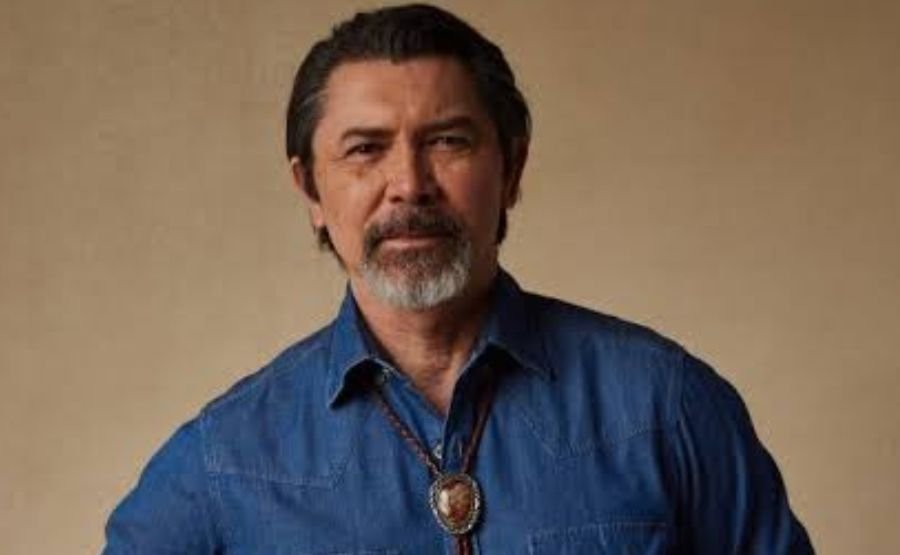
Lou Diamond Phillips: The Man Who Never Stopped Reinventing Himself
Quick Bio
| Detail | Info |
| Full Name | Louis Diamond Upchurch (professionally Lou Diamond Phillips) |
| Born | The Philippines’ Subic Bay Naval Station on February 17, 1962 |
| Nationality | American (Filipino-American heritage) |
| What He Does | Actor, director, writer |
| Biggest Accomplishments | Starred as Ritchie Valens in La Bamba (1987); Golden Globe nomination for Stand and Deliver; Tony Award nomination for The King and I on Broadway; eight-season run on Longmire |
| Other Important Facts | Named after decorated WWII Marine Leland “Lou” Diamond; has four children; holds a BFA in Drama from the University of Texas at Arlington; also an enthusiastic competitive poker player |
Why Readers Continue to Return to This Story
Lou Diamond Phillips is one of those names that makes people stop and say, “Oh yeah — whatever happened to him?” And then they find out: he’s been working continuously for four decades, doing theatre, television, film, directing, and writing, somehow without ever becoming the kind of household name his early career seemed to promise.
That gap between his initial explosive arrival in Hollywood and where he actually ended up is what makes his story so compelling. He could have been a flash-in-the-pan. Instead, he quietly became one of the most durable, versatile performers of his generation. He just did it without always being in the spotlight. That takes a particular kind of stubbornness — the good kind.
See also “Patience Wolfe Net Worth: How Her Career Shaped Her Wealth“
The Kid Born on a Military Base at the Edge of the World
Lou came into the world on a U.S. Naval base in Subic Bay, in the Philippines, in February of 1962. His mother, Lucita, was Filipino. His father, Gerald Upchurch, was an American serviceman — specifically, a crew chief in the Marines, a highly technical and demanding role. The two worlds of his parents were already a kind of collision — East and West, island life and American military culture.
Tragedy arrived almost immediately. Gerald died when Lou was barely a year old. A toddler in the Philippines without a father — that’s a rough beginning by any measure.
His mother eventually remarried, and her new husband, a man named George Phillips, stepped into Lou’s life and adopted him. Lou took that surname. He also carried something else from this arrangement: his first name. He was named after Leland “Lou” Diamond, a celebrated Marine hero from World War II — a man known for toughness, precision, and an almost mythic reputation in military circles. There’s something quietly poetic about a boy who would one day play legends on screen being named after one from the start.
Texas, Theatre, and the Teacher Who Changed the Trajectory
The family eventually settled in Corpus Christi, Texas, which is about as far from a Hollywood film set as you can get while still being in America. Lou attended Flour Bluff High School, a regular Texas public school where he discovered something that made the rest of his life make sense: acting.
He got involved in theatre early. It wasn’t just fun — it became the thing around which everything else organized itself. After graduating in 1980, he headed to the University of Texas at Arlington, where he pursued a Bachelor of Fine Arts in Drama. He was serious about it. Not dabbling — serious.
While he was still in college, he crossed paths with a man named Adam Roarke, an actor and coach who became a genuine mentor. Meeting Roarke in 1982 gave Lou a practical education that went beyond what any classroom could offer. The craft side of acting — the technical discipline, the approach to character work — started to sharpen during this period in ways that would matter enormously later.
After graduation, he kept performing in regional theatre in the Fort Worth area, including at Stage West Theatre. Nobody was writing articles about him. He was simply working hard.
The Beginning: Low Budgets and Long Odds
Lou’s screen career started the way most do — quietly and without fanfare. His first film role came in 1986 in a low-budget production called Trespasses. It wasn’t the kind of movie that generated Oscar buzz. It was the kind of movie that gave a young actor a chance to be on a set, understand how things worked, and prove to himself he could do it professionally.
What happened next was the kind of thing that changes a person’s life in a single decision. Lou was cast as Ritchie Valens in La Bamba, a biographical film about the young Mexican-American rock and roll star who died at seventeen in the same 1959 plane crash that claimed the lives of The Big Bopper and Buddy Holly.
Here’s what you need to understand about that casting: Lou Diamond Phillips is not of Mexican descent. Ritchie Valens was. And yet the director, Luis Valdez, saw something in Lou that he trusted. Maybe it was the depth of the heritage Lou did carry — Filipino, Spanish, Hawaiian, a mix that defied easy categorization. Maybe it was the hunger in how he prepared. Whatever it was, the gamble worked.
1987 to 1989: The Streak That Made Hollywood Pay Attention
La Bamba came out in the summer of 1987, and it connected with audiences in a way that surprised nearly everyone. Lou’s performance was moving and committed — he didn’t do a lazy impression of Valens, he tried to inhabit the loss and the joy of the man’s short life. The film became a genuine hit.
Then, before the year was even done, he appeared in an episode of Miami Vice. By the following year, he had two more major credits that would have been enough to define most careers on their own.
Stand and Deliver put him alongside Edward James Olmos in the story of Jaime Escalante, the East LA math teacher who pushed his students to pass the AP calculus exam against all expectations. Lou played a troubled student, and the film was critically embraced. He won the Independent Spirit Award for Best Supporting Male and received a Golden Globe nomination in the same category. Two films in, and he was already being talked about as one of the most exciting young actors in the business.
Then came Young Guns, the revisionist Western where he played a member of Billy the Kid’s gang — José Chávez y Chávez, a character with Native American and Mexican roots — alongside a cast that included Emilio Estevez, Kiefer Sutherland, and Charlie Sheen. The film was a hit, the ensemble crackled, and Lou held his own in very competitive company. He returned for Young Guns II in 1990.
Three years. Three massive films. The kind of opening act that makes studio executives call their agents.
Broadway, Bumps, and Refusing to Disappear
The early 1990s were harder. The films he chose didn’t perform as well. There were some genuine misfires. The early momentum stalled, and that happens — Hollywood is unforgiving when the marketplace shifts.
But Lou did something that very few actors making the transition from movie star to something murkier actually do: he went back to the stage. As a conscious decision, not as a retreat. In 1996, he made his Broadway debut playing the King of Siam in The King and I — a role that is physically and vocally demanding in ways that screen acting simply isn’t. For his performance, he was nominated for a Tony Award.He later reprised the role in Australia.
Think about what that requires. You’ve been a film lead. You step onto a Broadway stage where there are no second takes, no close-ups to hide behind, and you go up against the memory of Yul Brynner in one of the most famous roles in musical theatre. That’s not safe behavior. That’s the move of someone who cares more about the work than the career optics.
There was also a broken arm — a serious injury at some point that required helicopter evacuation and surgery, with four fractures requiring repair. The details around how it happened were somewhat vague in the coverage, but the recovery was reportedly difficult. It didn’t stop him.

Love, Family, and Three Marriages Worth Knowing About
Lou’s personal life has been lived at a similar level of intensity to his professional one.
In 1987, he wed Julie Cipher for the first time.That relationship ended in 1990. He was then briefly engaged to actress Jennifer Tilly, whom he met on a film set, but the engagement didn’t lead to marriage.
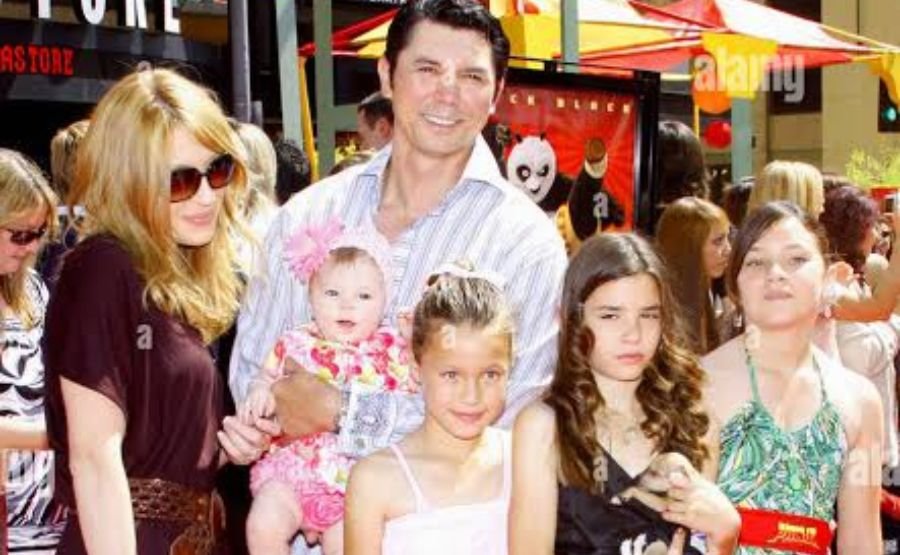
In 1994, he married Kelly Phillips. They had three daughters together — twins Grace and Isabella, born in 1997, and then Lili in 1999. That marriage eventually fell apart too, ending in 2007 after thirteen years.
He then found his way to Yvonne Boismier, a makeup artist, whom he’d met during that difficult period.After being married in 2007, they had a daughter named Indigo.By all accounts, this one has held — they’ve been together since.
Four daughters. A complicated marital history. And through all of it, he kept showing up for work.
The Quiet Money Conversation
Lou Diamond Phillips has an estimated net worth somewhere around $6 million, and there’s something instructive about that number. For a man who was genuinely one of Hollywood’s hottest properties in the late 1980s, $6 million might seem modest. But it reflects a career that took a different shape than stardom usually does.
He didn’t chase blockbusters after the early stumbles. He didn’t hold out for leading-man roles that weren’t coming. He worked — television guest spots, supporting film roles, voice work (including on the animated series Elena of Avalor), stage productions. A constant, steady output across four decades accumulates.
The neo-Western drama Longmire, which played on A&E and subsequently Netflix from 2012 to 2017, was his longest-running source of income. He played Henry Standing Bear, the wise and dry-humored Native American best friend of the show’s sheriff protagonist. Eight seasons. The character became beloved by the show’s devoted audience, and it gave Lou consistent, quality work at a time when many actors from his generation were struggling to find a foothold on television.
Where He Is Now
As of 2026, Lou Diamond Phillips is 64 years old and still actively working. His most recent high-profile television role was as Lieutenant Gil Arroyo in Prodigal Son on Fox, a crime procedural that ran for two seasons and gave him a substantial, recurring lead role. He’s also appeared in Blue Bloods, Goliath, Brooklyn Nine-Nine, and various other projects that suggest an actor comfortable moving between prestige and genre work without ego getting in the way.
He continues to direct. He’s explored writing. The poker playing — yes, he competes seriously, and has placed in state-level tournaments — remains a hobby that says something about his mind: he likes games of long-term strategy where reading people matters.
What This Journey Actually Adds Up To
crash that claimed the lives of The Big Bopper and Buddy Holly.He probably never will be again in the way he was for that brief, blazing stretch in the late 1980s. But here’s what he is: a working actor with genuine range, a stage performer who earned respect from the most demanding critics, a director who has quietly built a secondary craft, and a man who absorbed significant personal turbulence without letting it hollow him out professionally.
What separates him from the hundreds of young actors who peaked early and vanished is that he never decided he was too important for the next available job. The Broadway detour alone — taking the risk of a live stage musical in a legendary role — showed a willingness to be judged on entirely new terms. Most people who’ve been in hit movies don’t do that. It’s too risky to the image.
Lou clearly never worried that much about the image. He worried about the work. And that’s why, in 2026, people are still writing about him.
See also “Patience Wolfe Net Worth: How Her Career Shaped Her Wealth“
FAQs
1. What is Lou Diamond Phillips’s real birth name?
He was born Louis Diamond Upchurch. He took the Phillips surname from his stepfather after his biological father passed away when he was an infant.
2. Why is he called “Lou Diamond” — is Diamond a family name?
It’s actually a tribute. He was named after Leland “Lou” Diamond, a highly decorated U.S. Marine from World War II. His father gave him that name as a mark of respect for the military legend.
3. What is his ethnic background exactly?
It’s genuinely layered. He has Filipino, Spanish, Hawaiian, Chinese, Scottish, and Irish heritage. He also claimed partial Cherokee ancestry at various points, though that was disputed and he later walked it back.
4. Was he actually good enough to play Ritchie Valens, given he wasn’t Mexican?
The film’s director, Luis Valdez, believed so — and audiences agreed. His performance was emotionally authentic and physically convincing. He clearly did thorough preparation, and the result speaks for itself.
5. Did he really get a Tony nomination?
Yes. For The King and I on Broadway in 1996. Playing the King of Siam in a classic Rodgers and Hammerstein musical is an enormous undertaking, and he earned the recognition.
6. How many marriages has he had?
Three times. First to Julie Cypher (1987–1990), then to Kelly Phillips (1994–2007), and currently to Yvonne Boismier Phillips, whom he married in 2007.
7. Does he have children?
Four. Three daughters — twins Grace and Isabella, and Lili — from his marriage to Kelly. And a fourth daughter, Indigo, with his current wife Yvonne.
8. What was Longmire, and why did it matter for his career?
Longmire was a six-season modern Western drama that debuted on A&E before being acquired by Netflix.Lou played Henry Standing Bear, the lead character’s best friend and a key figure on the local Native American reservation. It was consistent, high-quality work that introduced him to a whole new generation of viewers.
9. How much is he worth?
Estimates sit around $6 million. It’s a solid figure for someone who has been continuously working for forty years without major blockbuster paychecks in the recent decades.
10. Does he do anything outside of acting?
He directs, he writes, and he plays poker competitively. He’s placed in serious state-level poker tournaments and takes the game genuinely seriously.
11. What was his worst career period?
Roughly the early to mid 1990s, when several films underperformed after the high of the late-1980s streak. The transition from leading-man status to something more varied was publicly visible and not always graceful. The Broadway pivot in 1996 was the turning point.
12. Is he still making new things?
Yes. Beyond Prodigal Son and Longmire, he has guest-starred in numerous series and continues to take on film and television work. He’s not the household name of 1988, but he’s absolutely still active, still good, and still worth watching.
Read. Explore. Discover more with Dicovered Magazine.