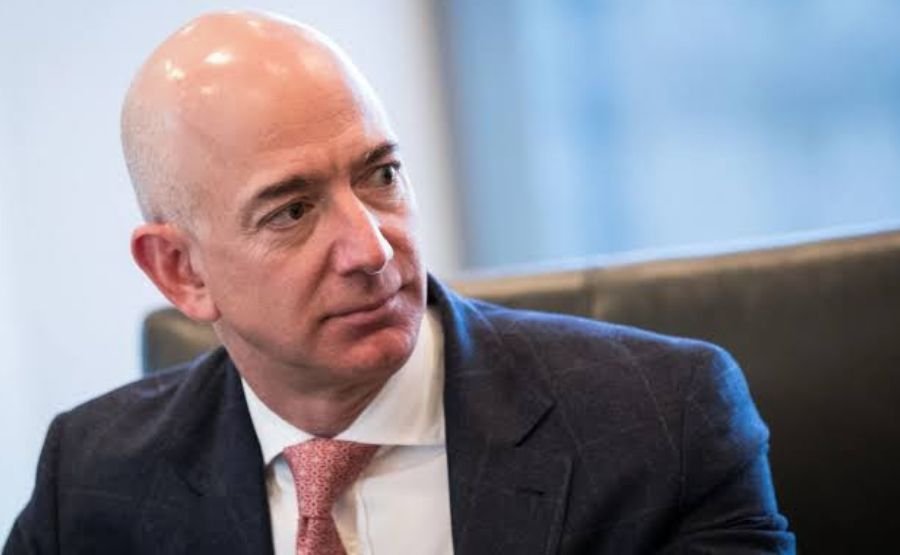
Jeff Bezos dead: The Guy Who Bet Everything on a Hunch
Quick Bio
| Detail | Info |
| Full Name | Jeffrey Preston Bezos |
| Born | Albuquerque, New Mexico, USA, January 12, 1964 |
| Nationality | American |
| What He Does | The Washington Post’s owner, Blue Origin’s founder, and Amazon’s executive chairman |
| Biggest Accomplishments | Built Amazon into one of the most valuable companies in human history; pioneered cloud computing through AWS; launched a private space company that actually puts people into space |
| Other Important Facts | Stepped down as Amazon CEO in 2021 after 27 years; divorced MacKenzie Scott in 2019 in what became one of the costliest splits on record; now engaged to journalist and pilot Lauren Sánchez |
The Man Who Still Makes People Argue
Here’s the thing about Jeff Bezos — people either think he’s a genius who changed civilization, or they think he’s proof that unchecked ambition can turn one person into something uncomfortably close to a monopoly. What’s interesting is that both camps are kind of right, and that tension is exactly what keeps him in the conversation.
He’s been a billionaire for so long it almost feels like he was born in a boardroom. He wasn’t. He was born to a teenager in New Mexico, raised partly on a Texas cattle ranch, and spent chunks of his twenties at a financial firm on Wall Street before a single bold decision flipped the entire trajectory of his life. That’s actually a pretty compelling story no matter how you feel about two-day shipping.
Where It All Started: A Kid With Big Ideas and an Even Bigger Grandfather
In January 1964, Jeff was born in Albuquerque. His mother, Jacqueline, was just 17 — still a student herself — when she had him. His biological father, Ted Jorgensen, wasn’t in the picture for long. By the time Jeff was barely a toddler, his parents had separated.
What changed things was his mother’s next chapter. She married a man named Miguel Bezos — Mike, to everyone who knew him — a Cuban immigrant who had come to the United States with almost nothing and built himself a solid life through sheer persistence. Mike adopted Jeff when he was four years old, and the Bezos name stuck. More than the name, though, what stuck was the example: here was a man who arrived in a new country, didn’t speak the language, and figured it out. That kind of quiet resilience clearly left a mark on his son.
Then there were the summers. Jeff spent long stretches of his youth on his grandfather’s ranch in Cotulla, Texas. His grandfather, Lawrence Gise, had worked at the Atomic Energy Commission — a man who understood complex systems, who fixed things when they broke, who operated in a world of logistics and problem-solving. Jeff spent those summer months repairing old Caterpillar tractors, working cattle, learning how to be resourceful. No one around him could pop on Amazon Prime and order a replacement part overnight. You either figured it out or didn’t.
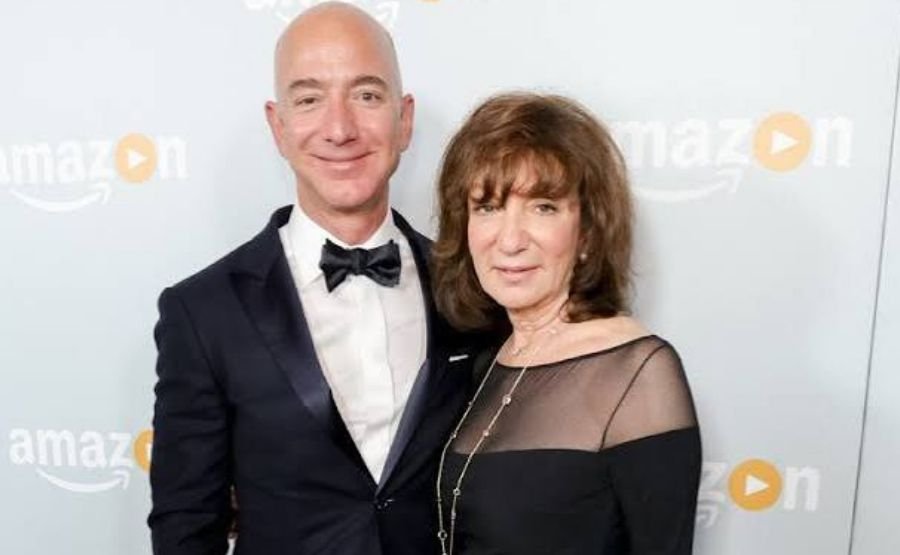
School Days: The Kind of Student Who Rigged Alarms to His Bedroom Door
As a kid, Jeff was genuinely strange in the best possible way. He once rigged up an electric alarm to keep his siblings out of his room. He took apart a crib at age three because he thought he was too old for it. His teachers weren’t sure whether to be impressed or mildly concerned.
He attended schools in Houston during part of his childhood, and he was consistently the kind of student who made teachers do a double take. Science came naturally. Curiosity came even more naturally. He participated in a student science training program at the University of Florida while still in high school — one of those moments that tell you a kid is operating on a slightly different frequency than the rest of the class.
He graduated in 1982 and headed to Princeton University, which is where things really got interesting. He started out thinking he wanted to be a theoretical physicist. That plan lasted until he realized that the smartest people in his physics lectures were leagues beyond him mathematically, and he had the self-awareness to understand that being good isn’t the same as being great. He pivoted to electrical engineering and computer science, graduating near the top of his class with honors. Two degrees. One very clear signal that he wasn’t the type to coast.
The Career Before the Career: Wall Street and the Moment Everything Shifted
Right out of Princeton, Jeff landed on Wall Street, which in the late 1980s was where ambitious young math-minded people went if they wanted to prove themselves fast. He worked at a few firms before landing at D.E. Shaw, a quantitative hedge fund in New York that operated like a technology company disguised as a financial institution. He rose quickly — genuinely quickly, not just on paper — and by his early thirties he was a senior vice president, a title that usually takes people twice as long to reach.
He also met his future wife there. MacKenzie Tuttle was a research associate and an extraordinarily bright person in her own right — a novelist, a former student of Toni Morrison at Princeton, someone who would go on to become one of the most consequential philanthropists in the world. They started dating, got married in 1993, and by 1994, the two of them packed their whole lives into a car and drove across the country to Seattle.
What made them drive that car west? A statistic. Jeff had read that internet usage was growing at something like two thousand percent annually, and he couldn’t stop thinking about what that meant for the future of commerce. He ran through what he later described as a “regret minimization framework” — basically, he asked himself whether he’d regret not trying this when he was eighty years old. The answer was yes. So he quit.
The Garage, the Gamble, and the Wildfire Growth
Amazon began in a garage in Bellevue, Washington. The first name Jeff considered was “Cadabra” — as in abracadabra — before someone told him it sounded too much like “cadaver” over the phone. He settled on Amazon, partly because it started with an A (useful for alphabetical listings back when that mattered online), and partly because the Amazon River is the largest in the world, and he wanted that kind of scale.
The site launched in July 1995 selling books. That first year, Jeff reportedly packed orders on his knees on the floor of the garage, and he kept telling his early employees they needed to buy kneepads. One of them pointed out that what they actually needed was a packing table. Jeff bought packing tables.
The growth was fast enough to make people genuinely uneasy. Amazon went public in 1997. By then it had already expanded beyond books. The late nineties dot-com frenzy lifted everything, and then the bubble popped in 2000 and took a lot of those companies down permanently. Amazon survived — barely at points — because Jeff was already thinking about infrastructure in a way competitors weren’t.
The real masterstroke wasn’t Prime memberships or one-click ordering or even the Kindle, though all of those mattered enormously. The real masterstroke was Amazon Web Services. Around the early 2000s, Bezos recognized that Amazon had built something remarkable for its own internal operations — a flexible, scalable computing infrastructure — and that other companies might pay to use that same infrastructure. AWS launched in 2006 and quietly became the backbone of the modern internet. Netflix, Airbnb, a huge portion of what you use online every single day runs on Amazon’s servers. AWS is currently the most profitable division of the entire company by a significant margin.
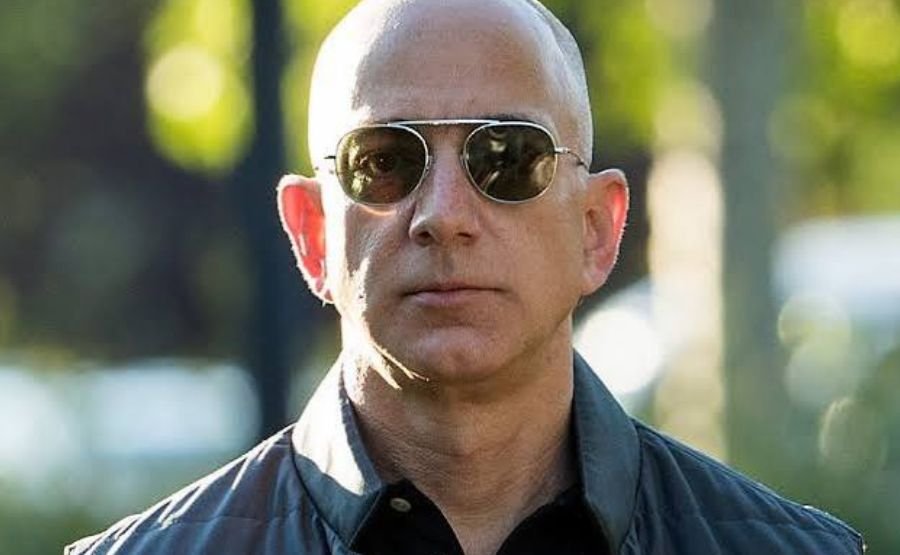
The Big Moments, the Awards, and the Record Books
In 2013, Jeff purchased The Washington Post for $250 million in cash, which is the kind of sentence that sounds surreal when you say it out loud. He bought one of America’s most important newspapers essentially the way most people buy a used car — with money he had on hand. The paper had been struggling, and under his ownership it modernized its digital operations substantially.
He became the first person in history to accumulate a net worth of $100 billion. Then he kept going. At various points between 2017 and now, he has held the title of wealthiest person on Earth, trading that position with Elon Musk depending on the week and what the stock market is doing.
In July 2021, he flew to space. That’s a thing that happened. Blue Origin’s New Shepard rocket carried him, his brother Mark, pioneering aviator Wally Funk, and the youngest person ever to go to space at that point on an eleven-minute suborbital flight. He came back grinning and thanked Amazon workers and customers for paying for it, which was a PR moment that landed with mixed results.
That same month, he stepped down as Amazon’s CEO after 27 years. He handed the role to Andy Jassy, who had built AWS, and took the title of Executive Chairman.
The Personal Side: Family, Love, and a Very Expensive Divorce
Jeff and MacKenzie had four children together — three boys and a daughter they adopted from China. By all accounts they were intensely private about their family life during the years he was building Amazon.
In 2019, they announced their divorce after 25 years of marriage. It came out that Jeff had been in a relationship with Lauren Sánchez, a television journalist and helicopter pilot. The divorce settlement was enormous — Jeff transferred roughly a quarter of his Amazon stake to MacKenzie, which at the time was worth around $38 billion. There was no prenuptial agreement from their original marriage, which is the kind of detail that becomes very interesting when you’re talking about numbers that large.
MacKenzie, now MacKenzie Scott, has since become arguably the most prolific philanthropist in America, giving away billions at a pace that astonished the nonprofit sector.
Jeff and Lauren got engaged in 2023. Their relationship drew plenty of tabloid attention — the yacht, the appearances at high-profile events, Lauren’s career as a pilot and media personality. Their wedding plans became a kind of ongoing saga in the press, with various locations and price tags being speculated about, some of which Jeff publicly disputed. As of now, they are married, having celebrated in Venice with a guest list that read like a who’s who of global celebrity and power.
The Hard Times Nobody Talks About Enough
Jeff doesn’t usually talk about failure in the traditional sense. But Amazon had genuine near-death experiences. In the early 2000s, after the dot-com collapse, the company burned cash at a terrifying rate and plenty of analysts predicted it would fold. There was real doubt.
He also launched some notable flops. Amazon Fire Phone — launched with enormous fanfare in 2014 — was discontinued within a year after failing to gain traction. Amazon’s foray into social media and other experiments over the years produced mixed results at best.
His acquisition of The Washington Post drew persistent scrutiny, with critics questioning whether a billionaire owning a major newspaper creates inherent conflicts of interest. Jeff largely stayed out of the editorial operations, but the debate never fully went away.
And the divorce — whatever the private reality of it was — played out in ways that invited public judgment from every possible angle.
Where the Money Stands Today
Jeff Bezos’s net worth at this point in 2026 is estimated at somewhere in the region of $200–240 billion, depending on Amazon’s stock price at any given moment. Most of it is tied up in his Amazon shareholding — he owns roughly 8 to 9 percent of the company. That stake alone is worth more than the GDP of most countries on Earth.
Blue Origin adds to the picture. He has invested something north of $1 billion annually into it personally over the years. The company has reached profitability through space tourism and commercial payload contracts. His real estate holdings include properties in Miami (where he relocated his main residence), Maui, Washington D.C., and Texas, among others. His superyacht, the Koru, cost an estimated $500 million to build.
He still gets richer when Amazon does well, which is often.
What He’s Actually Doing Now
Jeff Bezos is 62 years old and genuinely does not appear to be slowing down. He chairs Amazon’s board but is no longer in the operational seat. Blue Origin consumes a significant chunk of his attention — he remains deeply committed to the idea that humanity needs to become a multi-planetary species to survive long-term, and he has spoken about wanting Earth’s heavy industry moved to orbit to reduce the planet’s environmental burden.
He and Lauren have been active philanthropically through the Bezos Earth Fund, which has committed $10 billion to fighting climate change. He also founded the Bezos Academy, a network of tuition-free preschools serving underserved communities.
He reads. He lifts weights. He appears at events. He occasionally posts things on social media that go viral. He is, by most indications, enjoying himself.
A Few Things Worth Sitting With
What’s genuinely remarkable about Jeff Bezos isn’t the money — it’s the fact that he took a single bet in 1994 and turned it into something that reshaped how the entire world shops, stores data, and thinks about delivery. That’s a rare kind of leverage.
He’s not a saint. The labor practices at Amazon have attracted significant criticism for years. Workers at warehouses have spoken about grueling conditions. He built an empire, and empires require enormous amounts of human effort to run, and that effort doesn’t always look pretty up close.
But the sheer audacity of the thing — leaving a comfortable Wall Street career to sell books out of a garage because the internet was growing at an unusual rate — that audacity is worth acknowledging. Most people read the same statistic he read and did nothing. He packed his car.
Whatever you think of him, Jeff Bezos genuinely changed the texture of daily life for a few billion people. That is not a common occurrence, and it is not an accident.
FAQs
1. Is Jeff Bezos still the richest person in the world?
Not consistently. He trades that position with Elon Musk depending on how their respective companies are valued. His net worth sits around $200–240 billion as of 2026.
2. Why did Jeff Bezos step down as Amazon CEO?
He stepped down in July 2021, handing the role to Andy Jassy. He said publicly that he wanted more time to focus on Blue Origin and his other projects. He remained involved as Executive Chairman.
3. Did Jeff Bezos and Lauren Sánchez actually get married?
Yes. After considerable media speculation and some denied plans, they held their wedding celebration in Venice, Italy.
4. How much did his divorce from MacKenzie Scott cost?
MacKenzie received roughly a quarter of Jeff’s Amazon stake — worth approximately $38 billion at the time of the 2019 divorce. There was no prenuptial agreement from their original 1993 marriage.
5. What exactly does Blue Origin do?
Blue Origin is a private aerospace company Jeff founded in 2000. It builds rockets, including the New Shepard (for suborbital space tourism) and the larger New Glenn rocket. The company has reached commercial viability and has paying customers for both cargo and human spaceflight.
6. Why did Jeff Bezos buy The Washington Post?
He paid $250 million for it in 2013.He said he saw it as a “important institution” and believed his technology background could help modernize its operations. He purchased it as an individual, not through Amazon.
7. What is the Bezos Earth Fund?
It’s a philanthropic initiative Jeff announced in 2020 with a $10 billion commitment to fight climate change. Grants have gone to conservation groups, scientists, climate advocacy organizations, and environmental justice initiatives.
8. How did Amazon Web Services (AWS) start?
It grew out of Amazon’s internal infrastructure work in the early 2000s. Jeff and his team realized that the scalable computing platform they’d built for their own use could be offered to outside developers and companies. AWS launched commercially in 2006 and became the dominant player in cloud computing.
9. What was Jeff Bezos’s first job?
As a teenager, he worked at McDonald’s during the breakfast shift. He’s mentioned it in speeches as a formative experience in learning to operate efficiently under pressure.
10. Does Bezos have children?
He has four children — three sons and a daughter — from his marriage to MacKenzie Scott.
11. What schools did Bezos attend?
He attended various schools during his childhood as his family moved. He took part in a gifted student science program at the University of Florida while in high school, then attended Princeton University, graduating in 1986 with degrees in electrical engineering and computer science.
12. What happened to his biological father?
Ted Jorgensen, Jeff’s biological father, was almost entirely absent from Jeff’s life after separating from his mother when Jeff was a toddler. A journalist eventually tracked Jorgensen down years later; he had no idea his son had become the world’s richest person. There has been no reported relationship between them.
Read. Explore. Discover more with Dicovered Magazine.


One Comment