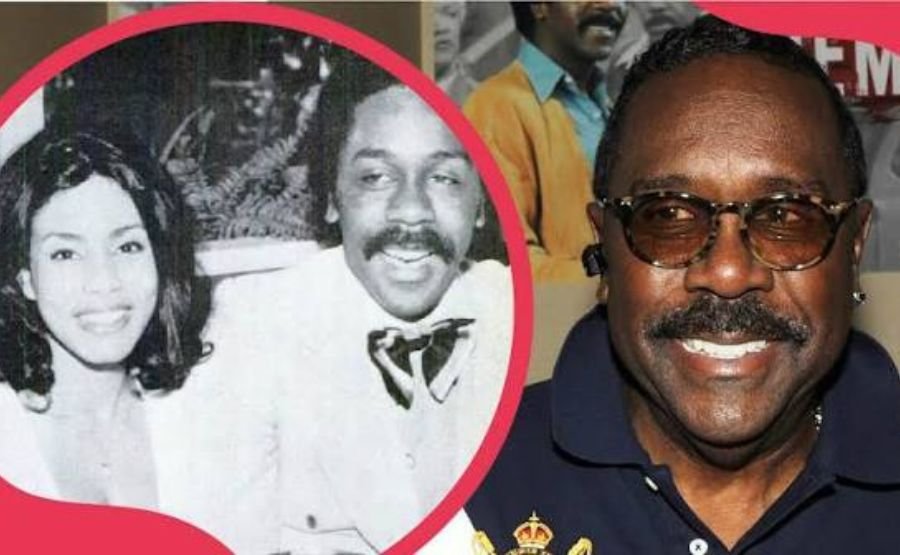
Cicely Johnston: The Woman Who Stood Firm While Everything Around Her Shifted
Quick Bio
| Detail | Information |
| Full Name | Cicely Loise Johnston Wilson |
| Born | Exact date and birthplace not publicly confirmed; American |
| Nationality | American |
| What She Does | Retired model; former flight attendant; devoted wife and mother |
| Biggest Accomplishments | Built a fifty-year marriage to Sanford and Son actor Demond Wilson that survived addiction, financial ruin, religious transformation, and public scrutiny; raised six children; appeared in the 1974 film Caged Heat |
| Other Key Facts | Married Demond Wilson on May 3, 1974; her husband died January 30, 2026 at age 79; their six children are Christopher, Demond Jr., Nicole, Melissa, Sarah, and Louise; described in multiple sources as a stewardess before modeling |
Why People Started Searching Her Name
There’s a particular moment when the internet decides it needs to know about someone who has spent decades deliberately avoiding its attention. That time came in waves for Cicely Johnston Wilson, first when inquisitive Sanford and Son fans began delving into Demond Wilson’s private life, and then more recently when her husband passed away in January 2026 and her name appeared in the obituaries as the woman who had stood beside him through everything.
Fifty-plus years of marriage. Six children. A husband who went from making forty thousand dollars a week in Hollywood to developing a thousand-dollar-a-week cocaine habit, nearly losing everything, having a spiritual conversion, becoming an evangelical minister, and eventually dying of cancer at seventy-nine. Through all of that — the fame, the fall, the faith, the quiet decades that followed — Cicely was there.
That’s the story. Not glamorous in the traditional sense. But it is genuinely remarkable.
See also “Daniel John Gregory: The Quiet Force Behind the Famous Name“
What We Know About Where She Came From
Here is the honest truth about Cicely Johnston’s early life: she has never shared it publicly, and the public record reflects that completely. Her birth date is unknown. Her hometown is unknown. Her parents and siblings, if any, are not documented anywhere reliable. She arrived in the public consciousness as Demond Wilson’s wife in 1974, and everything before that is private in the most complete sense of the word.
What is known is that she is African-American, that she holds American citizenship, and that at some point in her young adult life she worked as a stewardess for an airline. This was a meaningful detail in the context of the era. Flight attendants in the 1960s and early 1970s — particularly Black women working in that profession — occupied a specific and sometimes complicated professional space. It was considered a prestigious service job, one that required poise, composure under pressure, and an ability to manage people across a wide range of circumstances. Those qualities, whatever their precise origins, would prove relevant to everything that came later.
From stewardess she transitioned to modeling. Given that she also appeared in a film in 1974 — the low-budget Roger Corman production Caged Heat, a women-in-prison film that is something of a cult curiosity in exploitation film circles — she was clearly in Los Angeles by that point, navigating the entertainment world’s edges while working as a model.
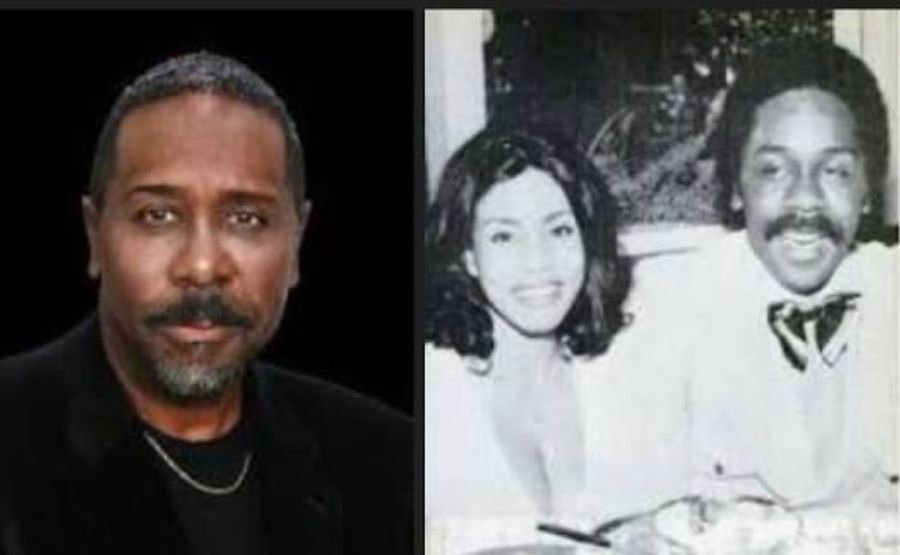
How she met Demond Wilson is not something either of them documented publicly in any detailed way. What is known is that when they married on May 3, 1974, both of them were moving into what looked like the best possible version of a Hollywood story. He was riding the crest of Sanford and Son’s enormous popularity. She was young, beautiful, working in a visible industry. The future looked wide open.
The Sanford and Son Years and What Was Happening Behind the Scenes
For audiences watching Sanford and Son in the mid-1970s, Demond Wilson was Lamont Sanford — the put-upon, good-hearted son of the cantankerous junk dealer Fred Sanford, played by Redd Foxx. The chemistry between Wilson and Foxx was real and electric, and the show became one of the most popular programs on American television. Demond was making very incredible money at its height, even by the standards of the 1970s.
Cicely was at home during those years, navigating the specific challenges of being married to someone at that level of celebrity while also beginning the work of raising a family. The children came — Christopher, then Demond Jr., and eventually Nicole, Melissa, Sarah, and Louise, six children across the years of the marriage.
But what the audience at home couldn’t see was that the same success that was generating that weekly salary was also funding a life that was slowly coming apart. Demond Wilson, by his own subsequent admission in interviews, developed a serious cocaine habit during his Hollywood years. The drug was everywhere in that industry during that period, and the specific combination of sudden wealth, high pressure, and constant availability made it almost a gravitational force.
Cicely, by every account, stayed. This was not passivity — it was an active and sustained choice made in the middle of genuinely difficult circumstances. Her husband was struggling, the marriage was rocky in ways that would test almost anyone’s commitment, and she was raising children through all of it.
The Rock Bottom and the Turning Point
There came a point when Demond Wilson had everything he’d worked for and simultaneously felt like he was losing everything that mattered. The money that should have been security had mostly gone — both through the cocaine habit and through the financial decisions that people in that spiral tend to make. The marriage was in serious trouble. The certainty he’d felt about his life and his identity had dissolved.
He prayed. That’s how he described it in the interviews he gave later, with a directness that left no room for reinterpretation. He prayed that if God would restore his family and restore his mind, he would turn his life around.
Over the following months, he became a born-again Christian. The transformation was real and total and permanent. He described the old Demond Wilson as dead. The new one was oriented toward faith, toward ministry, toward something entirely different from Hollywood.
For Cicely, this meant yet another significant adjustment. She had married a television star with a cocaine habit and a rocky marriage. She now found herself married to an evangelical minister who was leaving the entertainment industry behind almost entirely. By some accounts, the conversion itself went through a period of its own instability — his obsession with religion initially concerned rather than reassured her, and the marriage nearly didn’t survive this phase either.
But it did. They came through it together.
The Life They Built After Hollywood
In 1995, Demond Wilson founded Restoration House of America, a rehabilitation center near Lynchburg, Virginia, that worked with former prison inmates. This was not a celebrity charity — it was active, hands-on ministry work far from the cameras and the entertainment press that had once followed his every move.
Cicely was beside him through this transition too. The Beverly Hills house was sold. The family relocated to smaller and more modest circumstances — first to Orange County with four of their children, then to Virginia for the ministry work. The trajectory of their lives moved consistently away from public visibility and toward something quieter and more purposeful.
She had retired from modeling. She was, in the most complete sense, a full-time mother and minister’s wife, supporting work that was genuinely demanding and genuinely invisible to most of the world that had once known Demond Wilson’s face.
The six children grew up and built their own lives. Cicely and Demond protected those lives carefully — the children’s careers and circumstances have been kept almost entirely private, which is a reflection of both parents’ sustained commitment to boundaries that the public has generally respected.

Caged Heat and the Film Career That Never Was
It’s worth taking a moment on the one documented professional entry in Cicely Johnston’s career as a performer. Jonathan Demme, the director of the 1974 Roger Corman exploitation film Caged Heat, is the same Demme who would go on to helm The Silence of the Lambs and Philadelphia. It was his directorial debut.
The film is a women-in-prison picture with the standard genre elements of its era, but it’s historically interesting because Demme used the format as a vehicle for genuine filmmaking craft. It has been written about seriously by film historians as an early example of his developing style.
Cicely appears in it — billed simply as “Cicely” in some sources. It is not a significant role by any measure, and she never pursued acting further. Within the same year she married Demond Wilson, and that chapter of her public life simply closed.
Whether she actively chose to step back or whether the circumstances of marriage and motherhood simply redirected her energy is something she has never said. What is clear is that one film appearance is the entirety of her documented professional acting work.
Demond Wilson’s Death and What It Means Now
On January 30, 2026, Demond Wilson died at his Palm Springs home from complications related to cancer. He was seventy-nine years old. His son, Demond Wilson Jr., confirmed the death to TMZ.
He is survived by Cicely Johnston Wilson and their six children.
Fifty-one years of marriage. That is the number sitting at the center of his obituaries, and it is the number that makes Cicely’s story undeniably significant in a way that goes beyond any film appearance or modeling career. She married a man at the height of his fame, watched him nearly destroy himself, stayed while he transformed, supported the work he found meaningful in the decades after renown passed and stayed by his side until the very end.
What She’s Worth and What That Really Means
Cicely Johnston’s personal net worth is genuinely unknown. Various websites have published estimates ranging from $300,000 to figures in the millions, but none of these are sourced to any verifiable financial disclosure.
What is known is that the household she and Demond built went from genuine Hollywood wealth in the 1970s to significantly more modest circumstances as they transitioned away from that world. She had no documented independent income after retiring from modeling. Demond’s subsequent work as a minister and author of Christian books generated some income but nothing comparable to his entertainment years.
Whatever financial picture exists now — including any inheritance from Demond’s estate — is private. She is not wealthy in any celebrity sense. She is a seventy-something widow in Palm Springs with six adult children and more than fifty years of a life built around something other than money.
Final Words
The thing about Cicely Johnston Wilson that most biographies miss by focusing on her husband is the specific quality of her choice across fifty years. She didn’t stay through the difficult parts because she had no options. She stayed because she decided to — repeatedly, in different circumstances, at different costs, without asking for recognition.
She was present when he was well-known and extravagant. She was there when he was using cocaine and the marriage was falling apart. She was there when he found religion with such intensity that it initially frightened her. She was there through Virginia and ministry work and the quiet decades. She was there at the end.
That arc — not passive, not glamorous, not designed for public consumption — is its own kind of achievement. In a world that celebrates the visible and the dramatic, Cicely Johnston spent half a century being the thing that held everything together from the inside.
FAQs
1. Who is Cicely Johnston?
She is an American former model and actress, best known as the wife of Sanford and Son actor Demond Wilson, whom she married on May 3, 1974.They have six children together.
2. What is Cicely Johnston’s birth date?
Not publicly confirmed. She has never disclosed her birth date, and it does not appear in any verified public record.
3. What was her career before marriage?
She worked as a flight attendant — a stewardess — and then transitioned to modeling. She appeared in the 1974 film Caged Heat, directed by Jonathan Demme.
4. How many children do Cicely and Demond Wilson have?
Six. Their names are Christopher, Demond Jr., Nicole, Melissa, Sarah, and Louise. All are adults and their lives have been kept largely private.
5. What happened in Cicely and Demond’s marriage?
The marriage went through a very difficult period during Demond’s years of cocaine addiction in the 1970s. Demond subsequently attributed the pivotal moment to his commitment to Christianity and his prayer for his family’s restoration. The marriage survived and lasted over fifty years.
6. When did Demond Wilson die?
Demond Wilson died on January 30, 2026, in Palm Springs, California, of complications from cancer. He was seventy-nine years old. Cicely Wilson and their six children survive him.
7. Is Cicely Johnston still alive?
As of Demond Wilson’s death announcement in January 2026, she is listed among his survivors, confirming she was alive at that time.
8. What is Cicely Johnston’s net worth?
Not publicly documented with any reliable figure. Estimates online range widely and are unsourced. The family lived in modest circumstances during Demond’s ministry years after leaving Hollywood.
9. What film did Cicely Johnston appear in?
Caged Heat (1974), a Roger Corman exploitation film directed by Jonathan Demme in his directorial debut. She is billed as “Cicely” in the film.
10. Did Cicely Johnston convert to Christianity like her husband?
She is identified as Christian in multiple sources. The nature and timeline of her faith relative to Demond’s conversion is not publicly detailed.
11. Where did Cicely and Demond Wilson live?
Various locations across their long marriage, including Beverly Hills during the Hollywood years, Orange County, Virginia during his ministry work, and Palm Springs in their later years.
12. Is Cicely Johnston on social media?
No. She has no known public social media presence and has maintained consistent privacy throughout her adult life.


One Comment