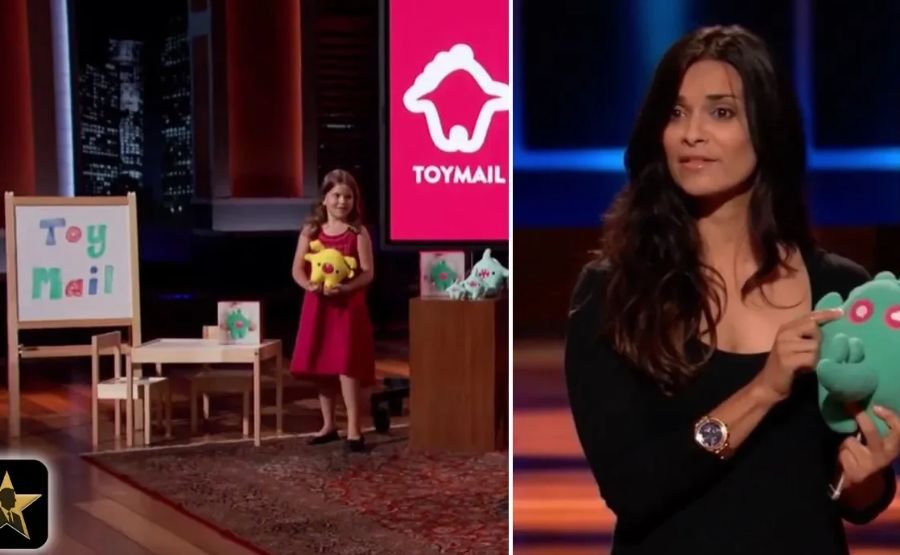
Toy mail Net Worth: The Story of Gauri Nanda, the MIT Inventor Who Wanted to Redesign Childhood Communication
Quick Bio
| Detail | Info |
| Full Name | Gauri Nanda |
| Born | 1980, Rochester Hills, Michigan, USA |
| Nationality | American |
| What She Does | Inventor, entrepreneur, product designer |
| Biggest Accomplishments | Invented Clocky (the runaway alarm clock); co-founded Toymail; secured $600,000 on ABC’s Shark Tank; sold over one million Clocky units worldwide; Toymail backed by Verizon, Amazon, Y Combinator |
| Other Key Facts | MIT Media Lab alumna (MS, 2005); University of Michigan undergraduate; Clocky won the Ig Nobel Prize in Economics (2005); Toymail sold in Best Buy and Target |
Why This Story Still Gets People Talking
Here’s the thing about Gauri Nanda — she became famous twice, for two completely different inventions, in two completely different stages of her life. That almost never happens. Most inventors get one defining moment. She got a running alarm clock and then a stuffed animal that sends voice messages, and somehow both of those things became legitimate cultural moments.
The reason people still bring up Toymail isn’t just because of the Shark Tank episode, though that was a wild ride. It’s because the whole arc of her career — from a grad student who couldn’t drag herself out of bed to a tech founder standing in front of some of the sharpest investors in America — is one of those rare stories that actually makes sense from beginning to end. Every chapter connects.
See also “Drogbruk Net Worth: Career, Income, Success, and the Story Behind the Wealth“
Growing Up in Michigan: The Early Roots
Gauri was born and raised in Rochester Hills, Michigan, which is a suburb of Detroit — a place that, back in 1980, was very much still car country. She grew up there, went through school there, and eventually enrolled at the University of Michigan for her undergraduate degree.
There isn’t a mountain of public detail about her childhood, but what’s clear from the way she talks about her own work is that she always had an eye for everyday problems. She wasn’t the kind of person who dreamed of abstract technology for its own sake. She was more interested in the small, annoying things about daily life — the friction points, the gaps, the places where something as simple as waking up in the morning could be done better.
She earned her bachelor’s degree at the University of Michigan and from there made the leap to one of the most famous research environments in the world.

The MIT Years: Where an Inventor Figures Herself Out
Landing at MIT’s Media Lab is not a small thing. It’s one of those places where the curriculum almost doesn’t matter because the environment is so stimulating that ideas just start popping. Gauri was part of the Media Lab’s Object-Based Media Research Group, and her focus sat at the crossroads of design and technology — things that feel like they belong together but which, in academic settings, often end up in completely separate buildings.
She was working toward her master’s in media arts and sciences, and during that time she was doing what a lot of grad students do: running late. She had a genuine problem with oversleeping. One morning — and this is one of those delightfully mundane origin stories — she was lying in bed thinking about how a regular alarm clock gives you an escape hatch. You can hit snooze without even waking up properly. The alarm is right there. It’s no match for your half-asleep self.
So she designed something for an industrial design course called Clocky. It was basically an alarm clock with rubber wheels. The idea was that when the alarm went off, if you hit snooze, the thing would launch itself off the nightstand and roll across the room. So now you actually have to get up and chase it down to turn it off. The prototype looked like it was wrapped in carpet scraps, because in a way it was — she built it from hardware store materials. It was cobbled together, barely worked right, and when a tech blog picked it up and posted about it, the internet lost its mind.
She hadn’t planned any of this. She didn’t have a business. She didn’t have investors. She had a fuzzy little rolling alarm clock and suddenly she had thousands of emails from people demanding to know where to buy one.
The First Business: Clocky Takes Off
MIT filed for the patent and Gauri spent the next stretch of her life figuring out what it meant to be an entrepreneur by accident. She finished her master’s in 2005 and founded a company she named Nanda Home, which was essentially built to sell Clocky to the world.
With family support behind her as early seed funding and guidance from MIT’s venture mentoring program, she got manufacturing sorted and launched Clocky commercially at the end of 2006. By the time a couple of years had passed, she had sold over 35,000 units. Eventually that number crossed half a million. By a later interview, she mentioned the figure had climbed past a million worldwide.
Along the way, Clocky turned into a proper media phenomenon. Gauri was on Good Morning America. She talked to Forbes, the New York Times, NPR. There was a Jeopardy question about Clocky. The Harvard Business School turned the whole story into a case study for entrepreneurship students. She also picked up the Ig Nobel Prize in Economics in 2005, which is the prize they give for achievements that first make you laugh and then make you think.
Nanda Home eventually expanded beyond just Clocky — she developed other clock products including Tocky and Ticky — but the original rolling clock remained the one everyone remembered.
The Idea That Changed Direction: Enter Toymail
After a few years running Nanda Home, Gauri said she wanted to do something that felt a little more meaningful. She was watching her own family, noticing the distance that kids experience from the adults who love them most during the working day. A parent heads to the office. A kid is at school or at home. They can’t really reach each other in a natural, safe, childlike way. Phones aren’t built for young children. Social media certainly isn’t. The gap was obvious once she looked for it.
She teamed up with her best friend, a woman named Audry, and the two of them started working on a concept that would become Toymail, founded around 2013. The premise was clean and clever: what if a plush toy could send and receive voice messages? Not texts, not video calls — just a voice, through a cuddly animal, over Wi-Fi. Parents, grandparents, and approved family members could send a message through a phone app, and the toy would light up and let the child know there was something waiting for them. The child could then send one back.
No screen time required. No unsupervised internet access. Just a soft, friendly toy that carried someone’s voice.
The flagship product was called the Talkie. It was exactly what it sounded like — a talking stuffed animal designed for the youngest part of the family.
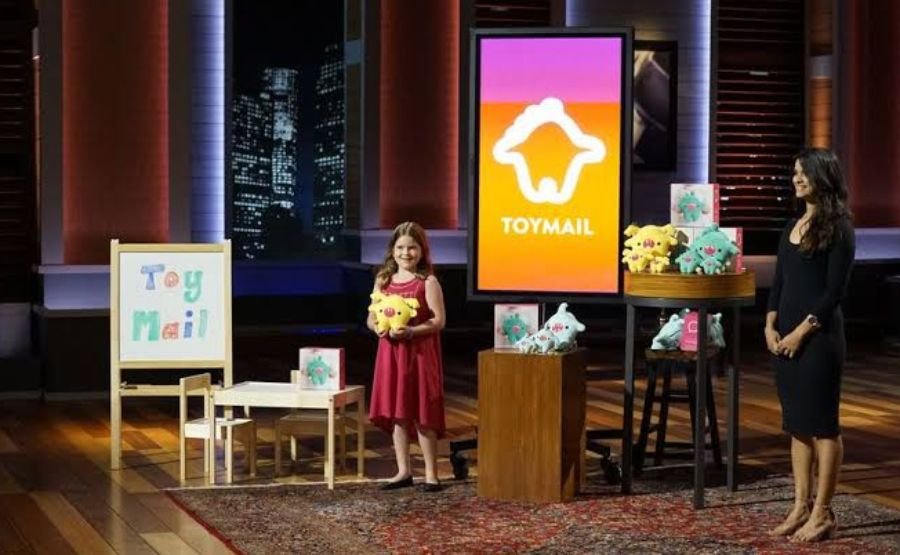
The Shark Tank Moment: Everything in the Room at Once
Gauri was approached by the producers of Shark Tank not long after Toymail launched. She declined the first invitation. She wanted to be ready — both in terms of the business and in terms of how she’d present it. Three years went by. She bootstrapped the company, refined the product, and lined up some substantial backers first. By the time she walked onto that stage, Verizon had already invested, and Amazon was involved too — reportedly considering building Alexa functionality into the toys.
When she finally appeared on Season 8, Episode 17 of the show, the pitch went unusually well. She was asking for $250,000 in exchange for a 2.5% stake, which implied a valuation that some of the sharks considered a bit steep. Chris Sacca, who was a guest shark that night, came in first with a counter offer of $400,000 for 5%. Mark Cuban followed with $500,000 for 5% and brought Lori Grenier in with him, bumping the number to $600,000. Kevin O’Leary, who had been impressed but skeptical, stepped back.
Gauri ultimately went with Sacca and Grenier — a pairing that gave her Silicon Valley startup credibility on one side and unmatched retail distribution capability on the other. She walked out with $600,000 for a 5% stake and left the Sharks’ bargaining among themselves while she waited.
She said afterward it went better than she ever could have dreamed. By any measure, that was an understatement.
Toymail was already selling in Best Buy and Target before the episode aired. The Shark Tank appearance pushed visibility dramatically higher.
The Harder Part: When the Company Closed
Here’s where the story takes a turn that doesn’t get talked about as much.
By November 2018, Toymail had shut down. That’s about a year and a half after the Shark Tank episode aired. The specific reasons for the closure weren’t spelled out in detail publicly, but the broader context is worth understanding. The connected toy market was a tough place in those years. Privacy concerns around internet-connected children’s devices were mounting. There were regulatory questions, consumer hesitations, and some high-profile incidents across the industry involving other companies’ smart toys getting hacked or misused.
For a company that had built its entire value proposition around safe, family-friendly communication for small children, that industry climate was deeply difficult. Whatever the specific internal factors were, the business didn’t survive them.
It’s worth saying clearly: that’s not a mark against Gauri as a founder. Building two companies, getting both into major retailers, pulling Shark Tank investment with two prominent investors, and generating the kind of press and cultural attention that Clocky and Toymail both did — that is a genuinely impressive entrepreneurial record. Not every startup makes it. Plenty of very smart founders running very good products hit walls they can’t get around.
Personal Life and the Shape of a Career
Gauri is someone who clearly lives close to her work, in the sense that her ideas come from her own life. The clock came from her oversleeping. Toymail came from watching her family. She speaks at universities — NYU, Columbia, MIT — about design, entrepreneurship, and the importance of building things that solve problems you actually live with.
She’s described the Media Lab environment as the thing that made her think like a designer, that gave her a framework for critical thinking that works in any situation. That’s not a throwaway quote. You can see it in how she moved from problem to solution in both of her major ventures.
She keeps a relatively low public profile outside of her professional work, which honestly fits the character of someone who seems more interested in building things than in being famous for building them.
The Money Side: What’s the Net Worth Picture?
This is where things get honest. Toymail, as a company, is estimated to have been valued at something in the range of $5 million during its operating years — some sources stretch that estimate higher, but those figures don’t have solid grounding. The Shark Tank deal valued the company at $12 million at the time of the deal (the $600,000 for 5% math).
Clocky, on the other hand, was a genuinely commercial success — over a million units sold worldwide at retail prices around $40 to $50. Even with manufacturing, distribution, and overhead costs, that translates to real revenue over many years of sales. Nanda Home continued operating as a business well beyond Toymail’s run.
Gauri Nanda’s personal net worth is not publicly disclosed with any precision. Estimates that circulate online range anywhere from the low millions upward, but there’s no verified number. What’s reasonable to say is that she built two companies that reached real scale, attracted venture backing and major corporate investment, and created products that sold in the millions of units globally. That doesn’t make someone a billionaire, but it’s not a small financial story either.
Her net worth today is plausibly in the range of several million dollars, built primarily through Clocky’s long commercial run and the value created through Toymail’s investment and partnerships before it closed.
Where Things Stand Now
There’s limited recent public information about what Gauri is working on right now. She continues to be cited as an entrepreneurship speaker at universities and conferences. Her work has become part of how design and startup courses teach the concept of turning personal problems into products. The Harvard Business School case study on Clocky is still in circulation.
Whether she’s quietly building something new or taking time away from the spotlight, her track record suggests she’s not someone who stops being curious about problems that need solving.
Final Words
What’s genuinely interesting about Gauri Nanda’s story is that it doesn’t follow the standard inventor-becomes-mogul blueprint. She didn’t cash out early and disappear. She didn’t pivot into something unrecognizable. She built one product that was genuinely funny and genuinely useful. Then she built another one that tried to do something meaningful for young children and families. One became an enduring product line. One didn’t survive. Both mattered.
The thread connecting them is that she builds from real life. She’s not a technologist in search of a problem to solve — she’s someone who notices a problem that already exists and figures out what it would take to fix it. It’s not as common as it seems. In a startup world full of solutions looking for problems, she worked the other direction. That’s what makes her career different from most of what you see in the consumer tech space, and it’s why both Clocky and Toymail landed with real people rather than just real investors.
See also “Drogbruk Net Worth: Career, Income, Success, and the Story Behind the Wealth“
FAQs
1. Who founded Toymail?
Toymail was co-founded by Gauri Nanda and her best friend Audry around 2013. Gauri was already known for inventing Clocky, the runaway alarm clock.
2. What exactly did Toymail make?
Toymail made Wi-Fi-connected plush toys called Talkies. Kids could receive voice messages from approved family members and send messages back — all without needing a phone or screen.
3. How did Toymail do on Shark Tank?
Very well, actually. Gauri secured a deal of $600,000 for 5% equity from Chris Sacca and Lori Greiner in Season 8. Mark Cuban had also made a competing offer.
4. What is Toymail’s estimated net worth?
During its operating years, Toymail was valued at approximately $12 million based on the Shark Tank deal terms. More conservative estimates of its total worth as a company put the figure in the $5 million range.
5. Is Toymail still in business?
No. Toymail shut down in November 2018, roughly a year and a half after its Shark Tank appearance.
6. Why did Toymail close?
No detailed official explanation was ever given. The connected toy industry faced mounting concerns around privacy and security during that period, and those pressures affected many companies in the space.
7. What is Gauri Nanda’s personal net worth?
There’s no verified public figure. Given Clocky’s commercial success (over one million units sold) and her investment history with Toymail, a net worth in the several-million-dollar range is a reasonable estimate.
8. What was Clocky, and how did it relate to Toymail?
Clocky was an alarm clock with wheels that rolled off the nightstand when you hit snooze, forcing you to get up and chase it. Gauri invented it at MIT and built an entire company around it before later founding Toymail.
9. Did Toymail sell in major stores?
Yes. Before and after the Shark Tank appearance, Toymail products were available at Best Buy and Target.
10. Who invested in Toymail besides Shark Tank investors?
Prior to Shark Tank, Toymail had support from Verizon, Amazon, Y Combinator, and a handful of other investors. Total pre-Shark Tank funding was around $230,000 in formal seed rounds.
11. Where did Gauri Nanda go to school?
She completed her undergraduate degree at the University of Michigan and earned her master’s degree from MIT’s Media Lab in 2005, where she specialized in media arts and sciences.
12. What was the Ig Nobel Prize that Clocky won?
In 2005, Clocky was awarded the Ig Nobel Prize in Economics. The Ig Nobels are given for inventions and research that make people laugh first and think second — it’s a genuine honor within the scientific community.





One Comment