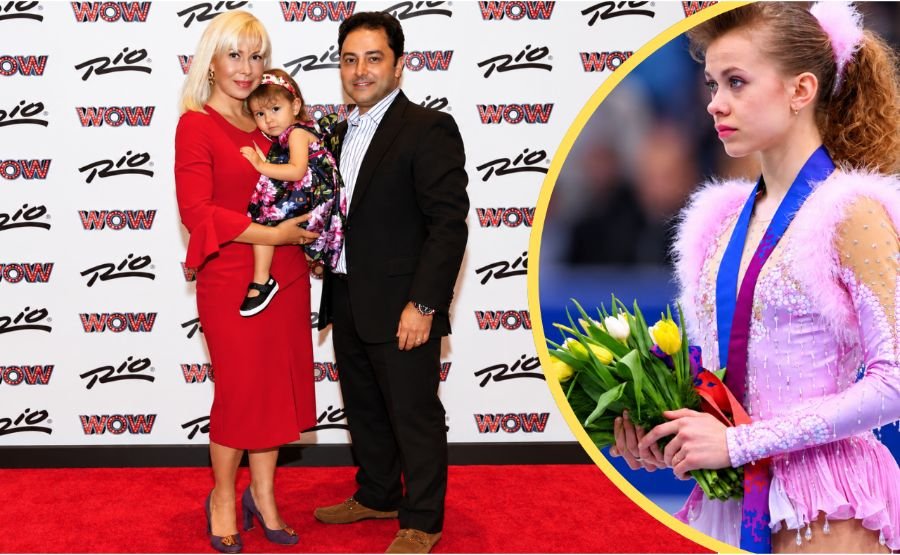
Oksana Bajul: The Swan Who Had to Learn to Land
Quick Bio
| Detail | Info |
| Full Name | Oksana Serhiyivna Baiul-Farina |
| Born | November 16, 1977 — Dnipropetrovsk, Ukrainian SSR (now Dnipro, Ukraine) |
| Nationality | Ukrainian |
| Known For | Figure skater; 1994 Olympic gold medalist and 1993 World Champion |
| Biggest Accomplishments | First Olympic champion of independent Ukraine in any sport · 1993 World Champion · Gold medal at Lillehammer 1994 at just 16 years old |
| Other Key Facts | Orphaned by age 13 · Moved to the U.S. after the Olympics · Married manager Carlo Farina; daughter Sophia born 2015 · Publicly recovered from alcohol addiction · Also known as “The Swan of Odessa” |
Why People Still Talk About Her
Let me paint you a picture. It’s February 1994 in Lillehammer, Norway. The figure skating world is consumed by the Tonya Harding and Nancy Kerrigan saga — one of the most bizarre dramas American sports had ever produced. Kerrigan is the favorite. Every camera is on the Americans.
And then this sixteen-year-old girl from a newly independent Ukraine skates out in white, puts on a performance that few people in that arena expected, and wins the gold medal.
She cried on the podium. The whole world watched.
What most of those viewers didn’t know yet was the story behind the girl. What she had come from. What she had lost before she ever stepped on an international rink. And what would come after — because what came after wasn’t easy either.
Oksana Baiul’s life is the kind of story that refuses to stay simple. It’s not a straight line from hardship to triumph. It’s messier and more human than that, which is exactly why it still pulls people in.
A Childhood That Asked Too Much
Oksana was born in Dnipropetrovsk — a large industrial city in what was then the Soviet Union, now simply called Dnipro, Ukraine. Her mother, Marina, was a French teacher. Her father, Sergei, left when Oksana was barely walking. She was around two years old. He just wasn’t there.
That left her mother, and for a time her grandparents, as the core of her world. When she was four, her grandfather made a decision that would change everything: he got her a pair of skates. Partly, accounts say, to help her get exercise. Whatever the original reason, the ice took to her immediately. She took to it right back.
By the time she was seven, she had won her first competition. Something clicked early for Oksana — a natural fluency on the ice that her first coach, Stanislav Korytek, recognized and nurtured. She trained hard through her childhood years, learning what it meant to give herself to a sport completely.
Then the losses started coming, and they didn’t stop.
Her grandparents died when she was around ten. That’s a weight that would break most children. Then, when she was thirteen, her mother died of ovarian cancer. Thirteen years old, and suddenly she had nobody. No father who had stuck around, no grandparents, no mother. Just a girl and her skates.
To make things worse, Coach Korytek left Ukraine not long after, headed to Canada. The economic conditions in Ukraine after the Soviet collapse had gutted support for sports programs. Rinks were falling apart. Coaches were leaving because there simply wasn’t funding to keep them.
Oksana could have disappeared entirely from skating. Nobody would have blamed her.
The Coach Who Became Everything
Before he left, Korytek made a call that mattered enormously. He reached out to a fellow coach named Galina Zmievskaya, who was based in Odessa. Zmievskaya was no minor figure — she had coached Viktor Petrenko to Olympic gold in 1992. She had real credibility, real skill, and she agreed to take Oksana in.
Not just as a student. As someone who lived in her home.
Oksana moved to Odessa and became part of Zmievskaya’s household. She had a coach, a roof, a family-style arrangement that gave her structure when her own family structure had completely collapsed. Zmievskaya later described Oksana’s situation with brutal plainness: the girl had nobody.
But under that roof, something remarkable happened. Oksana trained with an intensity that her natural talent now had the technical guidance to match. The rink conditions were rough — post-Soviet Ukraine wasn’t exactly flush with perfectly maintained ice facilities — but she got on that ice every single day and built something extraordinary.
Within a couple of years, she was competing internationally.
The Rise Nobody Saw Coming
In 1993, Oksana Baiul was fifteen years old and already winning things that fifteen-year-olds almost never win. She took silver at the European Championships in Helsinki — her first major international competition. Then she went to Prague for the World Championships and won. World champion. At fifteen.
Think about that for a moment. A girl who had lost everyone she loved, who was essentially a ward of her coach’s household, went to the World Championships and beat the world.
The 1994 season was next, and it brought Lillehammer.
Going into those Olympics, there was a strange atmosphere around the women’s skating event. The American narrative was all about Kerrigan and Harding. Oksana Baiul, this teenager from Ukraine, wasn’t the story anyone was focusing on. Even within the competition, after the short program she was sitting in second place behind Kerrigan.
Then came the free skate.
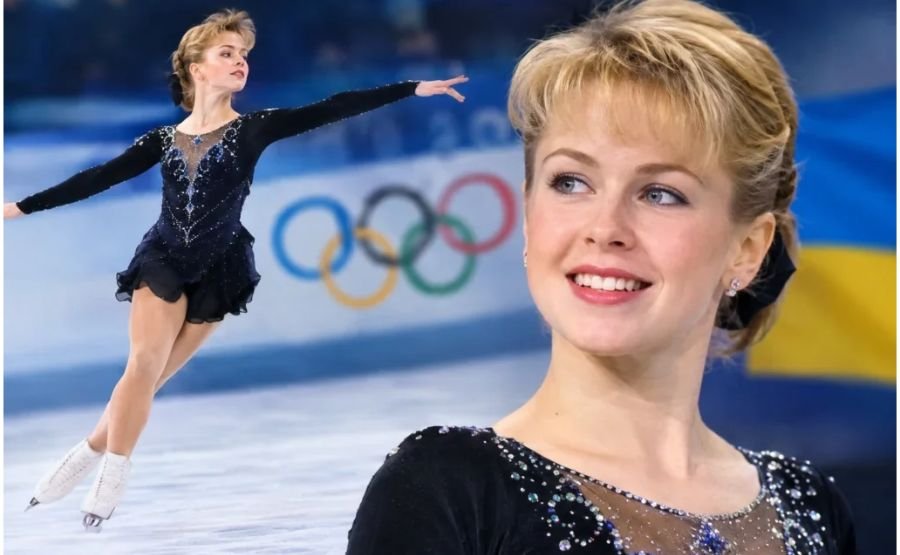
Oksana skated to a program built around Swan Lake — fitting, given that she would later be nicknamed “The Swan of Odessa.” She landed five triple jumps. The performance was technically strong and artistically expressive in a way that was genuinely different from everyone else on that ice. The judges saw it. When the scores came up, she had edged past Kerrigan by the thinnest possible margin.
She was sixteen. She was an Olympic champion. She was the first Olympic gold medalist of independent Ukraine — in any sport, not just skating.
Standing on that podium, crying in front of the world, she became one of those images that attaches itself to an era.
Life in America, and What It Cost Her
The Olympics opened a door, and Oksana walked through it quickly. She turned professional, signed with the William Morris talent agency, and moved to the United States — settling in Simsbury, Connecticut, near the International Skating Center there. Endorsement deals followed. Professional skating tours. The whole machinery of post-Olympic fame came looking for her.
But here’s the thing nobody talks about enough: she was sixteen. She had almost no family support structure. Her English was limited. She had come from a country still figuring out its own post-Soviet identity, and now she was navigating American celebrity culture with very little scaffolding around her.
She later said that her drinking problems started during the professional touring circuit, surrounded by older skaters where alcohol was freely available. She was a teenager in an adult world, and she made adult mistakes.
Then came the injuries. A back injury during the 1994 Olympics had actually gone largely unannounced at the time — she skated through it. After the Games, her body started catching up with her. A growth spurt complicated her technique. Physical ailments made consistent training difficult. The professional skating world is demanding in ways that competitive skating isn’t, and she was trying to manage all of this while also managing herself as a young person far from home.
The Crash — Literal and Otherwise
In January 1997, Oksana crashed her car into a tree in Bloomfield, Connecticut. She was arrested for driving under the influence. The crash also left her with a concussion. The charges were eventually dropped after she completed probation and an alcohol education program, but the underlying problem didn’t go away with the legal resolution.
That May, she entered an alcohol rehabilitation program and spent about two and a half months there.
This is the part of her story where a lot of people stopped following her. The golden girl had fallen — hard and visibly. The Lillehammer moment was now years in the past, and what was left of the public image she’d built was getting chipped away.
But Oksana kept going. She published two books in 1997 — one a memoir about her life, one about skating. She launched a clothing line called the Oksana Baiul Collection in 2002. She tried to regain competitive eligibility ahead of the 2000 Olympics but wasn’t able to restore her amateur status in time.
By 2004, she was saying in interviews that she had been sober for six years. She said sobriety mattered more to her than the gold medal. That’s not a throwaway line. That’s someone who has looked at both things squarely and made a real assessment.
A Private Life, Rebuilt
At some point, Oksana Baiul married Carlo Farina, who had been her manager. It’s one of those relationships that likely formed through years of professional closeness — two people who spent a lot of time in the same world, navigating the same challenges. Their daughter, Sophia, was born in 2015.
She became a mother in her late thirties. There’s something about that timing that seems deliberate — like someone who waited until she felt ready, until she had the stability she wanted before adding something that precious to her life.
What the Money Situation Actually Looks Like
Oksana’s financial story is a complicated one. She signed significant contracts early on — endorsements, performance tours, book deals, her clothing line. For a moment, she had the kind of earning potential that very few athletes ever see.
But she also turned professional at sixteen with limited business experience, went through a period of personal crisis that disrupted her career momentum, and navigated disputes that cost her. Celebrity Net Worth puts her current net worth at around two million dollars — a figure that reflects both what was earned and what wasn’t held onto. Some sources cite higher estimates closer to twenty million, though those figures aren’t widely corroborated.
What’s clear is that she’s not wealthy on the scale her early fame might have suggested, but she’s also not struggling. She has built a life on the other side of the hardest years.
Where She Is Now
Oksana Baiul is in her late forties. She stays connected to Ukraine — especially since the Russian invasion began in 2022, she has spoken publicly about her support for her home country, for the people still there, for peace. She has family in Ukraine. The war is personal to her, not abstract.
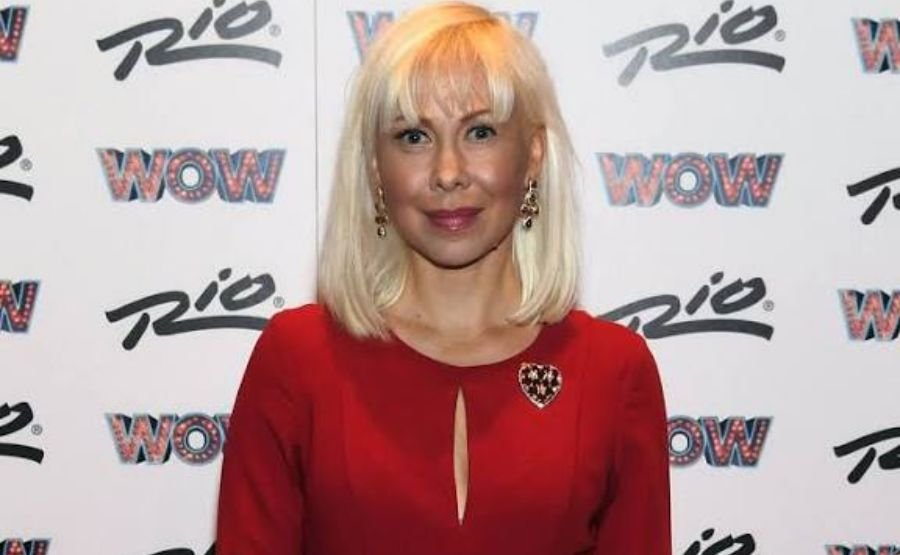
She remains connected to skating culture and has periodically appeared in skating-related events and media. She’s a mother. She’s married. She appears to be, by most available evidence, someone who has found a version of her life that fits her — which, given everything she’s been through, is no small thing.
What Her Story Really Means
Here’s what I keep coming back to when I think about Oksana Baiul. She didn’t just overcome a hard childhood. She didn’t just win a medal and ride off into a sunset. She did the harder, quieter, less glamorous work of surviving fame, surviving loss, surviving her own choices, and coming out the other side as a person rather than a symbol.
What makes her different from so many athletes of that era is the combination of circumstances she came from and what she did with them. She had no family, no financial safety net, a country in economic freefall, and a world-class talent that came packaged with world-class pressure. And she was a child through all of it.
The Swan of Odessa label is beautiful, but swans actually work incredibly hard beneath the surface to stay where they are. That’s the part the cameras didn’t always catch. It’s the truest part of her story.
FAQs
1. What did Oksana Baiul win at the 1994 Olympics?
She won the gold medal in women’s figure skating at the Lillehammer Winter Olympics, edging out American skater Nancy Kerrigan. She was sixteen years old at the time and became the first Olympic champion representing independent Ukraine in any sport.
2. What happened to Oksana Baiul after the Olympics?
She turned professional and moved to the United States, participating in touring shows and signing endorsement deals. Her post-Olympic years were marked by injuries, a growth spurt that disrupted her technique, and eventually alcohol problems that led to a DUI arrest in 1997 and a stint in rehabilitation.
3. Was Oksana Baiul an orphan?
Yes. Her father left when she was around two. Her grandparents died when she was approximately ten, and her mother died of ovarian cancer when she was thirteen. By the time she reached her early teens, she had no immediate family and lived with her coach, Galina Zmievskaya.
4. Who was Galina Zmievskaya and why does she matter?
Zmievskaya was the coach who took Oksana in after her previous coach left Ukraine for Canada. She didn’t just train Oksana — she gave her a home. Zmievskaya had previously coached Viktor Petrenko to Olympic gold in 1992, and under her guidance Oksana went from a homeless teenage skater to a world and Olympic champion.
5. Is Oksana Baiul married?
Yes. She married Carlo Farina, her former manager. They have a daughter together named Sophia, born in 2015.
6. Did Oksana Baiul have a drinking problem?
She has spoken openly about this. She struggled with alcohol in the years after the Olympics, partly attributed to exposure during professional touring circuits. In January 1997, she was arrested for DUI after crashing her car in Connecticut. She entered rehabilitation in May 1997, and by 2004 she publicly stated she had been sober for six years.
7. What is Oksana Baiul’s net worth?
Estimates vary. Celebrity Net Worth puts the figure at approximately two million dollars. Some other sources suggest higher figures, but those are not consistently backed by credible financial reporting. Her early earning potential was significant, but personal and career difficulties affected her financial trajectory.
8. Where does Oksana Baiul live now?
She has lived in the United States since 1994. She settled in Connecticut initially and has remained in the U.S.
9. Did she compete after 1994?
She turned professional after the 1994 Olympics, which meant she was ineligible for amateur competition. She explored returning for the 2000 Olympics but was unable to regain the amateur status required to compete. Her professional competitive career was also hampered by injuries.
10. What is the “Swan of Odessa” nickname about?
It refers to her famous short program performed to Swan Lake at the 1994 Olympics, combined with her connection to Odessa, where she trained under coach Zmievskaya. The nickname captures both her artistic style and the city that became her training home after losing her family.
11. Has she spoken about the war in Ukraine?
Yes. Since Russia’s invasion of Ukraine, Oksana has been vocal in her support for Ukraine, stating she has family there and advocating for peace. She has written open letters and spoken publicly about the crisis in her home country.
12. What was the 1994 Olympic competition like — was it really that close?
Yes. Oksana was second to Nancy Kerrigan after the short program. In the free skate, she landed five triple jumps and delivered a performance that the judges ultimately scored slightly higher than Kerrigan’s. The margin was very slim — one of the more debated judging outcomes of that era. The Harding-Kerrigan scandal had consumed most of the media attention going into the event, which made Oksana’s victory feel all the more surprising to general audiences who hadn’t been watching her rise.
Read. Explore. Discover more with Dicovered Magazine.




One Comment