Noah Lee Ritter: Carrying a Famous Name While Building a Life Entirely His Own
Quick Bio
| Detail | Info |
| Full Name | Noah Lee Ritter (birth name: Stella Ritter) |
| Born | September 11, 1998 — Burbank, California |
| Nationality | American |
| What He Does | Private individual; arts enthusiast; connected to the John Ritter Foundation for Aortic Health |
| Biggest Accomplishments | Publicly came out as a transgender man on his 18th birthday in 2016; transitioned with the full support of his family; lives authentically as Noah Lee Ritter |
| Other Key Facts | Only child of actor John Ritter and actress Amy Yasbeck; his father died on Noah’s fifth birthday — September 11, 2003 — from an undiagnosed aortic dissection; has three older half-siblings Jason, Carly, and Tyler Ritter from his father’s first marriage |
Why People Keep Searching This Name
The search query that brings most people to Noah Lee Ritter’s story is “birth name” — and that single question opens into something far more layered and human than most celebrity-adjacent searches turn up.
People want to understand the journey. They want to understand how a child born into one of Hollywood’s most recognizable families navigated loss, identity, and the specific pressure of carrying a name that the whole world has feelings about — and who emerged from all of that as someone who decided to live honestly, quietly, and entirely on his own terms.
Noah’s story isn’t about fame. It’s almost the opposite of fame. It’s about a person who happened to be born into an extraordinary family and chose, deliberately and consistently, to build something interior and real rather than exterior and visible.
That choice — made against the backdrop of genuine tragedy and genuine public interest — is what makes the story worth telling.
See also “Jelly Roll Before He Was Famous: The Untold Story of Struggle, Survival, and His Rise to Stardom“
Born Into Hollywood, September 11, 1998
Noah was born in Burbank, California on September 11, 1998 — a date that at that moment was just a birthday, belonging entirely to a new baby and the parents who had been waiting for her.
His father was John Ritter — one of the most beloved comedic actors of his generation, the man whose physical comedy on Three’s Company had made him a household name in the late seventies and early eighties, and who was in the middle of a career renaissance in 1998 with new projects keeping him busy and visible. His mother was Amy Yasbeck — an actress in her own right, known for her work in Wings and various film appearances, and a woman whose wit and warmth were evident in every interview she gave.
They were deeply in love. They’d gotten together in the mid-1990s and married in September 1999 — a year after Noah was born — in a ceremony at the Murphy Theatre in Wilmington, Ohio, a beautiful and slightly unexpected choice of venue that reflected who they were as people: not predictably Hollywood, not given to the obvious gesture.
Noah arrived as their only child together, though John had three older children from his first marriage to Nancy Morgan — Jason, Carly, and Tyler. So from the start, Noah had siblings, even if the age gaps were significant. Jason in particular would go on to build his own substantial acting career, appearing in Parenthood and Joan of Arcadia among many other things. The Ritter family was, by any measure, drenched in entertainment industry history and talent.
But what Noah was actually born into was simpler and warmer than that sounds. Two parents that cherished their child and each other. A home. A beginning.
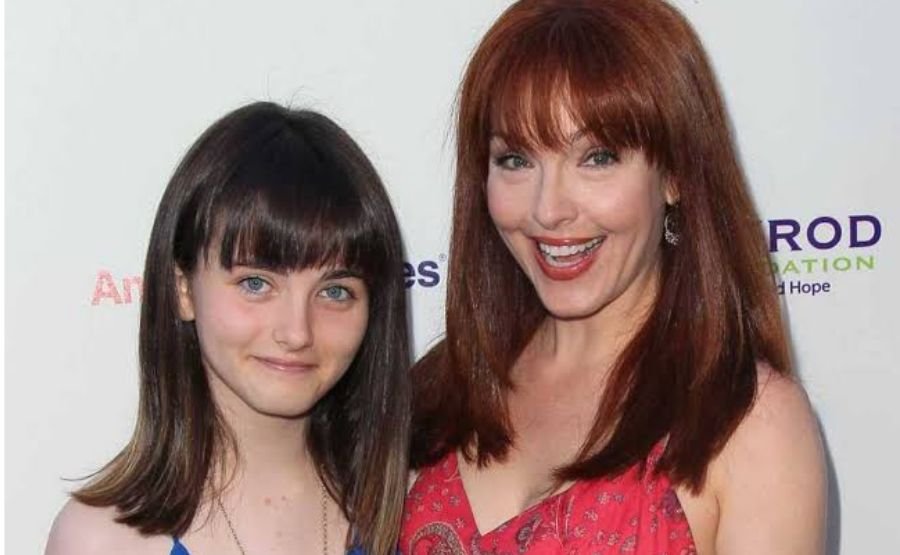
The Birthday That Changed Everything — Forever
September 11, 2001 came and went, and the date acquired its catastrophic national meaning. Noah was three years old and understood none of it.
September 11, 2003 is the date that permanently reshaped Noah’s specific life.
John Ritter was at work, filming 8 Simple Rules for Dating My Teenage Daughter, the ABC sitcom that had brought him back to weekly television and was doing well. He began feeling seriously unwell on set. He was taken to Providence Saint Joseph Medical Center in Burbank. Doctors there initially suspected a heart attack.
What was actually happening was an aortic dissection — a catastrophic tearing of the inner wall of the aorta, the body’s largest artery. It is a condition that can be treated surgically if diagnosed correctly and quickly. It was not diagnosed correctly. John Ritter died that same day, September 11, 2003, at the age of 54.
Noah turned five years old that day. He did not know his father died on his birthday. He was five. The understanding of what that meant — the specific weight of those two events permanently sharing a date — would come later, in layers, as he got older.
Amy Yasbeck later founded the John Ritter Foundation for Aortic Health within weeks of his death, channeling her grief into something purposeful: raising awareness about thoracic aortic disease, funding research, and creating resources so that what happened to John Ritter would happen to fewer people. In 2010, the foundation released what became known as the Ritter Rules — five clear reminders about recognizing symptoms and risk factors of aortic dissection, simple enough to circulate widely, specific enough to save lives.
Amy also wrote a memoir about John in 2010 — With Love and Laughter: John Ritter — a tribute that documented who he was beyond the performances, as a husband and as a father.
Noah grew up inside all of this. The loss. The foundation. The advocacy. The specific kind of household that forms when a family decides to turn private tragedy into public good.
Growing Up Without His Father
Noah was five when John died. That’s old enough for real memories and too young to have enough of them. It’s one of the more particular kinds of grief — not the grief of having known someone fully and lost them, but the grief of knowing they were there and then weren’t, with the adult understanding of who they were only arriving later, through photographs and recordings and other people’s stories.
Jason Ritter has spoken publicly about how much his father meant to him and to the family. The older siblings were a presence in Noah’s life — connected through John, connected through loss, connected through the shared experience of being the children of someone the whole world felt entitled to claim as their own.
Amy was Noah’s primary parent through his childhood and adolescence. She continued acting to some degree but became increasingly defined by her foundation work — a choice that was clearly both grief-driven and purposeful, and one that shaped the household Noah grew up in. Questions of health, awareness, and advocacy were not abstract in that home. They were daily and personal.
Noah was educated in the Los Angeles area, though the specific details of his schooling aren’t part of the documented public record. He appears to have grown up with access to the arts — consistent with having two actor parents — and with a close, deeply supportive relationship with his mother.
What his internal life looked like during those years — how he processed his father’s death, how he understood the public attention that came with the Ritter name, how he navigated the ordinary difficulties of adolescence against that backdrop — is something he hasn’t shared publicly. And that privacy is entirely his right.
The 18th Birthday and the Name He Chose
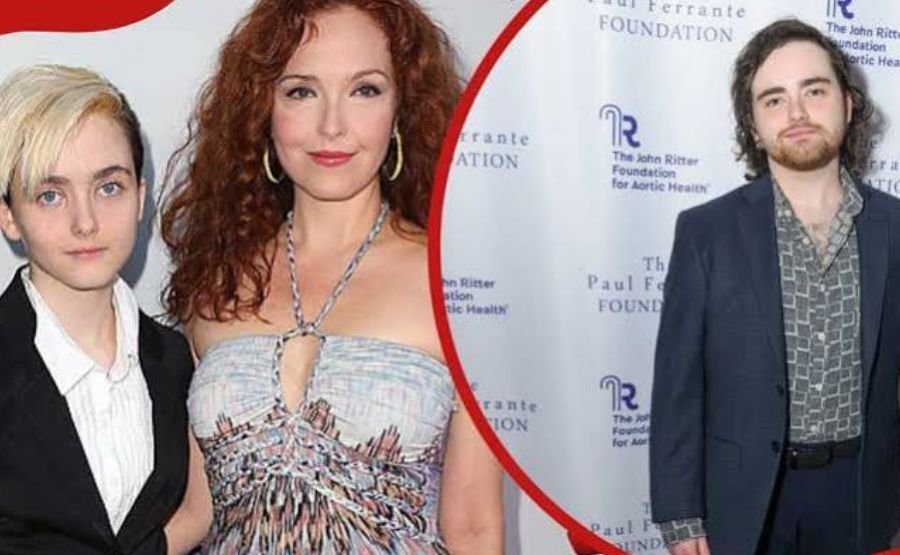
On September 11, 2016 — his 18th birthday, and the 13th anniversary of his father’s death — Noah came out publicly as a transgender man.
He announced that he would be going by the name Noah Lee Ritter. That name was his. Not inherited, not assigned, not given by anyone else. Chosen.
The timing — his 18th birthday — had an obvious intentionality to it. The day that for his entire life had carried the weight of both his own birth and his father’s death became also the day he claimed his own identity publicly. Noah is the only one who knows if that time was deliberate symbolism or just the practicality of turning eighteen and being prepared.
Sources from that period indicate that his mother Amy and his siblings were supportive. There’s no documented account of family conflict around the transition — what is clear from how Amy has conducted herself publicly in the years since is that she loves her son and that her role has been one of consistent and quiet support.
Noah’s social media accounts were made private following the announcement, which was consistent with his general approach to public life. He didn’t give press tours or interviews. He didn’t appear on talk shows to discuss his journey. He made his announcement, chose his name, and continued living his life.
By approximately 2017, sources indicate the name Noah Lee Ritter was consistently in use. The transition was described as complete by various outlets covering the story around that time.
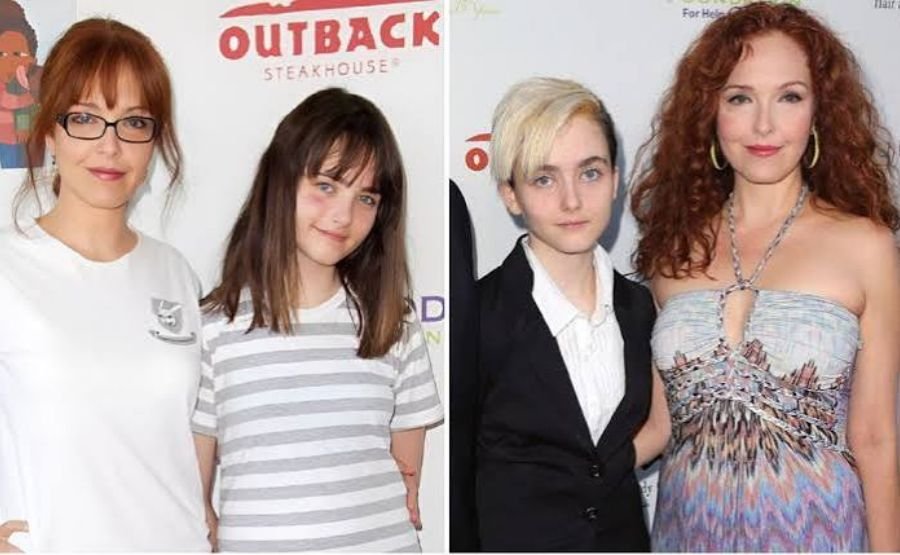
A Family That Supports One Another
One of the more quietly moving aspects of Noah’s story is the picture it paints of the Ritter family as a unit. John’s children from his first marriage — Jason, Carly, Tyler — have all spoken warmly about their younger sibling. They are half-siblings technically, but the word feels insufficient.
Jason Ritter in particular has built a public persona rooted in warmth and openness, and has navigated his own grief about his father’s death in ways that have occasionally been visible. The sibling dynamic in the Ritter family appears to be genuinely close, even across the age gaps and across the different households they grew up in.
Amy Yasbeck’s dedication to the John Ritter Foundation has kept the family oriented toward something collective — a shared cause, a shared memory, a shared project of turning loss into meaning. Noah has been supportive of that work, which makes sense: it was the cause his mother built in the weeks after his father died, it has shaped his entire childhood and adolescence, and it honors a man he lost before he had enough years to fully know him.
What He’s Worth and What That Actually Means
Noah Lee Ritter’s personal financial situation is not extensively documented. Estimates from around 2020 placed his net worth in the neighborhood of $200,000 — a figure that reflects a young private individual rather than a public career.
His mother Amy Yasbeck’s net worth has been estimated at approximately $12 million, built across decades of acting work and connected to the estate of John Ritter, which was significant at the time of his death.
Noah’s own financial picture is modest and appropriate for someone in his mid-twenties who has not pursued a public career. He is not rich in the celebrity sense. He has the support of a financially stable family. He is building his life.
Where He Is Right Now
Noah Lee Ritter is twenty-seven years old as of late 2025. He lives privately. He does not have an active public presence — his social media accounts have been private for years, which is a consistent choice rather than an oversight.
He remains connected to his family. The John Ritter Foundation continues its work under Amy Yasbeck’s leadership, publishing annual reports and promoting the Ritter Rules as a public health resource. Noah’s relationship with that work — whether active involvement or simply supportive presence — is not publicly documented beyond general family solidarity.
His half-brother Jason continues his acting career. The siblings remain close in the way that people who’ve shared significant loss tend to remain close.
Noah is living his life. Quietly, honestly, on the terms he chose on his 18th birthday when he told the world his name and then went home.
Final Words
Noah Lee Ritter’s life is extraordinary for reasons that have almost nothing to do with entertainment or celebrity.
He was born on a date that would acquire catastrophic national significance three years after his birth. He lost his father to a preventable medical condition on his fifth birthday. He grew up carrying both a famous name and a profound private grief. He discovered who he actually was and chose, at eighteen, to live as that person regardless of public attention or expectation.
What makes him different from anyone else in his position is that he has consistently refused to let the public narrative own his story. The search queries that bring people to him are all oriented toward other people — his father, his birth name, his mother, his transition. And what he seems to have decided is that none of those external frames are the point. He is Noah. He has always been Noah. The name on his birth certificate was a placeholder that the world used for eighteen years until he was ready to correct it.
He is leading a life that is rightfully his.In the context of the family he was born into, that is not a small achievement. It is, quietly, everything.
FAQs
1. What was Noah Lee Ritter’s birth name?
He was born Stella Ritter on September 11, 1998, in Burbank, California. He publicly came out as a transgender man on his 18th birthday in 2016 and chose the name Noah Lee Ritter.
2. Who are Noah Lee Ritter’s parents?
His father is the late actor John Ritter, who died on September 11, 2003 — Noah’s fifth birthday — from an undiagnosed aortic dissection. His mother is actress Amy Yasbeck.
3. Does Noah have siblings?
Yes — three older half-siblings from his father’s first marriage to Nancy Morgan: Jason Ritter (actor), Carly Ritter, and Tyler Ritter. The sole child of Amy Yasbeck and John Ritter is named Noah.
4. How old was Noah when his father died?
Five years old. John Ritter died on September 11, 2003 — Noah’s fifth birthday.
5. When did Noah come out as transgender?
On his 18th birthday — September 11, 2016. He announced he was a transgender man and would be going by Noah Lee Ritter.
6. Did his family support his transition?
Yes. His mother Amy Yasbeck and his siblings have been described as supportive. There is no documented family conflict around his transition.
7. Is Noah Lee Ritter active on social media?
His accounts have been set to private since around the time of his announcement in 2016. He doesn’t keep up a public persona.
8. What is the John Ritter Foundation?
It is the John Ritter Foundation for Aortic Health, founded by Amy Yasbeck within weeks of John Ritter’s death in 2003. It raises awareness about thoracic aortic disease, funds research, and promotes the “Ritter Rules” — five guidelines for recognizing aortic dissection symptoms.
9. What is Noah Lee Ritter’s net worth?
Estimated at approximately $200,000 as of 2020 — reflecting a private individual who has not pursued a public career. His mother Amy Yasbeck’s net worth is estimated at approximately $12 million.
10. What did Amy Yasbeck write about John Ritter?
In 2010 she published With Love and Laughter: John Ritter — a memoir about her late husband that documented his life, their relationship, and who he was beyond his famous roles.
11. What are the Ritter Rules?
Released in 2010 by the John Ritter Foundation and the Thoracic Aortic Disease Coalition, the Ritter Rules are five simple reminders about the symptoms and risk factors of aortic dissection — designed to help people recognize a potentially fatal condition that is often misdiagnosed.
12. Is Noah Lee Ritter employed in the entertainment industry?
There is no documented public career in entertainment. He has maintained consistent privacy and has not pursued acting, public advocacy, or any visible professional identity connected to the Ritter name.
Read. Explore. Discover more with Dicovered Magazine.