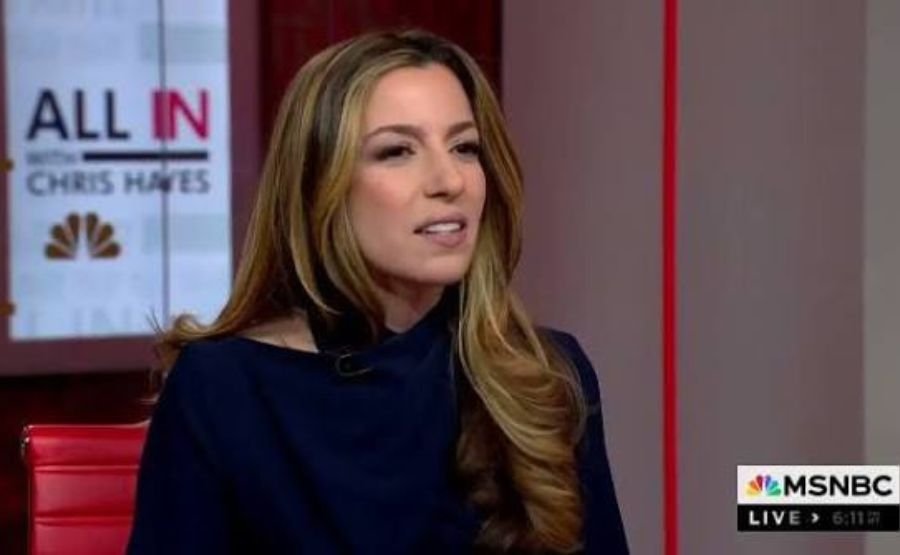
Kristy Greenberg Age: The Prosecutor Who Took Down Fraudsters — and Then Went on TV to Explain How It All Works
Quick Bio
| Detail | Info |
| Full Name | Kristy Jean Greenberg |
| Born | Approximately 1979, New York City |
| Nationality | American |
| What She Does | Attorney, former federal prosecutor, MSNBC legal analyst, Hogan Lovells partner |
| Biggest Accomplishments | Spent over a decade as a federal prosecutor at the SDNY; rose to Deputy Chief of the Criminal Division; prosecuted Billy McFarland of Fyre Festival infamy; received the Top Prosecutor Award from Women in Federal Law Enforcement in 2018; joined Hogan Lovells as partner in 2022 |
| Other Key Facts | Graduated summa cum laude and Phi Beta Kappa from Yale; earned her J.D. cum laude from Harvard Law School; keeps her personal life intensely private despite a very public professional presence |
Why People Are Suddenly Googling Her Name
Here’s the thing about Kristy Greenberg. She spent over a decade doing some of the most consequential legal work in the country — putting fraudsters behind bars, dismantling cybercrime networks, untangling massive healthcare schemes — and almost nobody outside the legal world knew her name.Then she started appearing on MSNBC.And suddenly everyone wanted to know who she was.
That’s the particular kind of fame that comes to former federal prosecutors when they step in front of a camera and start breaking down complicated legal situations in plain language. The audience watching high-profile trials and political scandals unfold in real time needs someone who can explain what a motion in limine actually does, why a certain piece of evidence got excluded, what the prosecution’s strategy probably looks like from the inside. Kristy Greenberg can do all of that with the kind of fluency that only comes from having actually done the job at the highest level for a very long time.
She is not a television personality who studied law. She is a lawyer who happens to be very good on television. That distinction matters, and the audience can feel it.
See also “Milburn Stone: The Doctor Who Stayed in Dodge City for Twenty Years“
Growing Up and the World That Shaped Her Thinking
Kristy Greenberg was born around 1979 in New York City, which means she grew up in the particular version of New York that existed through the eighties and into the nineties — a city that was gradually pulling itself out of a rough era, becoming something different, carrying the weight of its recent history while simultaneously reinventing itself.
Details about her family background are not publicly available in any verified form, and she has never spoken extensively about her childhood in interviews. What we do know is that at least one account suggests her parents had some connection to the legal profession, which may have planted the earliest seeds of where she’d eventually land. But that detail is unconfirmed enough that it shouldn’t be leaned on too hard.
What we can say is that whoever shaped her early years did something right. The person who showed up at Yale University was intellectually serious, historically curious, and disciplined in a way that doesn’t appear out of nowhere. Those qualities were cultivated somewhere, by someone, before she ever set foot on a college campus.

Yale, Harvard, and the Academic Record That Still Turns Heads
Kristy enrolled at Yale University in the late 1990s, and she didn’t just attend — she excelled in a way that put her at the very top of her class. She graduated summa cum laude, which means among the highest academic honors the university awards. She was also inducted into Phi Beta Kappa, the oldest and most prestigious academic honor society in the United States. Getting both of those simultaneously at Yale tells you something very specific about the kind of student she was.
She majored in history, which turns out to be a fascinating choice for someone who’d go on to prosecute complex financial crimes.History teaches you how to piece together events from insufficient data, comprehend how individuals make decisions under duress, and recognize the bigger picture that underlies individual acts. Those are exactly the skills a prosecutor needs when building a case from scattered documents, conflicting accounts, and financial records that someone was hoping you’d never find.
She was also involved in the Yale Political Union and the Yale Daily News during her time there, which suggests someone who was always interested in argument, persuasion, and public discourse — not just academic achievement for its own sake.
From Yale she went directly to Harvard Law School, where she again distinguished herself: graduating cum laude and serving on the Harvard Journal on Legislation as a Symposium Chair. That last role is worth noting because it’s not a passive honor — it means she was organizing and running academic events, pulling people together around complex legal questions, and producing something tangible. Leadership in academic settings doesn’t always translate to leadership in practice. In her case, it clearly did.
The Career Begins — Cravath and the Slow Build Toward Government Work
After Harvard Law, Kristy began her legal career the way many elite law school graduates do: she joined one of the most prestigious private law firms in the country. She went to Cravath, Swaine and Moore, a firm so selective and so demanding that it functions almost as a post-graduate crucible for young lawyers. She worked there as a litigation associate from 2004 to around 2010, spending six years learning how major cases get built, argued, and resolved at the highest levels of the private legal market.
But somewhere in those years, she made a decision that many people in her position don’t make: she chose to leave private practice for the government. Specifically, she joined the United States Attorney’s Office for the Southern District of New York — the SDNY — as an Assistant U.S. Attorney.
This is a trade-off that deserves a moment of honest explanation. Partners at firms like Cravath earn genuinely extraordinary sums. Assistant U.S. Attorneys earn a government salary. There is a significant difference between those two figures. People who make the switch do it because they want something the private sector can’t offer — the ability to bring cases, to make charging decisions, to stand in a federal courtroom and represent the United States of America in the pursuit of people who have done real harm.
Kristy Greenberg made that choice. And she stayed at the SDNY for over twelve years.
The Cases That Made Her Reputation
The cases Kristy handled at the SDNY weren’t the kind of thing that gets quietly resolved in settlement negotiations. They were big, complicated, and in at least one instance, globally notorious.
The Fyre Festival case is probably the one most people will recognize. Billy McFarland was the young entrepreneur who sold thousands of people on the idea of a luxury music festival in the Bahamas — private jets, gourmet food, supermodel hosts, an experience that would be, in his own marketing language, the cultural event of a generation. What attendees actually found when they arrived was an empty field, FEMA tents, soggy sandwiches, and no musical acts. The infrastructure had never existed. The money had been spent on McFarland’s lifestyle, not the event.
Kristy was the lead prosecutor on the case. She built the wire fraud case against McFarland, managed the plea negotiations that eventually led to his guilty plea, and argued for the sentence he deserved. When McFarland tried to pull additional fraud schemes even while awaiting sentencing — selling fake tickets to events that didn’t exist — Kristy successfully argued for his detention, telling the court he’d told associates he planned to flee if sentenced to more than three years. The judge agreed. McFarland ultimately received a six-year prison sentence, and Kristy’s argument in court was direct and precise: the motivation was greed and a desire for a flashy lifestyle, full stop. Not a misguided young visionary. A fraudster.
Beyond Fyre, she led prosecutions involving the cyber hacking of hundreds of celebrities — cases that required deep technical fluency in addition to legal skill. She oversaw major healthcare fraud prosecutions, including one involving two dozen former professional athletes and the healthcare professionals who helped them file fraudulent claims. She served as the SDNY’s Healthcare Fraud Coordinator, managing the entire portfolio of that work across the district.
By 2020 she had risen to become the Deputy Chief of the Criminal Division at the SDNY — a position of genuine organizational authority, overseeing the work of the entire division including the Securities and Commodities Fraud Task Force, the Complex Frauds and Cybercrime Unit, and the Money Laundering and Transnational Criminal Enterprises Unit. That’s not one area of expertise. That’s the whole landscape of complex federal criminality, managed from the top.
In 2018, the Women in Federal Law Enforcement Foundation recognized her with their Top Prosecutor Award. It is not the kind of award that gets handed out to people who are good at their jobs in a general way. It goes to people who are exceptional in specific and demonstrable ways.
The Private Life She Keeps Firmly Private
Ask most people who follow Kristy Greenberg’s MSNBC appearances what they know about her personal life and you’ll get a pause followed by not much.
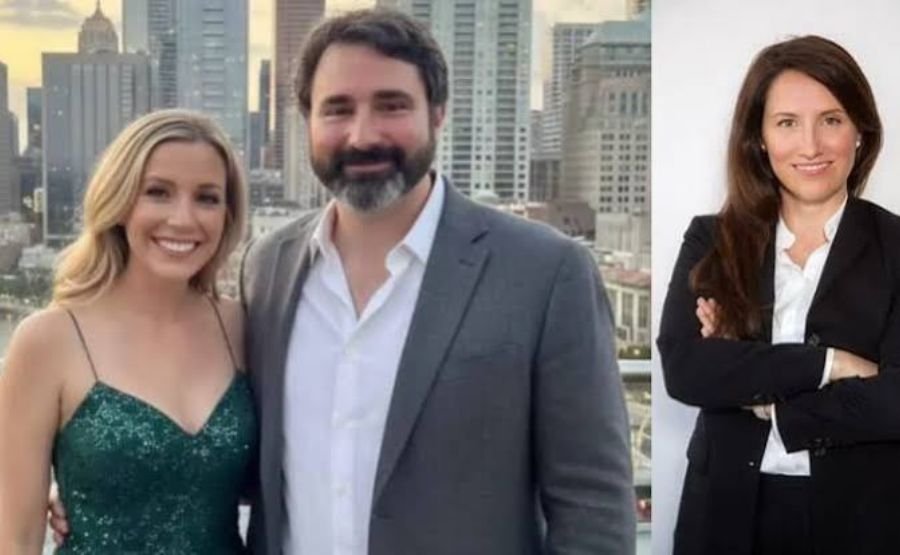
She keeps that separation complete and deliberate. There is no confirmed public information about her marital status, her romantic relationships, or whether she has children. Some sources have connected her name to a person named Michael Sheehan as a possible husband, but this has not been verified through any reliable journalistic source and should be treated with appropriate skepticism.
What is clear is that she lives in New York, she works in New York, and she has built a career in that city across three distinct institutional phases — Cravath, the SDNY, and now Hogan Lovells — without ever appearing to be defined by anything other than the quality of her legal work.
That level of privacy, maintained consistently across a career that has become increasingly public-facing, is itself a choice that tells you something about her. She will explain the law on national television. She will talk about cases, strategies, constitutional questions, the inside workings of federal prosecution. She will not be giving you her personal life in exchange for your attention.
Challenges, Transitions, and the Choice to Leave the SDNY
Leaving the SDNY after more than twelve years at the institution is not a simple thing. The SDNY has a culture and an identity that is hard to overstate — it is arguably the most prestigious U.S. Attorney’s office in the country, and people who spend over a decade there, rising through its ranks to positions of genuine leadership, have built something that doesn’t just get folded up and carried somewhere else.
But in September 2022, Kristy made exactly that transition. She joined Hogan Lovells — a major international law firm — as a partner in their litigation and investigations practice in New York.
There is a certain logic to the move. After twelve-plus years on the government side of federal criminal practice, she understood better than almost anyone what large institutions do wrong when they’re under investigation, what prosecutors look for, how internal compliance programs succeed or fail, and how to structure a defense when the government comes knocking. That knowledge has enormous value to the kinds of corporate clients who hire Hogan Lovells. She’s not just a smart lawyer. She’s someone who spent over a decade as one of the people those clients were most afraid of.
The learning curve exists on both sides of that equation. Shifting from bringing cases to defending against them — or helping clients avoid them entirely — requires a real psychological and professional reorientation. There’s no indication she’s found it anything other than a natural evolution.
What She’s Actually Worth
Kristy Greenberg’s net worth is not a publicly disclosed figure, and any specific number circulating online should be understood as an educated estimate rather than a verified fact.
That said, the component parts are knowable. Her years at Cravath would have built a foundation. Her SDNY years — while government-compensated rather than privately compensated — didn’t cost her financially in any permanent sense. And partnership at Hogan Lovells, one of the world’s leading international law firms, puts her in an income bracket that is genuinely significant. Law firm partners at that level, in major markets, with her specialization and profile, typically earn well into seven figures annually.
Add MSNBC analyst compensation on top of that, and the picture comes into clearer focus. Various estimates have landed around $3 million in total net worth, which seems plausible but should be held lightly. She’s not a publicly traded company. No one actually knows.
What is certain is that she has spent her career making choices that prioritized professional excellence and mission over maximum financial return — and that in doing so she has arrived at a position where the financial return is excellent anyway.
Where Things Stand Right Now
As of 2026, Kristy Greenberg is a partner at Hogan Lovells, a recognized national legal analyst on MSNBC and NBC News, and one of the clearer, more credible voices available when the public needs someone to explain what is actually happening in a major federal case.
She is the person television producers call when something genuinely complex is happening in the legal world and they need someone who has done the work, not just studied it. That combination — courtroom experience at the highest level, communication ability, and the specific credibility that comes from having prosecuted cases that people actually know about — is not common. Most people who have done the work can’t explain it simply. Most people who can explain it simply haven’t really done the work.
She sits at that unusual intersection, and she shows every sign of staying there.
A Reflection on What Her Career Actually Represents
Kristy Greenberg’s path is a quiet argument against a certain kind of ambition. She didn’t go to Yale and Harvard to become famous. She didn’t leave a lucrative firm to take a government salary because she was chasing visibility. She built things carefully, one step at a time, in institutions that valued excellence over attention.
The television presence came later, almost as a byproduct of the depth she’d developed doing the actual work. People trust her on screen because they can sense that she’s not performing expertise — she’s reporting it back from somewhere real.
What makes her different from most legal commentators is precisely that she is a legal commentator who used to make the decisions that commentators now analyze. She doesn’t speculate about what a prosecutor might be thinking. She knows what a prosecutor is thinking, because she was one, for a very long time, in the office where some of the most significant federal cases in the country are built.
That’s not a credential you can borrow or acquire quickly. She earned it across more than a decade of disciplined, consequential work. And she’s using it now in two directions at once — in private practice helping clients navigate the legal landscape she knows from the inside, and in public helping audiences understand the legal world their democracy depends on.
FAQs
1. How old is Kristy Greenberg?
She was born around 1979, which puts her in her mid-forties as of 2026. Her exact birth date is not confirmed by official sources — May 8, 1979 is the most commonly cited date but should be treated as approximate.
2. Where did Kristy Greenberg go to school?
Yale University for her undergraduate degree — graduating summa cum laude and Phi Beta Kappa — and Harvard Law School for her J.D., which she earned cum laude.
3. What did Kristy Greenberg do at the SDNY?
She served as an Assistant U.S. Attorney for over twelve years, prosecuting major white-collar, cybercrime, and healthcare fraud cases. She eventually rose to Deputy Chief of the Criminal Division, overseeing several major units including the Securities Fraud Task Force and the Cybercrime Unit.
4. Did Kristy Greenberg prosecute the Fyre Festival case?
Yes. She was the lead prosecutor on the case against Billy McFarland, who pled guilty to wire fraud charges connected to the disastrous 2017 festival. McFarland received a six-year prison sentence.
5. Where does Kristy Greenberg work now?
She joined Hogan Lovells as a litigation and investigations partner in September 2022. She also continues to appear as a legal analyst on MSNBC and NBC News.
6. Is Kristy Greenberg married?
No confirmed public information exists about her marital status. She keeps her personal life private and has not publicly discussed relationships, a spouse, or children.
7. What is Kristy Greenberg’s net worth?
Not publicly disclosed. Estimates suggest somewhere around $3 million, based on career trajectory, government service, and private law firm partnership, but these are rough estimates, not verified figures.
8. What award did Kristy Greenberg win in 2018?
The Top Prosecutor Award from the Women in Federal Law Enforcement Foundation, recognizing her exceptional work as a federal prosecutor at the SDNY.
9. What kinds of cases did Kristy Greenberg handle?
White-collar crime, investor fraud, cybercrime, healthcare fraud, money laundering, and transnational criminal enterprises — essentially the full breadth of complex federal criminality.
10. Why did she leave the SDNY?
She hasn’t provided a thorough public explanation.The transition to Hogan Lovells in 2022 followed more than twelve years of government service — a natural career arc for someone of her level moving into private practice.
11. Does Kristy Greenberg have a podcast?
Some sources have mentioned a podcast called “Courtside with Kristy Greenberg,” but this hasn’t been confirmed across reliable mainstream sources and should be verified independently before citing.
12. What makes her different from other TV legal analysts?
Most legal analysts either comment from academic experience or private practice. Kristy spent over a decade as a senior federal prosecutor at the SDNY — one of the most demanding prosecutorial offices in the country. She has actually made the decisions she now analyzes, which gives her commentary a grounding that most legal TV commentary lacks.
Read. Explore. Discover more with Dicovered Magazine.





One Comment