
Dick Van Dyke: The Man Who Never Stopped Moving
Quick Bio
| Detail | Information |
| Full Name | Richard Wayne Van Dyke |
| Born | December 13, 1925, West Plains, Missouri |
| Nationality | American |
| What He Does | Actor, comedian, singer, dancer, and entertainer — across television, film, stage, and radio across nearly eight decades |
| Biggest Accomplishments | Five Emmy Awards for The Dick Van Dyke Show (1961–1966); Tony Award for Best Featured Actor for Bye Bye Birdie on Broadway (1960); iconic film role as Bert the chimney sweep in Mary Poppins (1964); SAG Lifetime Achievement Award (2013); Kennedy Center Honoree (2021) |
| Other Key Facts | He was 86 years old when he married his current wife Arlene Silver in 2012 — she is 46 years his junior; his net worth is estimated at approximately $50 million; as of December 2024, he is 99 years old and still making public appearances |
Why People Keep Coming Back to His Story
Here’s the thing about Dick Van Dyke. He’s been famous for so long that most people have stopped thinking of him as a specific person with a specific story and started thinking of him as a fixture — something that has simply always been there, like a favourite lamp in the corner of a room you’ve known your whole life.
And that’s a shame, because the actual story is extraordinary. Not just the career, though that alone would be remarkable. But the full shape of it — the West Plains, Missouri kid who couldn’t get himself into World War II because of flat feet and colour blindness, who ended up lip-syncing to records in a mime act on the West Coast nightclub circuit, who was fifty-seven before he got sober, who married a woman forty-six years younger than him at eighty-six, and who is still showing up in public at ninety-nine years old with what looks like genuine joy on his face.
That’s a life. Let’s actually look at it.
See also “Sharon Tate: A Life That Deserved More Time — and a Story That Was Always Bigger Than Its Ending“
A Small Town with a Big Family Tree
West Plains, Missouri, is where Richard Wayne Van Dyke arrived on December 13, 1925. His father Loren — everyone called him Cookie — was a salesman who had previously been a minor league baseball player. His mother Hazel Victoria McCord was a stenographer, and by Dick’s own account, the more grounding force in the household. Cookie was charming, athletic, the life of every party he walked into. Hazel apparently kept him anchored.
The family moved to Danville, Illinois, when Dick was still young, and that’s the town that really shaped him. Population thirty thousand, and Dick wrote in his autobiography that it felt like most of them were relatives. The family had Dutch, English, Irish, and Scottish threads running through it. They traced one line all the way back to John Alden, the Mayflower passenger. And on his mother’s side, someone had done the genealogy and found a connection to Captain John Smith, the man who established the first English settlement at Jamestown in 1607. Dick’s brother Jerry grew up in the same house and eventually became a recognisable television actor in his own right — he later appeared as Dick’s brother on The Dick Van Dyke Show, which is either a small casting miracle or the laziest creative decision in TV history, depending on how you look at it.
Another fact worth mentioning is that a young guy by the name of Gene Hackman was raised in Danville during this period.Hackman will later take home two Oscars. Dick Van Dyke would become one of the most beloved entertainers in American history. Danville, Illinois, apparently had something in the water.
High School, the Stage, and the War That Wouldn’t Take Him
Dick discovered his folks in the theater and drama club at Danville High School. The performance instinct was already there — the physical comedy, the desire to make people laugh, the timing that would eventually make him one of the best physical comedians of his era. High school gave him a stage. He used it.
Then World War II came. He tried to enlist three times.Since the military denied him three times, it is clear that his colorblindness and flat feet precluded him from serving on the front lines. He eventually got himself in as a flight instructor trainer, which meant he spent the war years teaching pilots rather than flying in combat. He never saw overseas action.
That gap — the years his generation spent at war while he was stateside — seems to have been something he carried with a certain quiet humility. He didn’t incorporate it into his public image. He stepped out and started working.
Mime Acts, Radio Microphones, and the Long Climb Up
Here’s the part of Dick Van Dyke’s biography that genuinely surprises people when they hear it. His first real professional breakthrough wasn’t a television show or a Broadway stage. It was a mime act.
In 1947, a pantomime performer named Phil Erickson convinced Dick to form a comedy duo. They called themselves “Eric and Van — the Merry Mutes.” The act was built around lip-syncing to records — 78 rpm discs, the kind that played for two and a half minutes before you had to flip them. They performed on the West Coast nightclub circuit, two young men in physical comedy doing something deliberately wordless.
The discipline of that is actually remarkable. To hold an audience without speaking, to build a joke through movement and timing alone, is harder than it looks. Dick took those skills and carried them through his entire career. The physical comedy in The Dick Van Dyke Show — the falls over that ottoman, the facial expressions, the way his whole body could be the punchline — all of that has roots in a mime act in California nightclubs in the late 1940s.
Simultaneously, he was working as a radio DJ on WDAN in Danville. He found his voice on air — learned how to fill time, how to be warm and present without a script, how to make strangers feel like they were in the room with someone they liked. Both skills — the physical wordless performance and the warm verbal one — would eventually converge in a television studio in 1961.
But there was a long way to get there. He worked local television in the Midwest. He did game shows. He was a host on CBS daytime programming when hosting daytime television wasn’t a stepping stone to anything obvious. He spent the 1950s doing work that paid and sometimes showed, without finding the thing that would make him famous.
Broadway, Birdie, and the Moment It All Clicked
In 1960, Dick Van Dyke opened on Broadway in Bye Bye Birdie, playing Albert Peterson — a nervous, earnest, sweet-natured promoter trying to manage a rock star who’s been drafted into the Army. The show was a hit. The physical comedy Dick brought to the role, the warmth, the timing — it all worked together in a way that made audiences and critics notice that something genuinely special was happening on that stage.
The Tony Award for Best Featured Actor followed. And with it, the industry took notice in a different way. He was thirty-four years old. It had taken a long time to get there. But when the door opened, it opened wide.
A year later, The Dick Van Dyke Show premiered on CBS.

Five Emmys and a Fictional Life That Felt Completely Real
Rob Petrie was a comedy writer who worked on a television variety show in New York and came home every night to his wife Laura and son Richie in their suburban New Rochelle home. He was kind, slightly flustered, physically expressive, and genuinely good at his job. He was also, in almost every episode, the straight man standing at the centre of some minor domestic or professional chaos.
Dick Van Dyke played Rob Petrie for five seasons, from 1961 to 1966. He won five Emmy Awards. Mary Tyler Moore played Laura, and what they created together — a marriage that looked like a real marriage, warm and occasionally exasperated and genuinely affectionate — was something that television comedy hadn’t quite managed before.
The show was Carl Reiner’s creation, modelled on his own experiences writing for television. Carl played the show-within-the-show’s demanding producer. The writing was sharp and specific. And Dick, with his physical gifts and his genuine warmth, made Rob Petrie one of the most enduring characters in American sitcom history.
During those years, he also made Mary Poppins for Disney — playing Bert the chimney sweep opposite Julie Andrews, dancing with animated penguins, doing a British accent that the British have been gently mocking ever since. The film was a massive success. When Dick first heard the Sherman Brothers’ songs for it, he described the music as the most beautiful thing he’d ever heard and reportedly cried. The sincerity of that response is very Dick Van Dyke.
Marriages, Children, and the Late Romance Everyone Talks About
He married Margie Willett in 1948, the same year he and Phil Erickson were starting their mime act. Together they had four children: Christian, Barry, Stacy, and Carrie Rae. Barry became an actor and starred alongside his father in Diagnosis: Murder, the crime procedural that ran from 1993 to 2001. Barry’s sons Shane and Carey Van Dyke also became actors. The Van Dykes are comprehensively a performing family.
Dick and Margie divorced in 1984 after thirty-six years. He was with Michelle Triola Marvin for the years that followed — she was a singer and actress who had her own complicated history with Hollywood, including a landmark legal case against Lee Marvin — until her death in 2009.
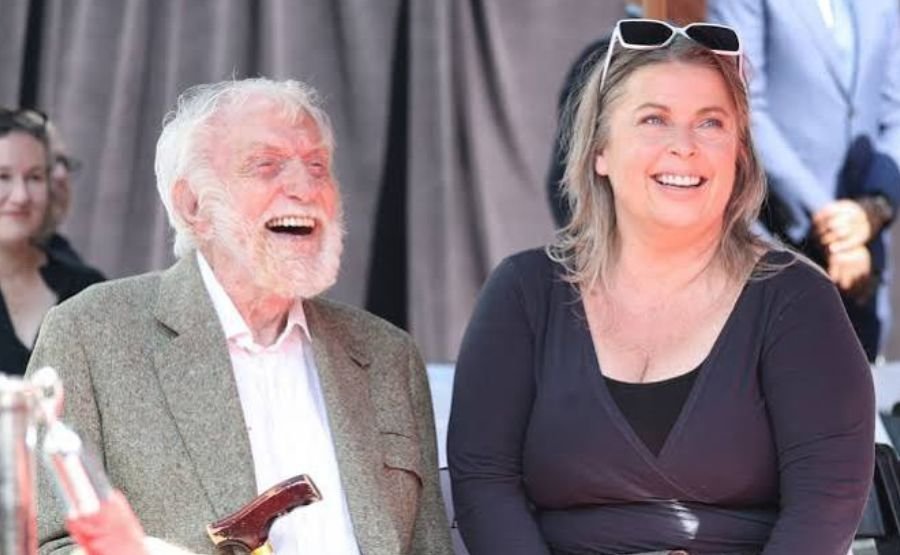
And then, in 2012, at age eighty-six, he married Arlene Silver. She was a makeup artist forty-six years younger than him. They had met at the SAG Awards. The marriage attracted enormous public commentary — some of it warm, some of it predictably sceptical about the age gap. Dick and Arlene have both spoken about it with genuine ease. By the time he received his SAG Lifetime Achievement Award in January 2013, he was a newlywed in his late eighties. Arlene was beside him at the 2024 Daytime Emmy Awards, and they looked, by all available evidence, like two people who are genuinely happy.
The Alcoholism, the Honesty, and Getting Through It
In 1977, Dick Van Dyke acknowledged publicly that he had been battling alcoholism. He got sober. He talked about it openly rather than hiding it, which in that era required a specific kind of courage.
He has also spoken about other health challenges across his ninety-nine years — including a 2012 incident in which he fell asleep at the wheel of his car on the freeway and was pulled out of the burning vehicle by several bystanders, one of whom he only managed to find and thank years later through a social media search. He’s spoken about a neurological condition causing tremors that he eventually had successfully treated. He has talked about the strange experience of being very old in a world that keeps wanting you to simply be charming and iconic without actually being a specific human being with specific problems.
He has, consistently, been a specific human being with specific problems, and been fairly open about it. That’s part of why people keep liking him.
Ninety-Nine and Still in the Room
Dick Van Dyke’s net worth is estimated at approximately $50 million — accumulated across nearly eight decades of work in television, film, stage, radio, and recording. The Dick Van Dyke Show reruns have never really stopped airing. Mary Poppins enters new generations of children every few years. Diagnosis: Murder has its own sustained audience. Chitty Chitty Bang Bang plays at Christmas. He keeps showing up in the culture.
He is, as of December 2024, ninety-nine years old. He attended award ceremonies in 2024 with Arlene. He has remained publicly visible and apparently physically mobile in a way that genuinely defies expectation. In 2021, he was awarded the Kennedy Center Honors. He keeps being asked to come to things, and he keeps going.
A Reflection on What He Actually Is
Dick Van Dyke is one of those rare entertainers who managed to be beloved across the full sweep of his career rather than just at its peak. He was beloved in the mime clubs of the late 1940s, beloved on Broadway in 1960, beloved in a CBS studio for five years in the 1960s, beloved by every child who ever watched Mary Poppins, and beloved still now at an age when most of his contemporaries are gone.
What makes him different isn’t the talent alone — though the physical gifts are extraordinary and the comedic timing is as good as anyone’s in his generation. It’s the warmth. Rob Petrie was a good man, and the actor playing him was recognisably a good man too. The career didn’t corrode that quality. The fame didn’t curdle it. He came out the other side of ninety-nine years still appearing to genuinely enjoy the company of other people, still apparently delighted by the possibility that something might be funny.
That’s not a small thing to preserve across a century.
FAQs
1. How old is Dick Van Dyke
He was born December 13, 1925, making him 99 years old as of late 2024. If he achieves that milestone, which seems quite likely considering his past performance, he will age 100 in December 2025.
2. Where was Dick Van Dyke born?
He was born in West Plains, Missouri, though he grew up in Danville, Illinois, which is the city he typically identifies as his hometown. His father Loren “Cookie” Van Dyke was a salesman and former minor league baseball player; his mother Hazel Victoria McCord was a stenographer.
3. Is Dick Van Dyke still married?
Yes. He has been married to Arlene Silver since 2012. He was 86 when they married; she was 40. The couple is 46 years apart in age and have been together for over twelve years.
4. What is Dick Van Dyke’s net worth?
His net worth is estimated at approximately $50 million, accumulated across decades of television, film, stage, and other entertainment work.
5. What was Dick Van Dyke’s biggest role?
This depends on who you ask. Professionally, The Dick Van Dyke Show (1961–1966) was the role that made him a television institution and won him five Emmy Awards. Culturally, his role as Bert the chimney sweep in Mary Poppins (1964) is probably the most enduringly beloved performance of his career.
6. Did Dick Van Dyke win an Oscar?
No. He has won five Emmy Awards, a Tony Award, a Grammy Award, and a Screen Actors Guild Lifetime Achievement Award, but he has never won an Oscar. He was not nominated for his work in Mary Poppins, which remains one of the more discussed oversights in Academy Award history.
7. Who are Dick Van Dyke’s children?
He has four children from his first marriage to Margie Willett: Christian, Barry, Stacy, and Carrie Rae. Barry Van Dyke became a television actor and appeared alongside his father in Diagnosis: Murder. Barry’s sons Shane and Carey Van Dyke are also in the entertainment industry.
8. Did Dick Van Dyke have a drinking problem?
Yes. He acknowledged his alcoholism publicly in 1977 and has been open about his recovery in the decades since. He has spoken about the problem with honesty in interviews and in his autobiography.
9. Was Dick Van Dyke in World War II?
He attempted to enlist three times and was rejected twice due to flat feet and colour blindness. He eventually served as a flight instructor trainer stateside and never saw combat.
10. What was Dick Van Dyke’s first big break?
His Broadway role in Bye Bye Birdie in 1960 was the breakthrough that brought him to national attention. He won the Tony Award for Best Featured Actor and parlayed that success into The Dick Van Dyke Show the following year.
11. Is Dick Van Dyke related to Jerry Van Dyke?
Yes. Jerry Van Dyke was Dick’s younger brother. He also became a television actor and appeared as Dick’s brother in several episodes of The Dick Van Dyke Show. Jerry Van Dyke died in January 2018 at the age of 86.
12. What recent projects has Dick Van Dyke been involved in?
In 2021, he was awarded the Kennedy Center Honors. He has made various public appearances and award ceremony appearances with his wife Arlene Silver, including at the 2024 Daytime Emmy Awards. He published a memoir in recent years and has appeared in small television roles and specials as recently as 2023 and 2024.





One Comment