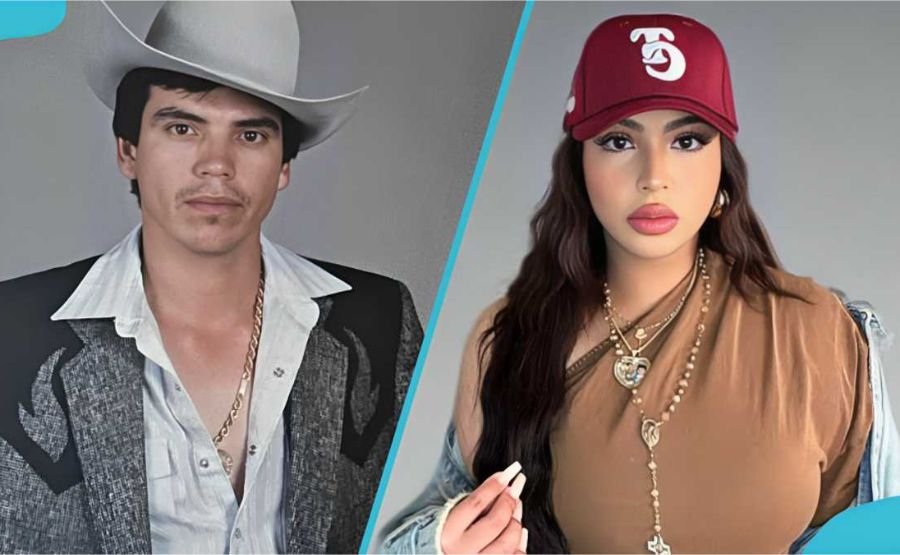
Chalino Sanchez Sister: Her Life, Family Tragedy, and Connection to the Music Legend
Quick Bio
| Detail | Info |
| Full Name | Juana Sánchez |
| Born | Exact date unknown; likely around the late 1950s, Sinaloa, Mexico |
| Nationality | Mexican; later lived in the United States |
| Who She Is | The only sister among Chalino Sánchez’s siblings; the sole female child of Santos Sánchez and Senorina Félix; central figure in the most defining event of Chalino’s early life |
| Biggest Connections to History | Her assault by a local criminal when she was a teenager set in motion the chain of events that forced Chalino to flee Sinaloa and eventually find his way to Los Angeles, where Mexican music history would be made; she later introduced Chalino to the woman who became his wife; she appeared in the 2004 documentary Chalino Sánchez: Una Vida de Peligros |
| Other Key Facts | One of the only surviving family members to speak publicly about Chalino; the only sister in a family of six brothers; her personal life remains almost entirely private to this day |
The Woman at the Center of a Legend
When people talk about Chalino Sánchez — and people still talk about him constantly, more than thirty years after his murder — they tend to focus on his music, his voice, his swagger, the way he performed with a pistol tucked into his waistband and somehow made it look poetic. What they talk about less, but what matters enormously, is the chain of events that made him who he was.
And right at the start of that chain is his sister Juana.
Her story isn’t comfortable to tell. It involves violence done to her, revenge taken on her behalf, exile, reinvention, and the particular loneliness of being the person whose suffering set a legend in motion. Juana didn’t choose any of that. She was a young woman in rural Sinaloa when something terrible happened to her, and the ripple effects reshaped not just her brother’s life but the entire trajectory of regional Mexican music in ways nobody could have predicted. Her name deserves to be said clearly and her story deserves to be told with the care it hasn’t always received.
See also “How Old Is Becky Lynch’s Daughter? Meet Roux and the Story Behind Her Young Family Life“
Growing Up Where the Roads Ran Out
The Sánchez family lived on a small ranch called Las Flechas — which translates simply as “The Arrows” — in the municipality of Badiraguato in Sinaloa, Mexico. If you know anything about that region, you know that Badiraguato is one of the more isolated and rugged parts of an already rugged state. The Sierra Madre descends into river valleys there, and life in those communities in the mid-twentieth century was genuinely hard. Poor soil, limited schooling, scarce work, and a social order enforced more by local strongmen than by any formal legal system.
Santos Sánchez, the father of the family, worked the land and kept his large household together by the usual combination of will and necessity. He and his wife Senorina Félix had eight children in total — six sons and one daughter. That daughter was Juana. Chalino, whose full birth name was Rosalino, was the youngest of the eight.
Santos died when Chalino was six years old, leaving Senorina with a full house and no income except what she and her older children could scratch together. Juana, as the only girl in this arrangement, would have carried a particular kind of domestic weight. In households like theirs, in that era and region, daughters were expected to keep things running — cooking, cleaning, managing younger siblings, holding the emotional center of a grieving and financially strapped home. There’s no reason to think Juana’s experience was any different.
What she got in return for that labor was a tight bond with her family, and in particular with her youngest brother Chalino, who by multiple accounts adored her. He was the kid of the family, she was the only girl — they found in each other a specific kind of alliance that siblings in large families sometimes do.
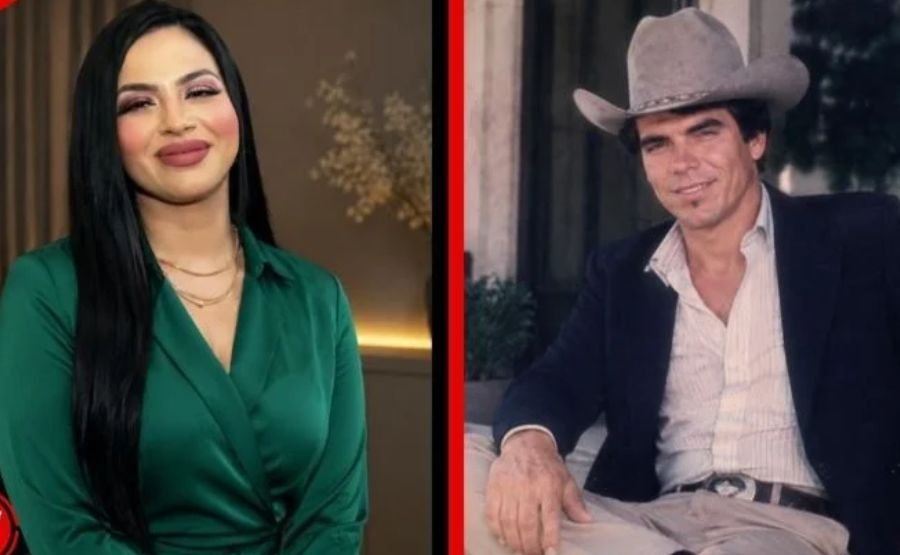
The Event That Changed Everything
Accounts differ slightly on Juana’s exact age when she was assaulted, and they differ on certain details of the assault itself — some sources say she was around thirteen, others suggest younger, and the identity of the man responsible is recorded in some accounts as a local mafioso nicknamed “El Chapo” Pérez (emphatically not the infamous cartel boss who came later — this was a local bully and criminal of the same nickname in their small community).
What every credible account agrees on is this: a man with local power and a reputation for violence raped Juana. He got away with it. Nobody in Las Flechas was in a position to bring a formal complaint against someone like that, and the idea of justice through official channels in that time and place was a fantasy. Juana’s family absorbed the harm and stayed silent, because silence was all they had.
Except Chalino wasn’t prepared to stay silent forever. He was around thirteen or so when it happened, young enough that he couldn’t act immediately, old enough to feel the full weight of what had been done to his family. He made a decision — or perhaps it wasn’t even a decision, more like a certainty forming — that this would not simply pass.
Two years later, at a party celebrating Mexican independence, Chalino encountered El Chapo Pérez. He walked up to him quietly and shot him dead. There are different versions of what happened next — some say Pérez’s brothers returned fire and Chalino narrowly survived, others are less dramatic — but the outcome was the same either way. A man was dead, Chalino was responsible, and he had to run.
He was approximately fifteen years old.
What Her Story Did to His Trajectory
Juana’s assault, and Chalino’s act of revenge, set in motion the entire geography of his life. Without them, there’s no flight to Tijuana. Without Tijuana, there’s no eventual crossing into the United States. Without arriving broke and undocumented in California, there’s no period of working in the fields and garment districts and doing whatever it took to survive. And without those years of rough living, there’s no authentic raw material for the songs that would eventually make Chalino the voice of a generation of working-class Mexican immigrants.
This isn’t to say Juana’s suffering was somehow “worth it” because of what it produced. That framing would be grotesque. What it means is that her experience and Chalino’s reaction to it were the first domino in a sequence that nobody planned and everybody felt.
Chalino made his way to Oregon and then to Los Angeles, living with an aunt in Inglewood and working any job that would have him. He sold buttons at the 1984 Summer Olympics to make ends meet. He got swept up in some low-level criminal activity. He ended up doing a brief stint at La Mesa prison in Tijuana on minor charges — and it was during that time in prison that he first began writing corridos, composing verses for fellow inmates who wanted their stories preserved in song.
She Brought Them Together
Here’s the other major moment where Juana enters the story. When Chalino was establishing himself in Los Angeles — working, starting to perform his songs at quinceañeras and small events in the immigrant community — Juana was also in the area. And at some point, she introduced her brother to a young woman from Mexicali named Marisela Vallejos Félix.
Some sources are precise about this introduction; others attribute it to Juana and a cousin called Rosalba. The particulars vary, but the outcome doesn’t: Chalino and Marisela connected, fell in love, and married in Los Angeles in 1984. Marisela was already expecting their first child, a son who would be named Adán, when they wed.
That marriage was the stable center of Chalino’s adult life. Marisela stayed beside him through the recording sessions and the escalating fame and the increasingly dangerous worlds he moved in. She was the one who raised their children — Adán and later Cynthia — after Chalino was murdered in May 1992 at the age of 31, his body found on a road outside Culiacán, Sinaloa, the morning after a concert.
Juana made that family possible. It’s not a small thing.

Becoming a Voice for His Memory
For most of the years after Chalino’s murder, Juana stayed quiet. She wasn’t giving press interviews. She wasn’t positioning herself as the keeper of his flame in any public or commercial sense. She was a private woman processing an enormous loss, the same as the rest of the family.
But in 2004 — twelve years after Chalino’s death, and the same year his son Adán died in a car accident in Sinaloa at just nineteen years old — a documentary was released that tried to gather the people closest to Chalino and let them tell the story in their own words. Chalino Sánchez: Una Vida de Peligros (A Life of Dangers) was directed by Henry Zakka and runs just over an hour. It features Chalino’s last known interview, alongside conversations with his wife Marisela, his son Adán, and — significantly — his sister Juana.
It’s the most substantial public record we have of Juana’s voice and perspective. She spoke in the documentary about her brother as a child — mischievous, imaginative, full of big dreams about becoming a performer — and about what his loss meant to her and to the family and to the culture that had claimed him. Her testimony in that film is irreplaceable. Without it, entire portions of Chalino’s early life would simply be gaps.
That she chose to participate suggests she felt something needed to be preserved, something only she could give.
Her Own Life, Outside the Story She Didn’t Choose
This is the honest part to say: beyond her role in Chalino’s story, Juana Sánchez’s personal life is almost completely unknown. There are no records of her profession, her marriage or relationship history, whether she had children, or what daily life looks like for her. She appears to have remained in the United States at various points but has never sought public attention.
She doesn’t appear to be using social media.She hasn’t done subsequent interviews as Chalino’s profile has grown and grown — and it has grown enormously, with new generations discovering him through streaming and the broader corrido revival that’s brought artists like Peso Pluma to global audiences while crediting Chalino as a founding figure. Even all that renewed attention hasn’t drawn Juana out.
That’s worth respecting. She didn’t ask to be a historical figure. Something was done to her when she was young, her brother took an action in response that sent him away from home and eventually got him killed, and she’s spent decades living with all of that. If privacy is what she needs, it seems like the least the world can offer her.
The Weight of Being the One Who Remained
Think for a moment about what Juana has carried. A brutal assault in childhood. A brother who fled to avenge her and never fully came home. The gradual rise of that brother to legendary status. His murder. The birth and death of his son — her nephew Adán, who followed his father into music and died at nineteen in a car accident, just twelve years after Chalino. The entire family’s world, scattered across the border and reshaped by violence and grief repeatedly.
Through it all, she’s been a witness. And in 2004, briefly, she agreed to be a voice. That documentary is a gift that people interested in Chalino’s story often don’t fully appreciate — not just for what it reveals about him, but for what it reveals about the family that made him.
Juana described him as someone who always believed, even as a poor child on a struggling ranch, that something big was in him. She remembered his energy, his stubbornness, his loyalty to the people he loved. She remembered a real person, not a myth. That’s exactly what only a sister can give you.
A Note on What We Know and What We Don’t
It’s worth being transparent here. Some researchers, including journalist Sam Quinones who investigated Chalino’s life thoroughly, have noted inconsistencies in parts of the official biography — including some uncertainty about whether “Juana” was a biological sister or a cousin. The documentary lists her as his sister. Most biographical sources treat her as his sister. That is the position taken in this piece, while acknowledging that absolute certainty on this specific point is not possible with available documentation.
What’s not in doubt is that a woman named Juana held a significant place in Chalino’s life and family, that she participated in the 2004 documentary, that she introduced him to his wife, and that the assault she survived as a young woman in Sinaloa was the event that propelled Chalino toward his extraordinary and ultimately tragic life in California.
Final Words
Juana Sánchez’s place in Mexican music history is accidental, earned through suffering she never invited. She is not a musician, not a public figure, not someone who sought recognition. She’s the sister of a legend — and that sister’s existence, and her pain, and her survival of that pain, and her brother’s fierce refusal to let it pass unanswered, is the hidden engine of one of the most extraordinary stories in regional Mexican music.
What makes her different from others in her position — the relatives of famous artists who get named in biographies and then disappear — is that she actually showed up when it mattered. She sat in front of a camera in 2004, in a year when her family had just lost Adán too, and she talked about her brother as a human being with a heart and a childhood and a sense of humor. That took something.
Her silence since then is not absence. It’s the kind of quiet that comes from having already said what needed to be said.
FAQs
1. Who is Juana Sánchez?
She is the only sister among Chalino Sánchez’s siblings, the sole daughter of Santos Sánchez and Senorina Félix. She grew up on a small ranch in Sinaloa, Mexico, in the same impoverished household that produced one of the most influential voices in the history of corrido music.
2. What happened to her that changed Chalino’s life?
When Juana was a teenager, she was raped by a local criminal in their community in Sinaloa — a man known as El Chapo Pérez. Chalino, around two years younger, waited until he was approximately fifteen and then shot and killed Pérez at a party. The killing forced Chalino to flee Mexico, ultimately landing him in California, where he built his career.
3. Did Chalino’s revenge actually help Juana?
That’s a question nobody can truly answer. Chalino’s act removed the man who had harmed her, but it also tore the family apart by sending him into exile. Whether Juana found closure or simply more grief is something only she knows, and she’s never addressed it publicly in depth.
4. Did Juana follow Chalino to the United States?
She appears to have been in California at some point — sources indicate she was living or spending time in Los Angeles when Chalino was establishing himself there — but the full details of her immigration story are not documented.
5. What was Juana’s role in Chalino’s music career?
While she didn’t manage him or appear in his music, Juana played a crucial indirect role by introducing Chalino to Marisela Vallejos Félix, who became his wife. Marisela was the steady presence behind him throughout his career and raised their children after his death.
6. Did Juana ever speak publicly about her brother?
Yes. She appeared in the 2004 documentary Chalino Sánchez: Una Vida de Peligros, directed by Henry Zakka, in which she shared memories of Chalino as a child and spoke about his character and their relationship. That documentary is the most significant on-record statement she has made about her brother.
7. What was Chalino like as a child, according to Juana?
In the documentary, she described him as a lively, curious, and somewhat mischievous younger sibling who had always dreamed of being an entertainer — a big personality even in a small ranch community with very limited resources.
8. How many siblings did Chalino have in total?
He had seven siblings, making him the youngest of eight children. The brothers were Armando, Lázaro, Régulo, Lucas, Espiridión (also known as El Indio), and Francisco. Juana was the only girl.
9. Is Juana still alive?
There is no public record of her death, and she is presumed to be alive. Given that Chalino was born in 1960 and she appears to be older than him, she would be in her late sixties or older today. She maintains a private life and has not appeared in media in recent years.
10. Was there any confusion about whether Juana was actually Chalino’s biological sister?
Yes. Investigative journalist Sam Quinones, who researched Chalino’s life extensively for a book about corridos, noted some inconsistency in accounts — some suggesting the woman called “Juana” may have been a cousin rather than a sister. Most published biographies treat her as a sister, and she is listed as such in the 2004 documentary. The ambiguity exists and is worth acknowledging honestly.
11. Does Juana have children or a family of her own?
This is not publicly documented. Nothing is known about her personal relationships, whether she married, or whether she has children. She has maintained an extremely private personal life.
12. Why does Juana matter to Chalino’s story?
Because without what happened to her, and without Chalino’s response to it, there is no exile, no journey north, no life in California, no corridos written in prison, no career built at quinceañeras in East LA, no legend. The assault she survived, and her youngest brother’s refusal to accept it, set the entire story in motion. She is not a footnote. She is the beginning.
Read. Explore. Discover more with Dicovered Magazine.


One Comment