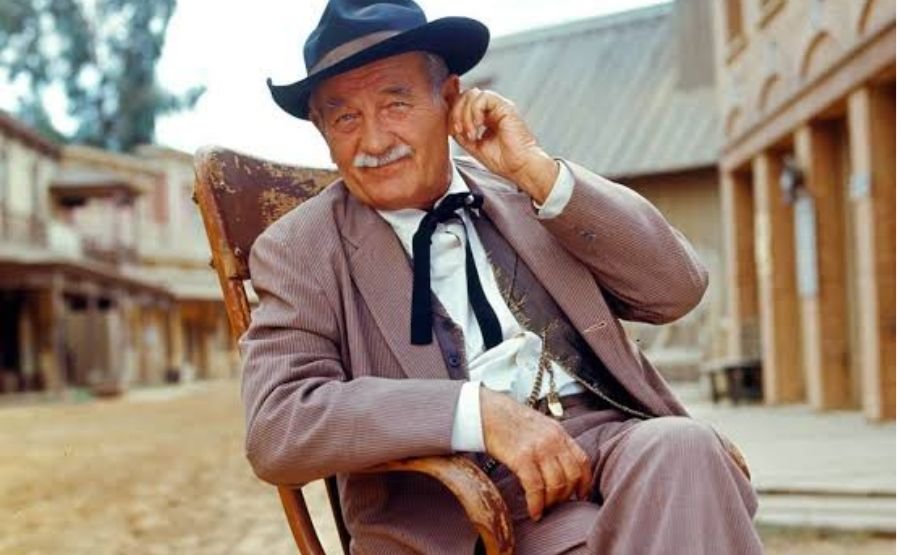
Milburn Stone: The Doctor Who Stayed in Dodge City for Twenty Years
Quick Bio
| Detail | Info |
| Full Name | Hugh Milburn Stone |
| Born | July 5, 1904, in Burrton, Kansas |
| Nationality | American |
| What He Did | Actor — stage, film, and television; best remembered as Dr. Galen “Doc” Adams on Gunsmoke |
| Biggest Accomplishments | Appeared in all but seven episodes of Gunsmoke across its entire 20-year television run (1955–1975); won the Emmy Award for Outstanding Supporting Actor in a Drama in 1968; received a star on the Hollywood Walk of Fame in 1960; inducted posthumously into the National Cowboy and Western Heritage Museum’s Western Performers Hall of Fame |
| Other Key Facts | He turned down a congressional appointment to the United States Naval Academy to pursue acting; in 1961 he sold his residual rights to Gunsmoke back to CBS for $100,000; a theatre at Cecil College in North East, Maryland bears his name to this day\ |
Why People Still Remember Him
Ask anyone who grew up watching Saturday evening television in the 1960s or early 1970s about Doc Adams and their face usually does something warm and immediate. Not the excited recognition of a celebrity sighting — more like bumping into an old family friend. That’s the particular magic Milburn Stone pulled off for two decades. He played a doctor in a dusty fictional Kansas town, and somehow made it feel like you personally knew the man.
That kind of deep, durable connection between an actor and an audience is rarer than people think. Plenty of television performers come and go. Stone didn’t go. He stayed put in Dodge City for twenty full years, showed up in nearly every single episode, and built one of the most consistently beloved supporting characters in the history of American television. All while working a role that, on paper, wasn’t even the lead. That gap between where he was positioned in the credits and how deeply audiences cared about him is probably the most interesting thing about his whole story.
A Flat Kansas Landscape and the Boy Who Didn’t Want to Stay
Burrton, Kansas, in 1904 was the kind of place where people knew each other’s parents, went to the same church, and largely expected to stay. It was a small farming community in Harvey County, nestled in the big flat middle of the state. Milburn Stone was born there on a July afternoon to Herbert and Laura Stone. His father worked as a shopkeeper.
The family had some theatrical blood running through it — his uncle Fred Stone was a well-known Broadway performer who had made quite a name for himself in variety and stage comedy, including productions that overlapped with the old circus world. When you’re a kid in a small town and you have an uncle like that, it plants something. It gives you permission to imagine that life might go sideways from the expected track in an interesting direction.
Milburn did his time in Burrton, graduated from the local high school where he sang in a barbershop quartet, played basketball, and threw himself into the drama club. He wasn’t just passing time in those clubs — he was practicing something. Genuinely rehearsing for what came next.

The Choice That Said Everything
Here’s the moment that tells you who Milburn Stone was going to be before he became anyone famous. After high school, he received a congressional appointment to the United States Naval Academy. That’s not a small thing. It’s a serious, career-shaping opportunity handed to relatively few young men. It meant stability, prestige, a clear and respectable path forward.
He turned it down. He wanted to act.
To walk away from something like that at that age, in that era, for the sake of a theatrical career that offered no guarantees whatsoever — that decision reflects a kind of stubborn, clear-eyed commitment that characterised the rest of his professional life. He wasn’t reckless. He just knew what he wanted, and he was willing to work for it regardless of whether or how long it took.
So instead of Annapolis, he joined a travelling stock company run by Helen Ross and hit the road. Tent shows, touring repertory troupes, small stages in small towns — the old American theatrical circuit that most people today have largely forgotten about. This was the training ground for serious actors before drama schools became the dominant path.
Decades of Grinding and Getting Nowhere Famous
The years between Milburn’s decision to leave Kansas and his eventual breakthrough are the kind of stretch that defeats most people who attempt it. He spent much of the 1920s working the circuit, then slid into vaudeville by the late part of the decade, forming a song-and-dance act called Stone and Strain around 1930. He made a brief stop on Broadway. Nothing launched.
By the mid-1930s he had made his way to Los Angeles to try his hand in movies. This was the era of the “B picture” — low-budget, fast-shooting, quickly forgotten films cranked out by smaller studios like Monogram and Mascot to fill out double bills. Milburn worked steadily in them. He played reporters, soldiers, bit characters. He did an adventure serial called Tailspin Tommy. He was a face you might vaguely recognise without being able to place.
In 1943, Universal Pictures signed him to a contract, which was a step up in respectability. He appeared in features like Captive Wild Woman, Jungle Woman, and the Sherlock Holmes picture Sherlock Holmes Faces Death, playing a supporting character called Captain Vickery. He had a starring turn in The Master Key in 1945. These were real studio films, and he acquitted himself well. But “well” wasn’t the same as “noticed.”
By the early 1950s, after more than three decades of professional work in theatre, vaudeville, Broadway, radio, and over 150 films, Milburn Stone was still not a household name. He was respected within the industry, a reliable and versatile character actor who could fill any role handed to him, but he hadn’t found the thing that would make audiences remember him specifically. He was fifty years old. Most people would have quietly adjusted their ambitions downward.
Doc Adams and the Role That Remade Everything
In 1952, CBS launched Gunsmoke as a radio western — a more serious, adult-oriented take on the frontier genre that distinguished itself from the cartoonish cowboy serials of the era. It was a hit. When the network decided to bring it to television in 1955, they needed to cast an ensemble. The lead, Marshal Matt Dillon, went to the towering James Arness. For the role of Doc Adams, the town physician — gruff, a little weathered, fundamentally compassionate — they landed on Milburn Stone.
The character was based loosely on a real historical figure, Samuel Crumbine, an early doctor who had worked out of Dodge City in the frontier days. Milburn wore make-up in the early seasons to age himself to match the character. As the years passed, he eventually caught up with the role naturally and the make-up became unnecessary.
Something clicked from the start. Doc Adams wasn’t a conventional television hero. He wasn’t young, dashingly handsome, or explosively dramatic. He was competent, plainspoken, occasionally cantankerous, and deeply human. He argued with Chester. He teased Festus. He counselled Matt Dillon through difficult decisions. He delivered babies and dug out bullets and sat with people who were dying. Stone gave the character a specific weight and texture that went beyond what the scripts alone could have created.
Gunsmoke ran for twenty seasons and 635 episodes. It became the longest-running primetime drama in American television history. And Milburn Stone showed up for nearly all of it.
The Emmy, the Star, and the Respect That Finally Came
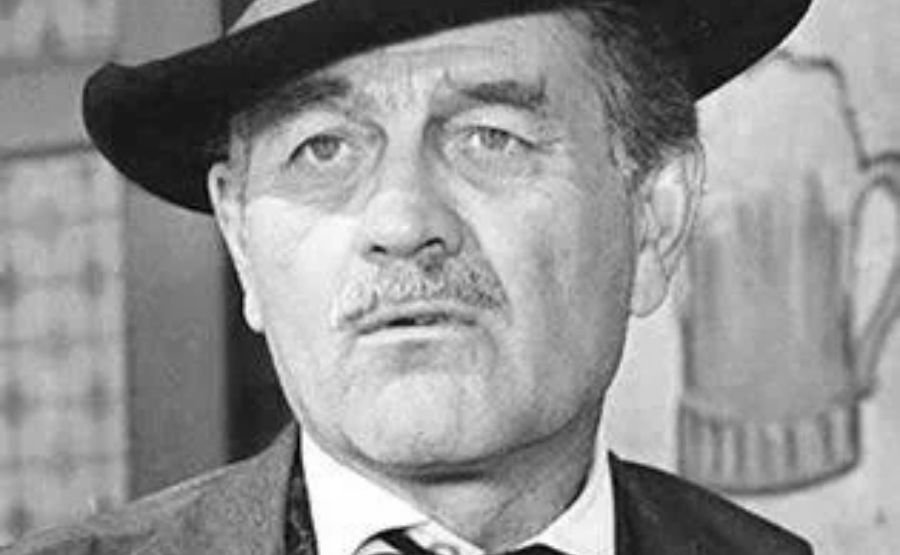
In 1968, thirteen years into the run, the Television Academy gave Stone an Emmy for Outstanding Supporting Actor in a Drama. It felt like acknowledgment of a body of work rather than a single performance — recognition that this was a man who had shown up, episode after episode, year after year, and done something consistently excellent.
He already had a star on the Hollywood Walk of Fame, which had been added in 1960 for his television contributions. Western Heritage Awards followed, in 1967 and 1972. His home state of Kansas honoured him too — the Kansas Medical Society gave him an honorary membership, and St. Mary of the Plains College in Dodge City granted him an honorary doctorate. That last one carries a particular warmth given that Doc Adams had spent two decades pretending to be a Kansas doctor.
Ronald Reagan, who would later become President, was a personal friend of Stone’s. When a Kansas painter named Gary Hawk created a portrait of Doc Adams, and Reagan caught wind of it, the artist was invited to the White House to present the piece. Stone was alive to see Reagan emerge as the likely Republican nominee in 1980 but passed away before the election itself.
The People in His Life
Milburn Stone was married three times, though his personal life was something he kept relatively private. His first wife, Ellen Morrison, died in 1937 — a loss he carried through the years that followed. He later married Jane Garrison, and the two had a complicated path together, separating and then reuniting. By the time Gunsmoke was in full swing, Jane was his partner through it all.
He had one child, a daughter named Shirley Stone Gleason, born around 1926. He lived on the West Coast during his Hollywood and television years but maintained connections to Kansas throughout his life — civic causes, charitable efforts, and genuine pride in where he’d come from. His boat, which he kept during those years, was named the Jayhawk, which is about as Kansan a thing as you can do.
He was close with his brother Joe, who ended up writing scripts for three episodes of Gunsmoke — a nice little family overlap. His cousin Madge Blake, a character actress best known for playing Aunt Harriet on the 1960s Batman TV series, came from the same theatrical branch of the family.
The Health Crisis That Almost Took Him from the Show
In 1971, with Gunsmoke well into its later seasons, Stone’s heart gave him serious trouble. He required surgery — sources describe it as heart bypass surgery — and had to step away from the show for seven episodes. The production didn’t want to write Doc Adams out entirely, so character actor Pat Hingle stepped in temporarily to cover the absence.
Stone came back. That matters. He could have stepped away permanently at that point — the health scare would have given him every excuse, and he was already in his mid-sixties. Instead he returned to Dodge City and kept going until the show itself ended in 1975, at which point he retired along with it.
Five years later, on June 12, 1980, he died of a heart attack in La Jolla, California. He was seventy-five years old. He was buried at El Camino Memorial Park in Sorrento Valley, San Diego. He had outlasted the show by five years and used those final years in genuine retirement.
The Money: Making Sense of His Financial Legacy
Here’s where things get a little complicated, because Milburn Stone’s financial picture looks different depending on which lens you look through.
At the time of his death in 1980, his estate was estimated at somewhere in the range of $600,000 to $1.5 million. The range in the estimates reflects uncertainty — these aren’t precisely documented figures, they’re educated guesses made from available information. In 1980 terms, that was a comfortable but not spectacular sum. Not the fortune you might expect from the co-star of one of the most successful television shows in history.
Part of the reason for that is a decision he made in 1961. Midway through Gunsmoke‘s run, Stone sold his residual rights in the show back to CBS for a lump sum of $100,000. At the time that probably seemed reasonable — television residual structures in the early 1960s were still being figured out, and a guaranteed $100,000 in hand was real money. In hindsight, given how many decades Gunsmoke reruns have continued to air, that sale almost certainly cost his estate significantly more than it gained in the short term.
His salary from the show during its run would have grown substantially as the series became a ratings juggernaut. Estimates for his peak per-season earnings run into six figures in period dollars. He had additional income from his film work, convention appearances as his fame grew, and various real estate interests.
Adjusted for inflation, the $600,000 he left at death translates to somewhere in the neighbourhood of $2 million in today’s money. Some sources have tried to project what his total earnings would be worth today and have landed on figures around $18 million when full inflation adjustment is applied to career earnings — but that’s a theoretical exercise more than a literal net worth.
The bottom line: he was comfortable, not extravagant. He lived a decent life, worked consistently for six decades, and left a modest but real estate behind. The real legacy wasn’t financial.
Where His Legacy Sits Today
Milburn Stone has been gone since 1980, and yet his presence hasn’t quite faded. Gunsmoke reruns still air. The character of Doc Adams remains one of the most recognisable figures in the history of the Western genre on television. A theatre at Cecil College in North East, Maryland carries his name — the Milburn Stone Theatre — which is the kind of legacy that outlasts almost any financial figure.
The National Cowboy and Western Heritage Museum in Oklahoma City inducted him into its Western Performers Hall of Fame in 1981, a year after his death. His connection to Kansas remained honoured there — the Kansas Historical Society keeps his biography as part of its Kansapedia collection, and his hometown community hasn’t forgotten the shopkeeper’s son who went off to become Doc Adams.
In 1987, a Gunsmoke reunion television movie aired called Gunsmoke: Return to Dodge, and Stone’s absence from it was palpable — he had been gone seven years by then, and the character of Doc Adams was conspicuous in its missing.
Final Words
The arc of Milburn Stone’s life has a particular shape to it — long, patient, unglamorous for most of its length, then suddenly and completely rewarded. He spent thirty-plus years grinding through bit parts, B movies, touring stages, vaudeville halls, and radio studios before a single role transformed him from “that reliable character actor” into someone that millions of American families felt they personally knew.
What’s striking is how little bitterness appears in any account of those years. He wasn’t a man who spent decades waiting to be discovered and resenting the wait. He was a craftsman doing his craft, improving with repetition, building a toolkit that ultimately made him exactly right for a role when the right role arrived.
He’s different from most icons of his era because the fame came late, came quietly, and came through consistency rather than flash. There was no breakout moment, no overnight sensation story. Just a man who showed up in Dodge City every week for twenty years and somehow, through the accumulated weight of all those episodes, became someone irreplaceable. That’s a rarer kind of success than the explosive kind, and in many ways it’s more enduring.
FAQs
1. Who was Milburn Stone?
He was an American actor born in Kansas in 1904, best known for playing Dr. Galen “Doc” Adams on CBS’s Gunsmoke from 1955 to 1975. He worked in theatre, vaudeville, film, and radio for more than three decades before landing that role and remained with the show for its entire run.
2. What was Milburn Stone’s real name?
His full birth name was Hugh Milburn Stone. He went professionally by Milburn Stone, and friends and colleagues often called him “Milly.”
3. How long was Milburn Stone on Gunsmoke?
He appeared on the show for all twenty seasons, from its 1955 television premiere to its 1975 finale — missing only seven episodes in 1971 while recovering from heart surgery.
4. Did Milburn Stone win any major awards?
Yes. He won the Emmy Award for Outstanding Supporting Actor in a Drama in 1968 for his work on Gunsmoke. He also received Western Heritage Awards in 1967 and 1972, was honoured with a Hollywood Walk of Fame star in 1960, and was inducted into the National Cowboy and Western Heritage Museum’s Western Performers Hall of Fame in 1981.
5. What was Milburn Stone’s net worth when he died?
Estimates place it between $600,000 and $1.5 million at the time of his death in 1980. In contemporary dollars, the lower estimate is roughly equivalent to about $2 million today. He was comfortable financially but not fabulously wealthy in the way modern television stars of equivalent fame tend to be.
6. Why did he sell his Gunsmoke residual rights?
In 1961, Stone sold his residual rights in the show back to CBS for $100,000. Television residual structures in the early 1960s were still an evolving area, and a guaranteed lump sum likely seemed like a smart move at the time. In retrospect, given the show’s continued rerun life over decades, it cost him considerably in long-term income.
7. Was Milburn Stone related to anyone famous?
Yes. His uncle was Fred Stone, a well-known Broadway and variety performer. His first cousin was character actress Madge Blake, who played Aunt Harriet on the 1960s Batman television series. Three Gunsmoke episodes were written by his brother Joe Stone.
8. Did Milburn Stone have a family?
He was married three times. Ellen Morrison, his first wife, died in 1937. He later married Jane Garrison, with whom he had an on-and-off relationship before remarrying her. He had one daughter, Shirley Stone Gleason, born around 1926.
9. What did Milburn Stone do before Gunsmoke?
He spent decades working through touring theatrical companies, vaudeville (including a song-and-dance partnership called Stone and Strain), a brief Broadway period, radio work, and well over 150 film roles — primarily B movies and serials for studios like Monogram, Mascot, and eventually Universal Pictures.
10. Why did he leave the Naval Academy opportunity?
He gave up a congressional appointment to the United States Naval Academy to pursue an acting career. The decision was made early, after high school, and reflected a genuine clarity about what he wanted his life to be, even if success took three more decades to arrive.
11. Where is Milburn Stone’s legacy preserved today?
The Milburn Stone Theatre at Cecil College in North East, Maryland carries his name. The Kansas Historical Society documents his life as a notable Kansas figure. His Gunsmoke episodes continue to air on various classic television channels, and he remains in the National Cowboy and Western Heritage Museum’s Hall of Fame.
12. How did Milburn Stone die?
He died of a heart attack on June 12, 1980, in La Jolla, California, at the age of seventy-five. He had survived a serious cardiac episode in 1971 that required surgery, returned to the show, and lived another nine years after that before his final heart attack. He was buried at El Camino Memorial Park in Sorrento Valley, San Diego.
Read. Explore. Discover more with Dicovered Magazine.





2 Comments