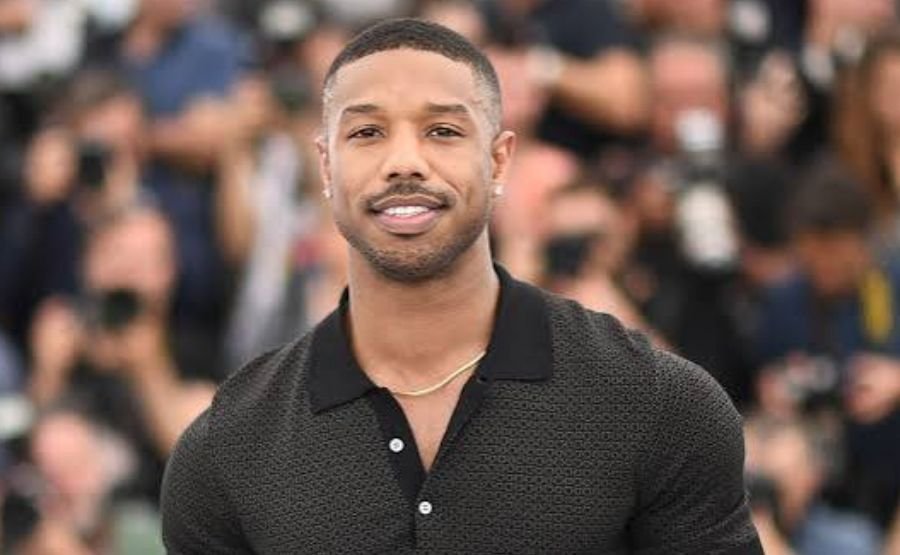
Michael B. Jordan: The Kid from Newark Who Refused to Stay Small
Quick Bio
| Detail | Info |
| Full Name | Michael Bakari Jordan |
| Born | February 9, 1987 — Santa Ana, California |
| Nationality | American |
| What He Does | Actor, director, producer |
| Biggest Accomplishments | Fruitvale Station (2013), Creed franchise (2015–present), Erik Killmonger in Black Panther (2018), directorial debut with Creed III (2023), Hollywood Walk of Fame star (2023) |
| Other Key Facts | Grew up in Newark, New Jersey; got his start as a child model; adds the “B” professionally because you simply cannot share a name with the greatest basketball player alive and expect people to take your headshots seriously |
Why This Guy Still Has Everyone’s Attention
Here’s what’s interesting about Michael B. Jordan. He didn’t explode onto the scene. He built up to it, slowly and deliberately, over about fifteen years of work that not enough people were paying attention to at first. And then one morning everyone just seemed to look up and realize he was already one of the best actors working in Hollywood.
That kind of trajectory is rare. Most stars either arrive fully formed or burn out before they ever get traction. Michael did something different — he took small, specific, emotionally honest roles and stacked them one on top of the other until the pile became impossible to ignore. And just when people had him figured out as a leading man, he went and directed a major franchise film and knocked that out of the park too.
He’s thirty-nine years old as of 2026. He has been acting professionally since he was twelve. Furthermore, he doesn’t even appear to be slowing down.
See also “Growing Up and Getting Serious Before Most Kids Start Middle School“
Newark, New Jersey, and the Family That Made Him
Michael was technically born in Santa Ana, California, but his family packed up and moved to Newark, New Jersey when he was barely two years old. So for all practical purposes, Newark is where this story begins. He grew up there. Went to school there. Learned what the world actually looked like there.
Newark in the late eighties and nineties was a city that didn’t sugarcoat much. It was a place where people worked hard or didn’t eat, where the streets had lessons that no classroom could teach, and where the gap between staying on a good path and sliding off it was narrower than most people outside those zip codes understand.
His father, Michael A. Jordan, worked in a range of roles — different accounts describe him as everything from a postal worker to a caterer depending on the period — and his mother, Donna Jordan, was deeply involved in the arts and education world. It was Donna who spotted something in her son early. She’s the one who steered him toward modeling work when he was still a kid, getting him commercial jobs for companies like Toys “R” Us and Modell’s Sporting Goods. She saw the camera liked him before he even knew what that meant.
He has a younger brother named Khalid and an older sister named Jamila. The family was close-knit and supportive, but they weren’t sheltered. Michael has talked openly about how Newark shaped his worldview — friends getting caught up in situations that had nothing to do with potential and everything to do with circumstances. He was aware, even young, that the path he was on wasn’t guaranteed. Someone was watching out for him. That mattered.
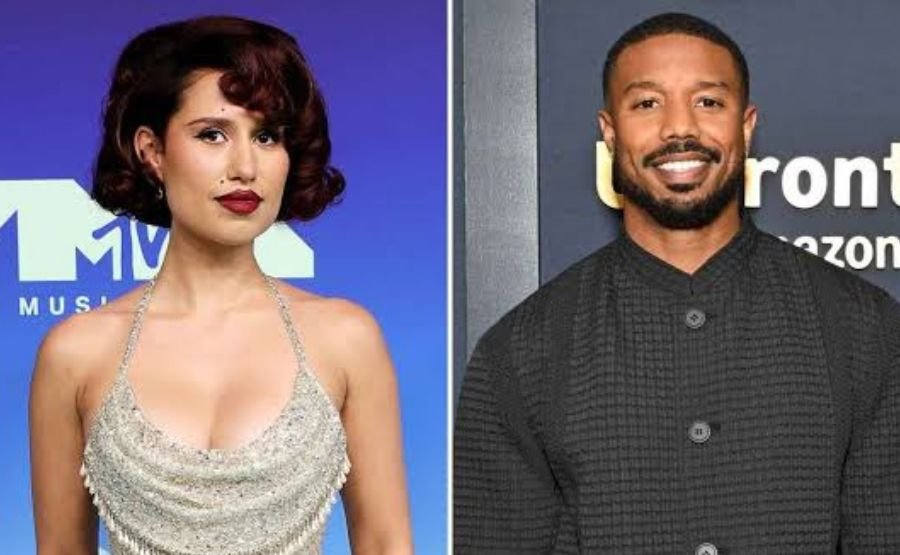
School, Basketball, and the Name Problem
Michael went to Newark Arts High School, which turned out to be exactly the kind of environment where his particular mix of talents — physical ability, emotional intelligence, a natural ease in front of people — could be noticed and developed.
He was a basketball player there. A real one, not just a casual pickup game kid. The sport meant something to him, and you can see echoes of that discipline in the way he’s approached his body and his training throughout his career. The work ethic of an athlete transferred cleanly to the work ethic of an actor.
He graduated in 2005, by which point he’d already been working professionally for six years. His classmates were figuring out college applications. His career was already well underway.
And then there was the name. Michael Jordan. You understand the problem immediately. This is a human being who shares his name with arguably the most famous athlete in the history of American sports — a man whose name is essentially synonymous with excellence, whose face appeared on every sneaker, every highlight reel, every cultural reference point of the era Michael grew up in. So the middle initial became essential. Not a pretension, just a practical necessity. Michael B. Jordan it was, and Michael B. Jordan it stayed.
How the Career Actually Got Rolling — and Why It Was Harder Than It Looked
His first credited work came in 1999, when he appeared in a single episode of The Sopranos as a child. One episode. A glimpse. Then came Hardball in 2001, a film with Keanu Reeves about a youth baseball team in Chicago, where Michael had his first real film role.
But the moment that actually started opening doors was The Wire in 2002. He was fifteen years old when he stepped onto that set and played Wallace — a soft-spoken, kind-hearted teenager caught in the machinery of Baltimore’s drug trade, who sees too much, feels too much, and pays for both. It was a role that lasted one season. And it was unforgettable.
The thing about Wallace is that he didn’t feel like a television character. He felt like someone you might have grown up next to. That quality — the sense that what you’re watching is completely real and completely fragile — came entirely from what Michael brought to the role. He was fifteen. He delivered it flawlessly.
After The Wire, he transitioned to the soap opera world, joining the cast of All My Children from 2003 to 2006. Soap operas get dismissed, but the training they provide is genuinely rigorous — fast turnarounds, enormous amounts of dialogue, emotional consistency across hundreds of episodes. Michael put in those hours and came out a sharper actor for it.
Then came the grind years. He appeared in Friday Night Lights, the beloved NBC drama set in the world of Texas high school football, playing Vince Howard for several seasons. He was excellent in it. The show was critically adored. But it wasn’t yet the kind of thing that makes you a movie star. It was the kind of thing that makes industry people take you seriously, which is a different and arguably more important step.
The mid-2010s brought two notable stumbles — That Awkward Moment in 2014, a romantic comedy that didn’t quite work, and the widely ridiculed 2015 reboot of Fantastic Four, in which Michael played the Human Torch. That film is practically a case study in how not to handle a superhero property. It bombed critically and commercially. Michael has been characteristically gracious about it in interviews, but it would have derailed a lesser actor’s momentum entirely.
The Turning Point — Fruitvale, Killmonger, and the Moment Everything Changed
In 2012, a then-unknown director named Ryan Coogler called Michael about a small independent film. The story was about Oscar Grant — a twenty-two-year-old Black man shot and killed by a transit police officer in Oakland on New Year’s Day 2009. The film would show the last day of his life.
Fruitvale Station was released in 2013, opened at Sundance, and won awards there. It then opened to the public and hit people like a freight train. Michael’s performance as Oscar Grant is one of the most quietly devastating pieces of acting in American film that decade. He made you love this person completely in under two hours, and then the film did what history had already done. The audience sat in the dark and couldn’t speak.
That role changed everything. Michael was suddenly impossible to ignore.
Ryan Coogler came back for Creed in 2015, and Michael took on the role of Adonis Creed — the illegitimate son of legendary boxer Apollo Creed, fighting for his own identity in a sport and a legacy that weren’t sure what to do with him. The film stands apart from every other Rocky installment in one specific way: it’s actually about something. It’s about the weight of inheritance, about proving yourself on your own terms, about what you owe the people who came before you. Michael made all of that personal and physical and real.
Then came 2018 and Black Panther. Michael played Erik Killmonger, the film’s villain — except calling him a villain undersells it entirely. Killmonger is one of the most compelling antagonists in the history of superhero cinema precisely because his grievances are legitimate. He’s angry about the right things. He’s just chosen a path that destroys him. Michael played that contradiction with such precision and such genuine pain that half the audience walked out rooting for the guy they weren’t supposed to root for. He won the MTV Movie Award for Best Villain, which sounds modest until you consider how many great screen villains that category has contained.
In March 2023, he received his star on the Hollywood Walk of Fame — two days before Creed III opened in theaters. In Creed III, Michael didn’t just star. He directed. His directorial debut was a massive commercial and critical success, proving that whatever space he was going to occupy in Hollywood wasn’t limited to what someone else put him in.
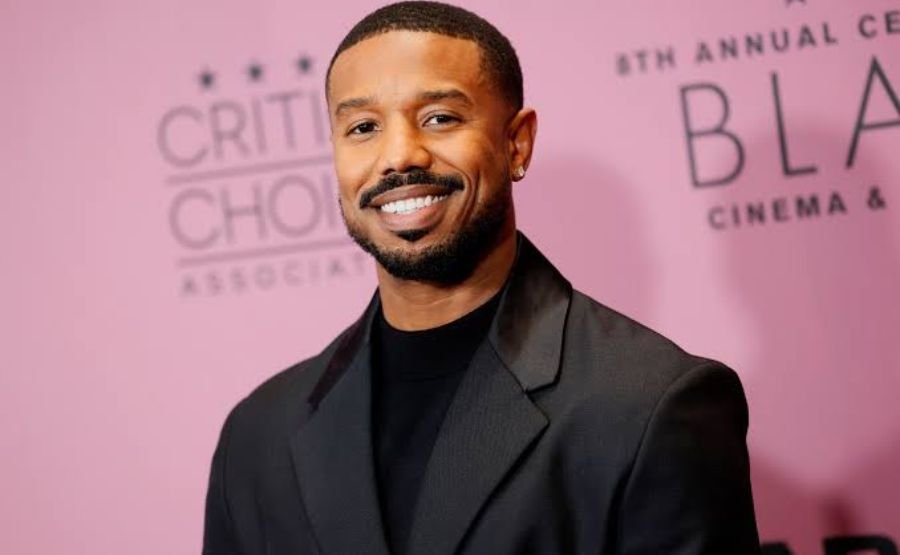
Private Life, Lori Harvey, and How He Handles the Spotlight
Michael has never been the kind of celebrity who makes his personal life a public performance. He’s talked about it enough to be honest but held back enough to keep something sacred.
The most visible chapter of his romantic life was his relationship with Lori Harvey — model, daughter of Steve Harvey — which went public in early 2021 and ended in June 2022 after roughly a year and a half together. Sources close to the situation described both of them as heartbroken. Reports suggested Michael had been ready to take things to the next level and that the timing simply hadn’t aligned. He’s spoken about it with a notable lack of bitterness — including a Saturday Night Live appearance where he addressed the breakup with humor and then turned around in the same breath to announce that he was in a good place, that this was his year, that he was operating from a position of genuine momentum.
He has no children. He remains close to his family, particularly his parents, who have been fixtures at major events in his career. His mother, the one who first spotted the camera’s affection for him, has remained a central figure in his life.
He lives in Los Angeles. He trains with a seriousness that borders on obsessive — the physical transformations he underwent for the Creed films are not special effects. That’s just what happens when someone approaches fitness with the same discipline they bring to a script.
Setbacks, Stumbles, and How He Processed Them
The Fantastic Four disaster is the obvious one, and it would be dishonest not to mention it. That film almost pulled him sideways at exactly the moment his momentum was building. He’s acknowledged it, moved past it, and let his subsequent body of work answer the question of what kind of actor he actually is.
The Lori Harvey breakup happened at a time when he was simultaneously managing enormous professional pressure — Creed III was in production, he was directing for the first time, and the weight of leading a franchise while also calling the shots behind the camera is not a small thing. He kept going. He delivered. He seems to have drawn on the personal difficulty to fuel something rather than letting it derail him.
He’s also been open about the mental health component of celebrity — the loneliness of that level of fame, the difficulty of building genuine trust with people when everyone around you has something to gain from proximity to your name. That kind of self-awareness doesn’t come easily, and it doesn’t come without some real reckoning.
What He’s Worth and How He Got There
Michael B. Jordan’s net worth sits at approximately $50 million as of 2025, which is the figure most serious trackers have landed on. It is constructed simultaneously from multiple angles.
Film salaries account for a significant portion — across the three Creed films, Black Panther, Fruitvale Station, Just Mercy, and Without Remorse, he’s accumulated tens of millions in acting fees, with his per-film rate climbing substantially as his leverage has grown. The Creed franchise alone represents the biggest financial engine of his career.
He founded Outlander Entertainment, his production company, which has been involved in developing and producing projects including Just Mercy and A Journal for Jordan. Owning the production side means getting a percentage of what something earns, not just a flat acting fee — a distinction that separates the genuinely wealthy in Hollywood from the merely well-paid.
He’s carried endorsement deals with major brands. He has real estate holdings. And he has brought the same intentionality to his financial life that he brings to his roles — careful, methodical, and always thinking about what comes next.
Where He Is Right Now
Michael B. Jordan is thirty-nine years old and operating at the peak of his abilities, which is a strange and wonderful thing to say about someone who has been at this since he was twelve.
Creed IV is in development, with Michael expected to return both as Adonis and as director. Projects are still being developed by his production firm. He has been linked to various upcoming roles and collaborations that suggest a career expanding in multiple directions simultaneously rather than narrowing into any single lane.
He’s a Hollywood Walk of Fame inductee, a franchise anchor, a debut director, and a producer — all before he turns forty. By any reasonable measure, he’s only getting started.
A Reflection on the Whole Journey
What makes Michael B. Jordan genuinely different from the generation of actors he came up alongside is the specificity of his choices. He has never chased what was popular when he could chase what was true. He turned a soap opera role into acting training. He turned a one-season television death into the performance that launched his career. He turned a superhero villain into one of the most morally complex characters in blockbuster cinema. He turned stepping behind the camera, for the first time, into a critical and commercial win.
He is also, quietly and consistently, a Black man who has used his platform to tell Black stories — Oscar Grant’s last day, Bryan Stevenson’s fight for justice, Adonis Creed’s search for identity on his own terms, Killmonger’s legitimate rage at a world that failed him. That through line is not accidental. It is intentional, and it matters.
He grew up in Newark watching how narrow the margin between one outcome and another could be. He’s never seemed to forget it.
FAQs
1. What does the “B” stand for in Michael B. Jordan?
It stands for Bakari — his full name is Michael Bakari Jordan. He uses the initial professionally to distinguish himself from basketball legend Michael Jordan.
2. Where is Michael B. Jordan from?
Born in Santa Ana, California, but raised entirely in Newark, New Jersey from the age of two. Newark is very much his city.
3. What was Michael B. Jordan’s very first acting role?
A small appearance in The Sopranos in 1999, when he was twelve years old. His first major film role came in Hardball (2001).
4. What is Michael B. Jordan’s net worth?
Estimated at approximately $50 million as of 2025, built from film salaries, his production company Outlander Entertainment, endorsements, and real estate.
5. Did Michael B. Jordan really direct Creed III?
Yes — it was his directorial debut, and it was a genuine success both critically and commercially. He starred in and directed the film simultaneously.
6. Why did he and Lori Harvey break up?
Reports from 2022 indicated both were heartbroken but that the timing around commitment hadn’t aligned. Michael has spoken about it with grace and moved forward publicly without drama.
7. Does Michael B. Jordan have children?
No. He has spoken about wanting a family eventually, but as of this writing he has no children.
8. What is Outlander Entertainment?
His production company, founded to develop and produce projects that tell stories he cares about. It has produced Just Mercy, A Journal for Jordan, and other films.
9. What was his role in Black Panther?
Erik Killmonger — the film’s antagonist and one of the most discussed villain performances in Marvel history. For the part, he took up the MTV Movie Award for Best Villain.
10. Where did Michael B. Jordan go to high school?
Newark Arts High School in Newark, New Jersey, where he also played basketball. He graduated in 2005.
11. What is his best performance?
Genuinely hard to call, but Fruitvale Station is the one most critics point to — his portrayal of Oscar Grant remains one of the most emotionally precise performances in recent American film.
12. Is Creed IV happening?
Yes, it is in development with Michael expected to return both as Adonis Creed and as director. No confirmed release date yet as of early 2026.
Read. Explore. Discover more with Dicovered Magazine.



One Comment