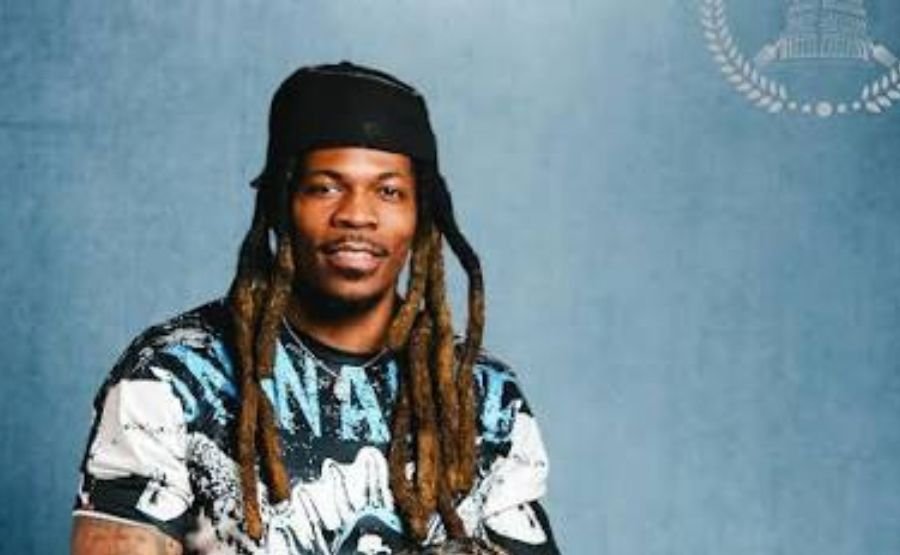
Young E Class: The DC Rapper Who Built His Voice Behind Bars and His Career After Them
Quick Bio
| Detail | Info |
| Stage Name | Young E Class |
| Born | Washington, D.C. (approximate birth year: around 1983–1985, based on timeline) |
| Nationality | American |
| What He Does | Rapper, independent label founder, music entrepreneur |
| Biggest Accomplishments | Founded Mobish Records LLC while incarcerated; released mixtape 10 Days within 10 days of his prison release (October 2016); project Bag Season 2 crossed 100,000 streams; released single “Ready to Die” featuring DC rapper Black Cobain (2021); featured on DJ Smallz interview series discussing his 13-year incarceration |
| Other Key Facts | Spent 13 years in federal prison — including 4 years in solitary confinement — for a murder committed at age 15; sentenced to 40 years as an adult; released October 21, 2016; grew up on 13th Street NE, Washington, D.C.; cites 2Pac and Lil Wayne as his primary musical influences |
The Reason This Story Won’t Sit Still
There are stories that catch your attention because someone did something extraordinary under comfortable circumstances. Then there are stories that catch your attention because of what was impossible about them — and how those impossible conditions produced something real anyway.
Young E Class is the second kind of story.
He’s from Northeast Washington, D.C., a part of the city that has long sat outside the tourist version of the nation’s capital. He started rapping before he was a teenager. He committed a murder at fifteen. He was convicted and sentenced to forty years in adult federal prison. He served thirteen of those years. And on October 21, 2016, the day he walked out, he went directly to a recording studio instead of anywhere else.
Ten days later, he released a mixtape. It was called 10 Days.
That’s not a motivational poster story. That’s a very specific, very human account of someone who decided — inside one of the harshest environments a person can inhabit — that music was the thing keeping him tethered to who he wanted to be. The fact that it worked, that he’s built an actual catalog and an independent label and accumulated real streaming numbers while making music that tells his truth, is not minor. It’s remarkable.
See also “Lou Diamond Phillips: The Man Who Never Stopped Reinventing Himself“
Northeast DC and the World That Raised Him
Washington, D.C.’s Northeast quadrant is, geographically, one of the city’s largest sections. But culturally, it has always carried a particular weight. By the late 1980s and early 1990s, DC had one of the highest per-capita murder rates in the country. The city’s open drug markets, the crack epidemic, the violence that followed — all of that was concentrated in specific neighborhoods. Thirteenth Street NE, where Young E Class grew up, sat right inside it.
He has described DC in that era as a cold place. That’s not poetic. That’s a flat statement about streets where open-air drug markets ran with no pretense of concealment, where homicide was so common it stopped being shocking to the people living inside it. He grew up watching all of that, absorbing all of that, trying to figure out who he was inside a world that wasn’t giving anyone a lot of good options.
His family included an older brother who rapped, and that’s where the music bug bit him. He was barely twelve when he started going to studios, listening, watching how experienced artists constructed songs. He says his early material was recycled — borrowing flows and ideas, figuring out how rapping worked by imitating the people he admired. He carried around printed lyrics from 2Pac. Read them. Studied them. Tried to understand what made a verse land the way it did.
For a kid from 13th Street NE in the early 1990s, that kind of intellectual curiosity about music wasn’t irrelevant. It was quietly building something.
What School Meant and What It Couldn’t Fix
Public records about his formal schooling are sparse, but the timeline tells the story in its outline. He was twelve and rapping. He was fifteen and caught inside a situation that ended in someone’s death. The school years and the street years were happening at the same time, competing for space in his life, and the streets won in the worst possible way.
He has been open in interviews about what led to that moment at fifteen — not to justify it, but to contextualize it. He grew up where violence was ordinary. He came up in a circle where being a “real individual” meant something specific, meant not backing down, meant carrying yourself in a way that the streets could read. By his own account, the version of that code he was living by at fifteen led him to a decision with consequences that would define the next fifteen years of his life.
He was tried as an adult. Given a sentence of forty years. Sent to federal prison at an age when most kids are still figuring out what they want from high school.
He says he thought, because of his age, they’d give him something lighter. They didn’t.
Prison: Where the Music Actually Got Serious
Here is where the story turns in a direction you don’t always expect. Most narratives about talented people who end up incarcerated are tragedies of wasted potential. Young E Class’s story is something more complicated — because prison is actually where his potential got developed.
He served thirteen years. Solitary confinement was used for four of those years. You shouldn’t browse past that statistic. Solitary confinement is psychological torture by any honest clinical measure — sensory deprivation, isolation, the complete removal of human contact. That he came through it with his mind intact and his creative impulse not just surviving but sharpening is either extraordinary luck, extraordinary will, or both.
While inside, he learned to write properly. Not just recycled rhymes or borrowed bars — he learned how to structure a song, how to build a verse with intention, how to put a hook together that actually carried emotional weight. Older incarcerated artists became informal teachers. He hated writing music in prison, he’s said — not because he didn’t love it, but because he didn’t want his music locked up with him. He wanted it to be free when he was free.
He also built something else while incarcerated: a business. He and his brother Dutch formed Mobish Records LLC before Young E Class ever walked out the door. That’s not a detail to gloss over. Planning an independent record label from inside federal prison while serving time for murder, with forty years hanging over his future, is a level of forward thinking that most people with every advantage in the world never manage.
October 21, 2016: The Day Everything Shifted
When he was released on October 21, 2016, Young E Class didn’t go home and rest. He didn’t take a day to adjust. He went straight to the studio and barely surfaced for ten days. He reportedly didn’t eat properly for nearly a week, too consumed by the need to record everything that had been building in him during thirteen years of confinement.
The first song he wrote as a free man was called “Carnage.” He’s described it as an explosion — energy, pain, and liberation all at once. You can hear all three in how he talks about it. After years of holding his music inside, keeping it private, refusing to let it be trapped with him, suddenly the dam broke.
On October 31, 2016 — exactly ten days after walking out — he dropped 10 Days. The mixtape’s title was the timeline. That’s how fast he moved.
The music he made was not soft. It wasn’t inspirational in the greeting-card sense. It was raw, street-level storytelling from someone who had lived the exact life he was describing — the violence, the incarceration, the years in solitary, the education that happened despite all of it, the survival that still felt uncertain even after the door opened.
He released it independently through Mobish Records, the label he had built before he was even out.
The Music After the Walls: Building Steadily
Post-release, Young E Class took the consistent route. That word — consistent — comes up over and over when you look at how he’s described his approach. He set a target of dropping content every month. Singles, projects, mixtapes. He didn’t wait for a platform from someone. He built a catalog while building his audience.
His project Bag Season 2 accumulated over 100,000 streams, a real benchmark for an independent artist operating without major label machinery behind him. He released the single “Ready to Die” featuring DC rapper Black Cobain in 2021, which brought him a Hype Magazine interview and more visibility in the independent hip-hop space. He also released the Bandcamp project Grim in December 2021, described as a portrait of his reality — street life, prison life, the truth of what he came from.
He placed himself in DC’s rap conversation alongside names like Fat Trel, Iamnortheast, Wale, and Funk — artists who either came from similar Northeast streets or who represent different facets of the District’s musical output. Wale made it to major label territory. Young E Class is still operating independently. The comparison isn’t about who got further — it’s about where the roots were planted.
The Label, the Brother, and the Family Angle
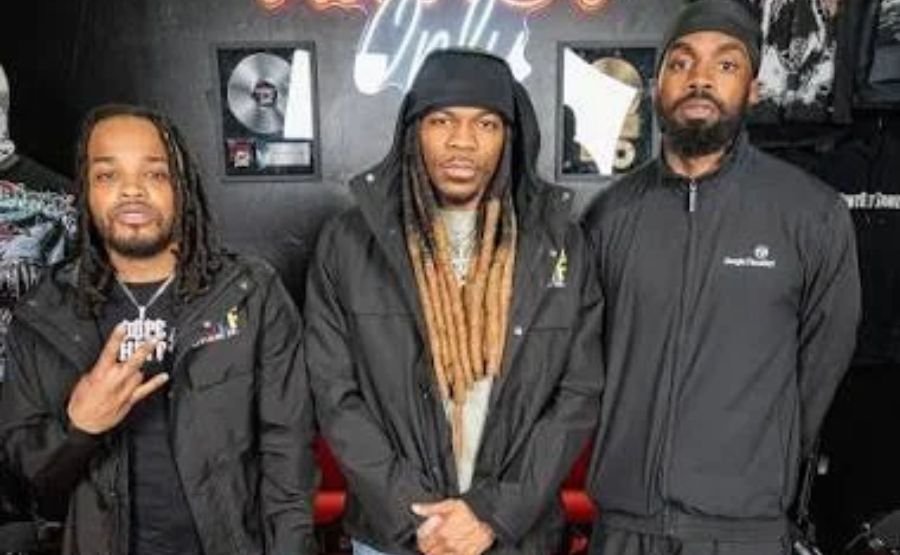
Mobish Records LLC is a real thing — not a vanity name thrown on a business card, but an actual structure built for purpose. Young E Class founded it with his brother Dutch while still incarcerated, and upon his release he came home with two other artists who had also been released. He’s been open about the fact that his own growth translates to theirs — that the more exposure he gets, the more it opens doors for everyone on the label.
That’s a particular kind of loyalty. It’s also smart business. He didn’t want to be the only one winning from whatever he built.
His niece is also reportedly involved in his musical life, another thread of family woven through the project of Mobish Records.
The Hardest Part: Sitting with What Happened
Young E Class doesn’t pretend the past was someone else’s story. He committed a murder at fifteen. A person died. He spent thirteen years in federal prison for it. Those facts don’t disappear when he puts out music, and he doesn’t treat them like they do.
What he has said, in interviews and in the lines of his songs, is that everything he went through made him who he is. That’s not a simple absolution. It’s a recognition that the path — brutal and costly as it was — is the material. His music is specific precisely because his life was specific. He’s not constructing a persona. He lived these things, and the weight of having lived them gives the words somewhere to stand.
Four years in solitary confinement. Coming out still functional, still motivated, still capable of building something. That takes a kind of internal resource that doesn’t come with a name we use often enough.
Money and Net Worth: The Honest Picture
Let’s be straight about this. Young E Class is an independent rapper operating without major distribution, without major label support, and without the kind of marketing machinery that inflates streaming numbers and public profiles. His financial situation is not publicly disclosed, and anyone claiming to know an exact figure is making it up.
What’s realistic: he earns from Bandcamp, streaming platforms, digital sales, live appearances, and whatever brand or licensing activity Mobish Records generates. A project hitting 100,000 streams on independent platforms generates meaningful but modest revenue. His net worth, honestly estimated, likely sits somewhere in the range of modest to low five figures in assets — not because he hasn’t worked hard, but because the independent rap game at his level of exposure is not a wealth-generation machine without major breaks.
That doesn’t diminish the story. He started from zero — from a federal penitentiary — and built something real without anyone handing him anything.
Where He Is Today and What’s Coming
As of 2026, Young E Class remains active. He continues to release music through Mobish Records and maintains his Instagram presence at @mobish.young, where he connects with his following directly. He continues to be part of the ongoing DC independent rap scene, a voice from Northeast who doesn’t let the city’s changing landscape erase the memory of what it was and what it cost people to survive it.
He has spoken about building toward his next album and keeping to his monthly content schedule. He’s also spoken about his life and his prison experience in several interview formats — including the DJ Smallz series that covered his first night in prison, his time in solitary, what he learned inside, and what he brought out with him.
The title of his Bandcamp project says it plainly: Grim. But the subtitle says the rest — his life, his street life, his prison life, all signed and sealed. The word for that is witness. He’s a witness to his own story, which is the only kind of rapper worth listening to.
A Personal Reflection
What makes Young E Class different from most artists in the rap space is not his technical skill or his streaming numbers. It’s the weight behind every line. He didn’t construct a street narrative from research or imagination. He lived it, and then he spent thirteen years confined with it, forced to sit with the full cost of the choices that led him there.
What came out the other side is music that carries the credibility of someone who had nothing to prove and nothing to perform. He could not have pretended his life was something other than what it was. So he documented it. He built a label. He came home and recorded in the first ten days. He put out music every month.
In a genre where authenticity is constantly claimed and rarely verified, Young E Class is one of the rare cases where the story checks out completely. What he raps about is what he lived. That’s rarer than it should be, and it’s the reason his work resonates even at an independent level with listeners who can hear the difference between testimony and theater.
See also “Lou Diamond Phillips: The Man Who Never Stopped Reinventing Himself“
FAQs
1. Who is Young E Class?
He’s an independent rapper from Washington, D.C.’s Northeast quadrant who spent 13 years in federal prison after being convicted of murder at age 15. He was released in October 2016 and has been building his music career and independent label, Mobish Records, ever since.
2. What is Young E Class’s real name?
His real name has not been confirmed publicly. He operates professionally under the stage name Young E Class.
3. How long was Young E Class in prison?
He served 13 years of a 40-year sentence for a murder committed when he was 15 years old. He was tried as an adult and incarcerated in federal prison, including 4 years in solitary confinement.
4. What was his first project after prison?
His first release was a mixtape called 10 Days, which he dropped on October 31, 2016 — exactly ten days after being released from prison on October 21, 2016.
5. What is Mobish Records?
It’s the independent record label Young E Class founded with his brother Dutch while still incarcerated. After his release, he came home with several artists and has continued to build the label as the foundation for his music career.
6. What is Young E Class’s net worth?
There’s no verified public figure. Given his independent operating status and streaming numbers (his project Bag Season 2 hit over 100,000 streams), a realistic estimate would put his assets in modest five-figure territory at best — but he has built this from literally nothing, post-incarceration, without label support.
7. What DC rappers does he consider his peers?
He has cited Fat Trel, Wale, Iamnortheast, and an artist named Funk (who was incarcerated at the time of his 2021 interview) as part of his personal top DC artist list.
8. Who are his musical influences?
He has consistently named 2Pac and Lil Wayne as his primary inspirations. He has described studying 2Pac’s printed lyrics as a young kid trying to understand how great rap was constructed.
9. What is “Grim”?
It’s a 2021 Bandcamp release by Young E Class described as a portrait of his reality — street life, prison life, and everything in between, using words as brush strokes over beats.
10. What was “Ready to Die” about?
The 2021 single featuring DC rapper Black Cobain addresses redemption, survival, and the weight of his past. It generated a Hype Magazine feature interview where he discussed the song and his broader outlook on his life and purpose.
11. How did he learn to write music properly?
He credits experienced incarcerated artists who mentored him inside prison, teaching him how to structure bars, verses, hooks, and bridges. He transformed raw talent into deliverable songwriting while serving his sentence.
12. Is Young E Class still making music?
Yes. As of 2026, he remains active on social media (@mobish.young on Instagram) and continues to release music through Mobish Records, with his stated goal being consistent monthly drops while working toward a full album.



One Comment