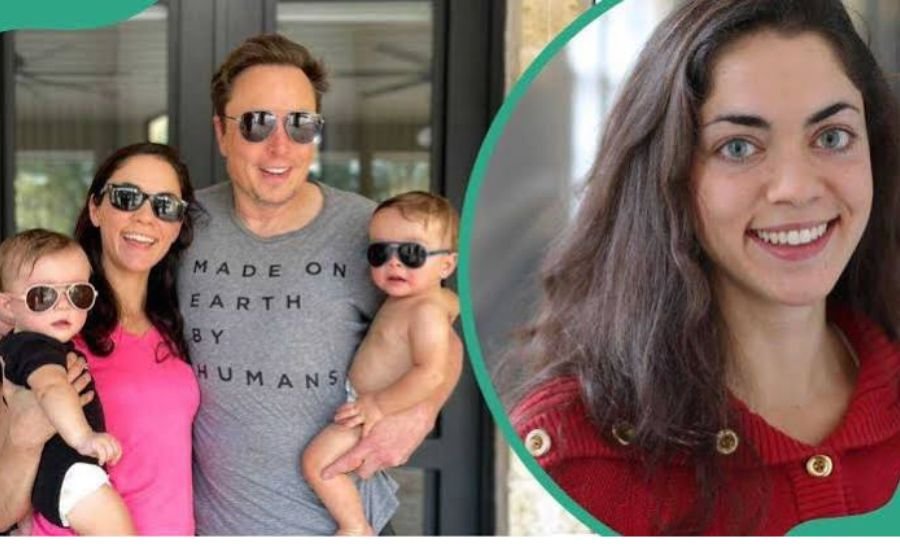
Shivon Zilis Net Worth: The Quiet Force Reshaping the Edge of Human Intelligence
Quick Bio
| Detail | Info |
| Full Name | Shivon Alice Zilis |
| Born | February 8, 1986 — Markham, Ontario, Canada |
| Nationality | Canadian-American |
| What She Does | Director of Operations and Special Projects at Neuralink; former founding partner at Bloomberg Beta; advisor and former board member at OpenAI; fellow at Creative Destruction Lab |
| Biggest Accomplishments | Co-founded Bloomberg Beta in 2012, investing in over 20 early-stage machine intelligence companies; joined Neuralink as a senior executive helping shepherd brain-computer interface technology toward human trials; served on the board of OpenAI during its most formative years; board member at the Vector Institute for Artificial Intelligence |
| Other Important Facts | Graduated from Yale University in 2008 with a degree in Economics and Philosophy; played ice hockey as a goalkeeper at school in Markham; shares four children with Elon Musk; describes herself as a “nerd-athlete” — a label she has used on her own public profiles |
The Name That Keeps Coming Up
Some people in the tech industry become well-known by design; they court the cameras, write thought pieces, deliver TED presentations, and develop their own brands. as carefully as they build their companies. Shivon Zilis is not that person.
She came into public awareness largely because court documents leaked to Business Insider in mid-2022, revealing that she and Elon Musk had welcomed twins in November 2021. Until that moment, she was well known inside the machine intelligence community — seriously well known, the kind of person who gets invited to the right tables without needing to announce her presence — but almost entirely invisible to the general public.
Since then, the curiosity around her has only grown. And here is what’s genuinely interesting: the more you dig into who she actually is professionally, the more the story of her career stands entirely on its own. The Musk connection gets the clicks. The true story, however, lies in the substance of what Shivon has created and how early she did so.
See also “Milburn Stone: The Doctor Who Stayed in Dodge City for Twenty Years“
Markham, Ontario: A Suburb That Shapes You
Shivon grew up in Markham, a suburb northeast of Toronto that has become one of Canada’s most diverse communities — a place with a strong South Asian immigrant presence, a tech-oriented professional class, and the kind of environment where ambition is ordinary rather than exceptional. Her father, Richard Zilis, is Canadian. Her mother, Sharda, is of Punjabi Indian descent, which means Shivon grew up navigating between cultures in the quiet, constant way that children of mixed backgrounds often do — absorbing two sets of references, two ways of seeing what success looks like, two kinds of expectation.
She attended Unionville High School in Markham, where she played ice hockey as a goalkeeper. That detail tells you something specific about her. Goalkeepers are different from other players — they absorb pressure that the rest of the team generates, they have to stay calm when everything is flying at them, and their success is measured not by what they score but by what they prevent. It’s a position that suits a particular kind of temperament: focused, steady, willing to stand in the way of things.
Yale and the Education That Set Everything in Motion
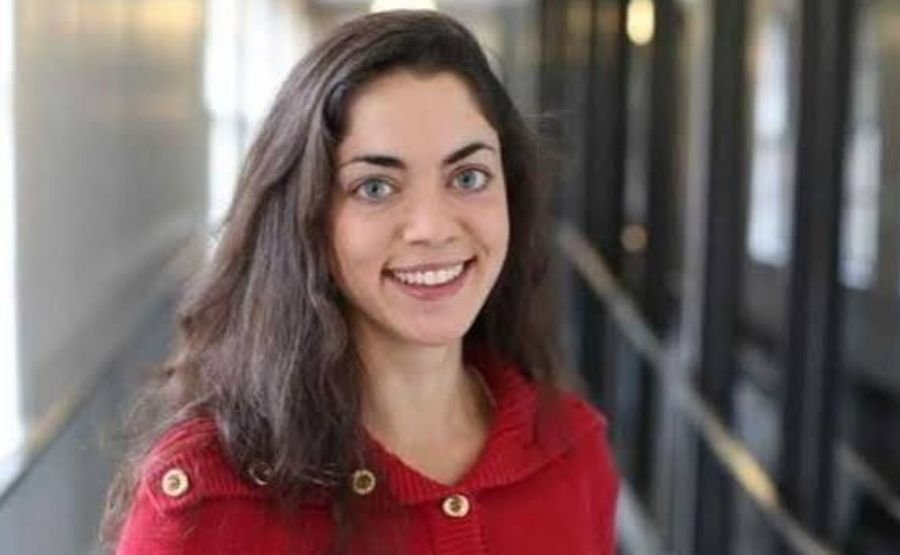
Shivon went to Yale University, graduating in 2008 with a Bachelor of Arts in Economics and Philosophy. That combination of subjects is more interesting than it might first appear. Economics is the study of how systems allocate scarce resources under pressure. Philosophy is the study of what questions are worth asking in the first place. Together, they produce a mind that can ask the right question and then figure out the most rational path toward answering it.
She was part of a Yale graduating class that entered a world in economic freefall — the 2008 financial crisis arrived almost exactly as she was walking across the stage. The tech industry, particularly the emerging world of machine learning and artificial intelligence, was one of the few sectors that continued to attract serious capital and serious talent through that period. Shivon moved toward it with clear intention.
IBM and the First Real Steps
Her early career started at IBM, which at the time was doing genuinely interesting work in data analytics and artificial intelligence — this was the era when the company was beginning to develop what would become Watson, and the broader question of what machine intelligence could do for enterprise clients was live and contested. It was a solid, substantial beginning. IBM was not glamorous in the startup sense, but it was technically rigorous, and it gave Shivon a foundation in how AI actually gets implemented in real systems rather than just theorized about in papers.
She didn’t stay long. The pull toward earlier-stage, higher-risk work was clearly stronger than the appeal of a large established institution. In 2012, she helped co-found Bloomberg Beta, the venture capital arm of Bloomberg LP, focused specifically on early-stage machine intelligence investments.
Bloomberg Beta: Where She Made Her Name
Bloomberg Beta was the move that established Shivon as a genuine figure in the machine intelligence investment world rather than just someone adjacent to it. She was a founding partner and one of the primary architects of the fund’s thesis, which was built around the idea that machine intelligence was going to transform how work itself gets done — not just in a few industries but across the whole economy.
Over her years at Bloomberg Beta, from 2012 through 2018, she participated in more than twenty machine intelligence investments. That number matters. Venture capital at the seed stage is a judgment game — you’re betting on teams, ideas, and timing before there’s meaningful evidence to work with. Making twenty-plus bets in a specific category over six years, and building a coherent thesis that connected them, is serious intellectual work. It’s not passive. It’s the kind of thing that builds real expertise rather than just a resume line.
During this same period, she became a fellow at the Creative Destruction Lab, a University of Toronto-based startup accelerator that has become one of North America’s most respected programs for early-stage science and technology companies. CDL has a specific focus on getting deep-science founders through the early stages of commercialization, and it attracts genuine domain experts rather than generalist advisors. Shivon’s presence there, sustained over years, reflects a commitment to the Canadian technology ecosystem that runs alongside and independent of her American career.
She also joined the board of the Vector Institute for Artificial Intelligence in Toronto — one of the world’s serious AI research institutions — and took an equivalent role at the Alberta Machine Intelligence Institute. These are not decorative board seats. They require engagement, judgment about research priorities, and an ongoing connection to the academic side of the field.
OpenAI, Neuralink, and the Musk Orbit
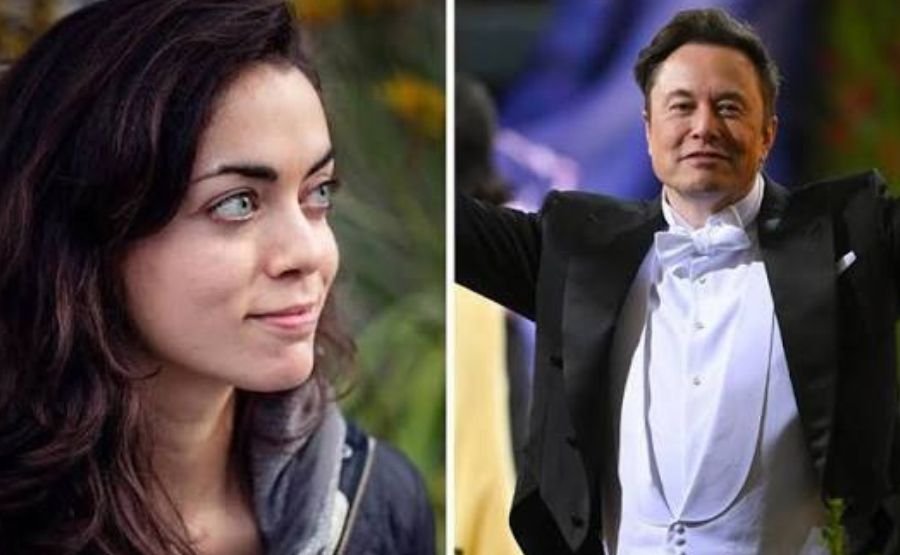
Shivon first crossed paths with Elon Musk through OpenAI, the AI safety research organization that Musk co-founded in 2015 along with Sam Altman and others. Shivon served in an advisory and board capacity at OpenAI during this period — she was, by some accounts, among its youngest board members. Her role was connected to the fund’s portfolio interests in machine intelligence rather than operational work inside the organization, but the connection brought her into a world where the biggest and most contested questions in AI were being debated at close range.
The OpenAI of that period was genuinely idealistic — a nonprofit trying to develop artificial general intelligence in a way that would be safe and beneficial to humanity rather than captured by any single commercial interest. Whether that vision survived contact with the real world is a separate debate. What’s relevant here is that Shivon was at that table early, before the organization became the most discussed AI lab in the world.
Her move to Neuralink came later. She joined as Director of Operations and Special Projects, which is a title that understates the scope of the role in the way that Musk’s organizations often understate things. Neuralink is building brain-computer interfaces — direct connections between neural tissue and computational systems — and the practical, operational, and regulatory complexity of that work is enormous. Getting from the research phase to human trials required exactly the kind of person who could hold multiple domains simultaneously: the scientific ambition, the regulatory pathway, the practical infrastructure, and the commercial reality.
She has described her work at Neuralink in terms of shepherding the company through the transition from a research-stage entity to one capable of actually implanting devices in human beings and measuring the results. The first human trial, which occurred in early 2024, represented a significant milestone for that effort.
The Private Life That Became Public
The twins, a boy and a girl named Strider and Azure, were born to Shivon and Elon Musk in November 2021.This happened quietly, without announcement, and became public only when court documents obtained by Business Insider surfaced in July 2022. The documents also revealed that the couple had petitioned to change the twins’ surnames to incorporate both Musk and Zilis, an unusual and telling gesture.
By the time that story broke, Shivon had also reportedly welcomed additional children with Musk. As of 2025 and into 2026, the total number of children they share is understood to be four, though she has maintained extraordinary privacy around all of it. She is not married to Musk. Their relationship — personal, professional, parental — does not fit neatly into conventional categories, which may be exactly the point.
She co-hosts an annual machine intelligence conference at the University of Toronto, has maintained her presence in the Canadian AI ecosystem throughout her American-based career, and continues to operate in a way that prioritizes the work over the profile.
What the Money Actually Looks Like
Shivon Zilis’s net worth is not publicly disclosed and no reliable verified figure exists in the record. What can be reasonably mapped out is this: six years as a founding partner at a Bloomberg LP-backed venture fund, followed by a senior executive role at a well-capitalized private company whose valuation has been estimated in the billions, combined with advisory roles at multiple significant AI institutions — that adds up to a genuinely substantial financial position even without specific numbers.
Online estimates vary from about $10 million to much more, depending on how her equity stakes in different companies have been evaluated. None of these are verifiable. What is certain is that she has operated at the senior level of some of the most consequential AI companies and funds of the past decade, and the compensation that comes with those roles is serious.
Where She Sits Today
As of 2026, Shivon Zilis is 40 years old. She is a senior executive at Neuralink as it navigates the transition from a company that has completed its first human trials to one actively developing a commercial product that could change what it means to interact with computers. She remains connected to the Canadian AI research community through CDL and her board work. She is mostly hidden from the public while raising her four kids.
She is not trying to be famous. She is trying to do the work. Those two things are genuinely incompatible with each other in a media environment that collapses every woman in proximity to Elon Musk into a single kind of story, and she has handled that tension with more grace than most people would manage.
What This Career Actually Adds Up To
Here is the honest summary: Shivon Zilis got to the intersection of machine intelligence, venture capital, and neurotechnology before most people had figured out that intersection was going to matter. She did it through a combination of genuine intellectual firepower, the willingness to take her Bloomberg credentials into early-stage companies that had nothing to do with financial media, and a sustained commitment to the Canadian AI ecosystem that gave her depth outside the Silicon Valley bubble.
The public story is about Elon Musk. The professional story is about someone who has been building expertise in the most important technological transition of our lifetime for more than fifteen years, mostly without anyone outside the industry paying attention. Those are two very different stories, and the second one is considerably more interesting.
See also “Milburn Stone: The Doctor Who Stayed in Dodge City for Twenty Years“
FAQs
1. Who exactly is Shivon Zilis?
Currently holding the position of Director of Operations and Special Projects at Neuralink, Elon Musk’s brain-computer interface startup, she is a Canadian technology executive and former venture capitalist. She was also a founding partner at Bloomberg Beta and an advisor and board member at OpenAI.
2. Where was she born and raised?
She was born on February 8, 1986, in Markham, Ontario, Canada — a diverse suburb northeast of Toronto. She attended Unionville High School there and played ice hockey as a goalkeeper.
3. Where did she go to college?
Yale University, graduating in 2008 with a Bachelor of Arts in Economics and Philosophy.
4. What is Bloomberg Beta?
It’s a venture capital fund backed by Bloomberg LP, focused on early-stage machine intelligence companies. Shivon was one of its founding partners from 2012 to 2018, helping build a portfolio of over twenty AI-focused investments.
5. What does she actually do at Neuralink?
She serves as Director of Operations and Special Projects, which in practice means overseeing the operational and strategic infrastructure needed to move the company from a research organization to one conducting human trials and developing commercial brain-computer interface products.
6. How did she meet Elon Musk?
Through her work at OpenAI, the AI safety research organization Musk co-founded in 2015, where she served in an advisory and board capacity.
7. How many children does she have with Elon Musk?
As of 2026, four children — including twins named Strider and Azure, born in November 2021. The relationship became public in July 2022 when court documents were obtained and reported by Business Insider.
8. Are Shivon Zilis and Elon Musk married?
No. They have not been reported to be married. Their relationship is described in media coverage as a partnership — personal, professional, and parental — without a formal legal marital status.
9. What is the Creative Destruction Lab?
A University of Toronto-based program supporting early-stage, science-focused startup companies. Shivon has been a fellow there since around 2015, contributing to the Canadian AI startup ecosystem independently of her American career.
10. What is her net worth?
No verified public figure exists. Given her founding partner role at Bloomberg Beta, her senior executive position at Neuralink, and her board positions at major AI institutions, informed estimates range from several million to potentially much higher, but these are unverified.
11. What is her ethnic background?
She has a Canadian father and an Indian-immigrant mother of Punjabi background, giving her a mixed Canadian-South Asian heritage.
12. Why is she relatively unknown to the general public despite her career?
She has actively maintained a low public profile throughout her career, rarely giving interviews or seeking media coverage. She became widely known only after the 2022 Business Insider report on her twins with Elon Musk — before that, she was well known inside the machine intelligence industry but essentially invisible to general audiences.
Read. Explore. Discover more with Dicovered Magazine.





One Comment