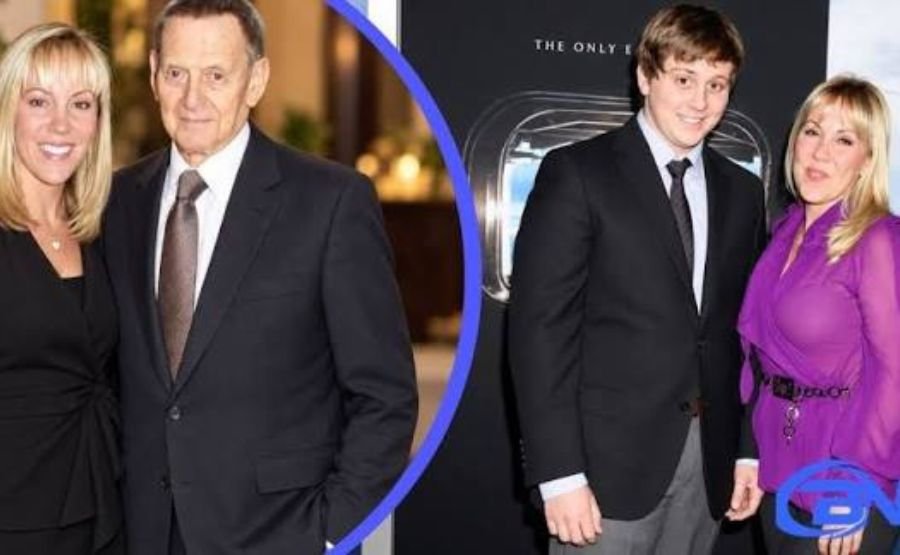
Jefferson Salvini Randall Today: From a Famous Hollywood Family to His Own Private Path
Quick Bio
| Detail | Info |
| Full Name | Jefferson Salvini Randall |
| Born | June 15, 1998, New York City, New York |
| Nationality | American |
| What He Does | Filmmaker, writer, actor, production professional in independent cinema and television |
| Biggest Accomplishments | Graduated from Wesleyan University with a BA in Film Studies and a writing certificate (2020); film credits including Kinder, Tub Adjacent, How to Lose a Dog (2025), and Male Connection (2026); production work at Sesame Workshop’s The Not-Too-Late Show with Elmo |
| Other Key Facts | Son of legendary actor Tony Randall, who was 78 when Jefferson was born; lost his father at age five; his name was a deliberate tribute by Tony to two revered nineteenth-century stage actors, Joseph Jefferson and Tommaso Salvini |
A Name That Carries Weight — Whether He Asked for It or Not
Let’s be honest about something upfront. When most people search for Jefferson Salvini Randall, they start from one direction: Tony Randall. The Odd Couple actor. Felix Unger. The man who spent decades in American living rooms being fussy, precise, and absolutely hilarious alongside Jack Klugman. Jefferson is that man’s son.
But here’s what makes this story interesting: Jefferson is 28 years old now, working steadily in independent film, and building something of his own. He didn’t follow the easiest path, which would have been coasting on nostalgia and name recognition. Instead, he went to university, studied the craft properly, took unglamorous production jobs, and has started accumulating actual screen credits. The backstory involving his father is genuinely remarkable and worth understanding — but it’s also not where Jefferson’s story ends.
See also “Julie Farrait: The Private Story Behind the Woman Linked to a Notorious Legacy“
The Household He Was Born Into
The circumstances of Jefferson’s birth were, by any normal measure, extraordinary.
His father Tony Randall — born Leonard Rosenberg in Tulsa, Oklahoma in 1920 — was already 78 years old when Jefferson arrived in June 1998. Tony had been married once before, for over five decades, to a woman named Florence Gibbs, but that marriage produced no children. When Florence died in 1992, Tony was 72 and had spent his entire adult life without becoming a parent.
Then came Heather Harlan. She was 25, working as an intern at the National Actors Theatre in New York — an institution Tony himself had founded out of his love for classical stage work. They met, fell in love, and married in November 1995. The age gap between them was exactly 50 years. People had opinions about it. Tony seemed genuinely baffled by the fuss. He was in love, he was healthy, and he was finally going to be a father.
Their daughter Julia Laurette came first, in April 1997. Jefferson followed just over a year later. Tony appeared on Larry King’s program around this time, visibly delighted, telling the audience his children’s names in full and explaining where each one came from. Julia Laurette honoured his late mother Julia and the actress Laurette Taylor, whom Tony considered the finest performer he’d ever witnessed on a stage. Jefferson’s name was a double tribute to nineteenth-century theatrical giants — the comedic genius Joseph Jefferson, and Tommaso Salvini, a brooding Italian tragedian of extraordinary power. Only Tony Randall, a man who had devoted his entire life to the theatre, would name his newborn son after two actors from the 1800s. It was completely on-brand.
The family lived in Manhattan. The home would have been culturally rich to a degree most children never experience — Tony’s world was saturated with art, theatre, opera, literature, and decades of stories from a career that stretched back to the 1940s.
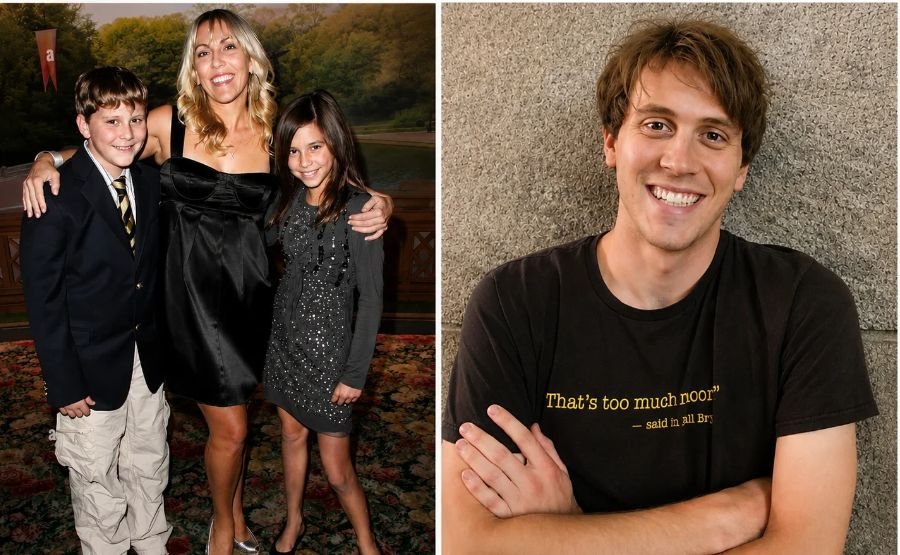
Losing His Father Before He Could Really Know Him
Jefferson was five years old when Tony Randall died.
That’s the part that stops you. Tony passed away on May 17, 2004, in New York City, from pneumonia related to heart bypass surgery. He was 84. His daughter Julia was seven. Jefferson was five. Heather was 34 and suddenly a widow with two very young children and a very large legacy to carry.
What does it actually mean to grow up as the son of someone famous when you barely knew them? It’s one thing to inherit a name and a reputation. It’s another thing entirely to grow up with that inheritance and almost no actual memories of the person behind it. Jefferson has been careful not to speak extensively about this publicly, which feels right — grief at that scale and that early age is deeply personal. But you can’t understand who he is without acknowledging that the defining biographical fact of his childhood was also the most painful one.
His mother Heather didn’t disappear into private life after Tony died. She remained active in the theatrical world Tony had loved, eventually taking a place on the board of the New York Theatre Workshop. That matters. It means Jefferson grew up with a parent who kept the arts alive as a daily reality rather than a fading memory.
School, Fieldston, and the Long Road to Wesleyan
Jefferson attended the Ethical Culture Fieldston School in New York City, beginning around 2002. Fieldston is the kind of private school that appears in conversations about serious intellectual formation — it has a progressive educational philosophy, a strong arts programme, and the kind of environment where a kid with genuine creative instincts can develop them properly.
He spent approximately fourteen years there, which means he was immersed in that environment all the way through his school years. Given what we know about his eventual career direction, it’s reasonable to suppose that those years mattered — that he was reading widely, probably making things, possibly writing, definitely thinking about stories and how they get told.
After Fieldston, Jefferson chose Wesleyan University in Connecticut, which has a reputation as one of the finest liberal arts schools in the United States and a particularly strong film programme. He graduated in 2020 with a BA in Film Studies and a certificate in writing. That dual credential is not a coincidence. He wasn’t just interested in the visual grammar of filmmaking — he wanted to understand storytelling at the level of the sentence and the paragraph too. The combination of those two disciplines is actually a pretty strong foundation for someone who wants to direct and write.
The Early Career: Learning the Hard Way First
Jefferson didn’t walk out of university and immediately start directing feature films. Of course he didn’t. Nobody does. What he did was the intelligent thing: he put himself in rooms where he could learn.
While still at Wesleyan he did a stint at Oscilloscope Laboratories — an independent film distribution company with a genuinely interesting catalogue — which gave him a window into how the business side of independent cinema actually works. Then in 2017 he took a role as an assistant at Under NYC in Brooklyn, which connected him to the New York creative community in practical terms. After graduating in 2020, he worked as a production assistant on The Not-Too-Late Show with Elmo at Sesame Workshop, which is exactly the kind of job that teaches you how a professional production actually runs from the ground up.
None of that is glamorous work. All of it is necessary. There’s a whole generation of would-be filmmakers who skip these steps and then wonder why their projects feel technically rough. Jefferson didn’t skip them.
His film credits — including shorts like Kinder and Tub Adjacent, and more recently How to Lose a Dog and Male Connection — are the output of someone who was building toward something rather than splashing onto a scene. The 2026 feature Male Connection in particular represents a meaningful step. Getting a feature-length work completed and into release is the kind of milestone that separates people who talk about making films from people who actually make them.
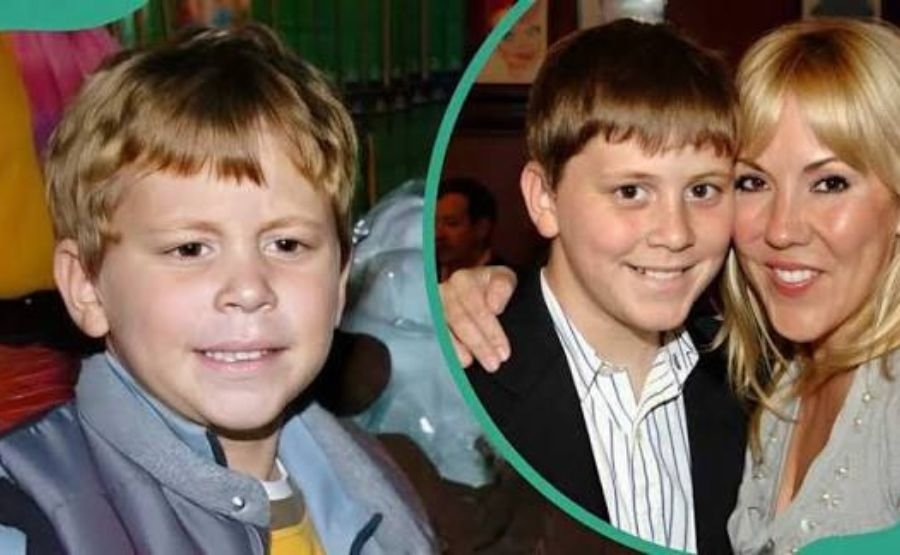
Private Life: What He Shares and What He Doesn’t
Jefferson is notably quiet about his personal world, and it seems like a genuine preference rather than a PR strategy. He has an Instagram presence under his own name, but uses it mainly to share work-related updates rather than anything particularly revealing. He lives in New York City — the same place he was born, the same city that shaped everything about his formation — which makes a certain kind of sense.
There’s no public information about romantic relationships, and he’s given no indication of wanting to change that. He’s 28. He’s making films. He’s private. These things can all coexist comfortably.
His mother Heather remains an active figure in New York’s theatrical community. His sister Julia, born in 1997, is a year older and has also maintained a low public profile. The three of them seem to have navigated the unusual circumstances of their family — the famous father, the enormous age gap, the early death, the public scrutiny — with something approaching quiet dignity.
The Harder Parts of Carrying This Particular Name
It’s worth saying directly: growing up as Tony Randall’s son is not simply a privilege. It comes with a specific kind of weight.
Tony Randall was genuinely beloved. His Felix Unger on The Odd Couple ran from 1970 to 1975 and won him a long-overdue Emmy. His film work alongside Doris Day and Rock Hudson in movies like Pillow Talk and Lover Come Back endeared him to audiences across generations. He was also a man of deep cultural seriousness — the kind of person who founded a theatre company because he believed classical drama should be accessible to everyone. He was not a trivial celebrity. He was a genuinely substantial figure.
All of that means Jefferson has always had to answer a question before he even gets in the door: is he doing this because he loves it, or because it’s the family business? The answer, based on what he’s actually built, looks like the former. But that question doesn’t go away just because the evidence starts to accumulate in your favour. Jefferson has had to earn credibility in a field where his name creates both attention and skepticism simultaneously. That’s harder than people who haven’t experienced it usually appreciate.
The Money Picture
Tony Randall’s estate was estimated at somewhere between $15 and $30 million at the time of his death — accumulated over six extraordinary decades in film, television, theatre, and smart investment in art and antiques, which Tony collected seriously. What passed to Heather and the children is not publicly documented in detail.
Jefferson’s own net worth today is estimated by various sources at around $500,000, which is consistent with someone early in an independent film career who has been working steadily but hasn’t yet had a breakout commercial hit. He’s not wealthy by Hollywood standards, but he’s not starting from nothing either — both in terms of what his family background may have provided and in terms of the real professional capital he’s been quietly building.
Where He Is Now and What He’s Doing
As of late 2026, Jefferson Salvini Randall is 28 years old, based in New York, and actively working in film. The release of Male Connection this year marks the most significant professional moment of his career so far. He has credits on both sides of the camera — directing, writing, acting — which suggests someone still figuring out where their particular gifts land most powerfully, which is completely appropriate at 28.
He carries his father’s name into a very different entertainment landscape than the one Tony inhabited. Streaming has restructured everything. Independent film has never been harder to finance and easier to distribute simultaneously. The tools available to someone like Jefferson now would have seemed like science fiction to Tony Randall’s generation. Whether he uses them to build something that outlasts its moment is still being determined.
A Reflection on the Whole Journey
What strikes you, thinking about Jefferson’s story carefully, is how many things he had to process before he could just be a person with a career. An absent father — not by choice but by death — and one of the most recognisable faces in American television history at that. A mother who kept culture alive in the household without turning grief into spectacle. A name chosen with such theatrical specificity that it announced, from birth, that he was expected to take art seriously.
He seems to have taken all of that on board and channelled it productively rather than running from it or drowning in it. He studied his craft. He did the low-status jobs. He made his films. He stayed private when privacy served him better than exposure.
What makes him different from others in his position? Most celebrity children who pursue entertainment either lean very hard into their name or very hard away from it. Jefferson seems to have done neither — he’s just doing the work, at the pace the work demands, without excessive announcement. In a field full of people who confuse attention with accomplishment, that reads as quietly mature.
See also “Julie Farrait: The Private Story Behind the Woman Linked to a Notorious Legacy“
FAQs
1. Who exactly is Jefferson Salvini Randall?
He is the son of Tony Randall — the iconic American actor best known as Felix Unger on The Odd Couple — and Heather Harlan Randall. Jefferson was born in New York City on June 15, 1998, and has built a career as a filmmaker, writer, and actor in independent cinema.
2. Why is his name so unusual?
Tony Randall named both his children after people he revered. Jefferson’s first name honours Joseph Jefferson, a celebrated nineteenth-century American comic actor famous for Rip Van Winkle. His middle name Salvini pays tribute to Tommaso Salvini, a nineteenth-century Italian tragic actor Tony considered one of the great theatrical masters. Tony explained this on camera himself — it was a completely deliberate act of homage.
3. How old was Tony Randall when Jefferson was born?
Tony was 78 years old, which made headlines at the time. He and Heather, who was 25 when they married in 1995, also had a daughter Julia Laurette in 1997, when Tony was 77. He became a father for the first time in his late seventies.
4. How did Jefferson lose his father?
Tony Randall died on May 17, 2004, at the age of 84, from pneumonia following complications from heart bypass surgery. Jefferson was five years old. His sister Julia was seven.
5. Where did Jefferson go to university?
He attended Wesleyan University in Connecticut, graduating in 2020 with a Bachelor of Arts in Film Studies and a writing certificate.
6. What was his first school?
He attended the Ethical Culture Fieldston School in New York City, starting around 2002 and remaining there for approximately fourteen years through his secondary education.
7. What films has he worked on?
His credits include short films Kinder and Tub Adjacent, and more recently How to Lose a Dog (2025) and the feature film Male Connection (2026). He also worked in production on Sesame Workshop’s The Not-Too-Late Show with Elmo.
8. Where does Jefferson live now?
He lives in New York City — the same city where he was born and raised.
9. Is Jefferson Salvini Randall in a relationship?
He has not shared any information about his romantic life publicly. He maintains a private personal life and hasn’t addressed this in any known interviews or public statements.
10. What is his estimated net worth?
Most sources estimate his net worth at around $500,000 — reasonable for an independent filmmaker in his late twenties with a steady but still-developing career. Tony Randall’s estate was much larger, but Jefferson’s own wealth reflects his work rather than inheritance.
11. What does his mother Heather Harlan do now?
Heather Harlan Randall has remained active in New York’s theatre world after Tony’s death. She has held a position on the board of directors of the New York Theatre Workshop, continuing the connection to the performing arts that defined her marriage to Tony.
12. Has Jefferson spoken publicly about his father?
He has been quite reserved on this subject, which is understandable given that he was only five when Tony died. There are no known in-depth interviews where he discusses his father at length. His career choices — working in the arts, studying film seriously, honoring storytelling as a profession — are perhaps the most visible form of tribute he’s offered.
Read. Explore. Discover more with Dicovered Magazine.


One Comment