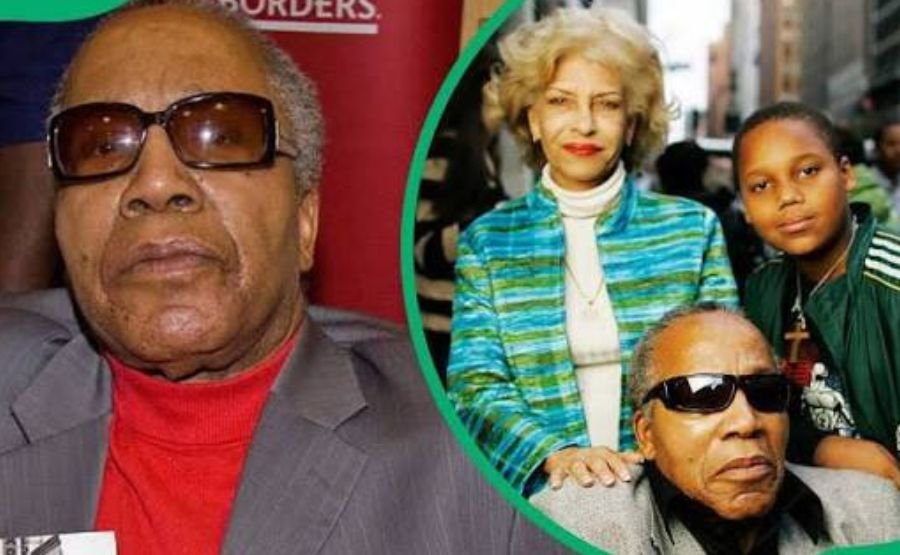
Julie Farrait: The Private Story Behind the Woman Linked to a Notorious Legacy
Quick Bio
| Detail | Info |
| Full Name | Julianna Farrait Rodriguez |
| Born | Around 1941, San Juan, Puerto Rico |
| Nationality | Puerto Rican-American |
| What She’s Known For | Wife of Harlem drug kingpin Frank Lucas; twice-convicted on drug charges; inspiration for the character “Eva” in the 2007 film American Gangster |
| Biggest Facts | Arrested in 1975 alongside Frank Lucas during one of the DEA’s most high-profile raids; rearrested in 2010 at nearly 70 years old for trying to sell cocaine to an undercover agent; remained with Frank Lucas until his death in May 2019 |
| Other Key Details | Won homecoming queen at her school in Puerto Rico (often exaggerated in tabloids as “Miss Puerto Rico”); mother of at least three children with Frank Lucas, including daughter Francine Lucas-Sinclair; lived through the full arc of one of America’s most notorious criminal empires — and paid for it twice |
Why Her Name Still Gets Searched
Here’s the honest truth about Julie Farrait: she never wanted the spotlight. She didn’t write a memoir. She didn’t do the talk show circuit. She never sat across from a journalist and tried to reframe her life as a cautionary tale. And yet, decades after her husband’s reign over Harlem’s drug trade crumbled, people are still Googling her name.
Part of it is the film. When Ridley Scott released American Gangster in 2007 — Denzel Washington as Frank, Puerto Rican actress Lymari Nadal playing a version of Julie called “Eva” — the whole story exploded back into public consciousness. Suddenly a woman who had spent years trying to disappear was front and center again, at least in the cultural conversation.
But there’s more to it than just the Hollywood connection. Julie’s story raises questions that don’t have clean answers. Was she a victim of circumstance, dragged into a world she didn’t fully choose? Or was she a knowing participant who spent years enjoying the fruits of Frank’s operation — the furs, the jewelry, the luxury — and has to own that? The answer, if you look honestly, is probably somewhere complicated in the middle. And complicated stories stick around.
See also “DebraCa Denise: The Daughter of a Legend Who Chose Her Own Quiet Story“
Growing Up in Puerto Rico
The details of Julie’s early life are genuinely thin. She was born around 1941 in San Juan, Puerto Rico, into a family about which very little has ever been publicly confirmed. She’s talked around her upbringing in the few snippets of interviews that exist, but the specifics — her parents’ names, what her father did, what her childhood looked like — remain private.
What we do know is that Puerto Rico in the early 1940s was a place of very specific cultural rhythms: tight family bonds, strong community identity, a mix of Spanish colonial heritage and American influence that shaped everything from food to music to how young women were expected to carry themselves. Julie grew up in that world. By all accounts she was striking — confident, put-together, with the kind of bearing that turned heads.
The “beauty queen” label that follows her everywhere online is a bit overstated. She won a homecoming title at school — which, look, is not nothing, but it’s also not Miss Puerto Rico. The film American Gangster took some creative license there and introduced her character as a former Miss Puerto Rico contestant. Julie herself later pushed back on that. She’d won a local title as a young woman. The glamorized version of the story ran away from the actual one, as tends to happen with these things.
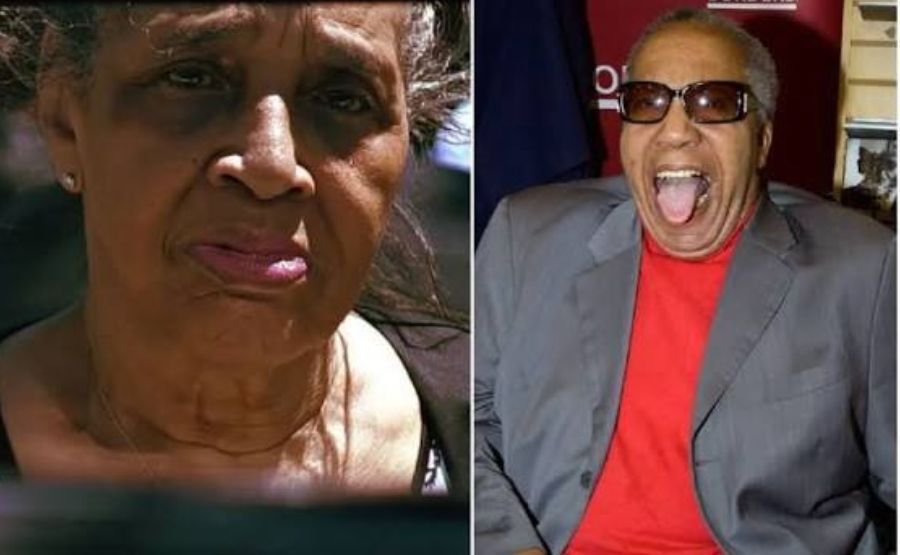
School Days and the Person She Was Before Frank
There’s no record of Julie attending university, and her educational background beyond high school isn’t something she’s ever addressed publicly. What is clear is that she was sharp, socially fluent, and ambitious in the way that young women of her era and background often had to be — ambitious about building a life, finding a partner with prospects, moving through the world with presence and intention.
She was a young woman in San Juan, and she was good at being in a room. That much comes through clearly even in the limited accounts of people who knew her before her story became inseparable from Frank’s.
The Flight, the Meeting, the Marriage
Accounts vary slightly on where exactly she first encountered Frank Lucas — some say on a flight from Puerto Rico to New York, others describe a nightclub during one of his visits to the island — but the chemistry was apparently instant and mutual. Frank Lucas in his prime was a magnetic figure: charismatic, well-dressed, clearly a man who operated with a certain authority that didn’t need explaining. He was also, by the mid-1960s, deeply embedded in Harlem’s criminal underground.
Whether Julie fully understood the scope of what Frank was doing when they first met is one of those questions that nobody can answer definitively now. What’s documented is that they married in 1967, and that by then Frank was already running an operation that would eventually make him one of the most notorious figures in American crime history.
Frank bypassed the usual channels — the Italian mob middlemen who controlled most of Harlem’s heroin supply — and went straight to Southeast Asia to source product directly. His heroin, sold on the streets of Harlem under the name “Blue Magic,” was famously pure and sold at prices that undercut competitors. The money was obscene. Frank later boasted about pulling in a million dollars a day at the height of the operation.
And Julie was in the middle of all of it. She wore designer clothes and expensive jewelry. She drove luxury cars. When she gave birth to their daughter Francine, Frank reportedly bought her a cream-coloured Mercedes as a gift. The life they built together was spectacular and dangerous in equal measure.
People around them, according to various accounts, sometimes called the pair a Black Bonnie and Clyde — a loaded description that speaks to how the outside world read their dynamic. They were glamorous, inseparable, and operating outside every law that was supposed to contain them.
The Raid, the Collapse, the First Time in Prison
January 1975 is when everything fell apart.
DEA agents raided the Lucas home in New Jersey and found what they’d been looking for — and more. Over half a million dollars in cash was seized. Frank was arrested on the spot. So was Julie. The couple who had built one of the most lucrative criminal enterprises in the history of Harlem were suddenly sitting in handcuffs in the home they’d furnished with the proceeds of it.
Frank’s sentence was staggering — 70 years. He eventually reduced it significantly by cooperating with federal authorities and helping convict over a hundred individuals connected to drug trafficking. When he flipped, Julie and their daughter Francine had to enter witness protection, which is a surreal detail in a story already full of them.
Julie’s own prison sentence from the 1975 proceedings was shorter — around six months initially, with later drug-related charges that extended her legal consequences further. Their daughter Francine ended up being sent to live with family in Puerto Rico while both parents navigated the aftermath. That image — a child sent across the Caribbean because both her parents were tangled in the consequences of a criminal empire — lands heavily when you actually sit with it.
After serving her time, Julie separated from Frank for a period. She went back to Puerto Rico. They lived apart. But they didn’t stay apart forever.
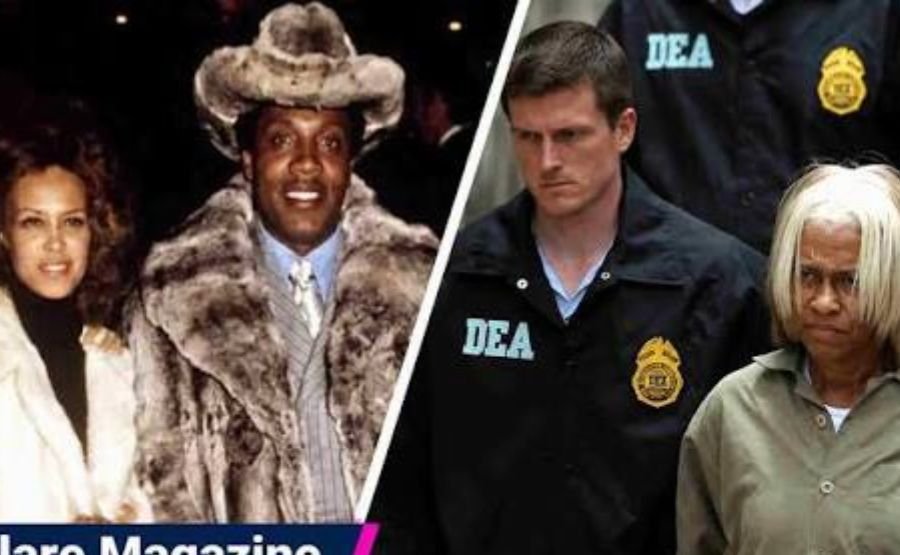
Reconciliation, Relative Quiet, and the Second Arrest
Eventually, Frank got out. And eventually, Frank and Julie found their way back to each other. By the time the 2000s arrived, they were together again, living in New Jersey, presenting something that looked — from the outside at least — like a quiet life after a turbulent one.
Then came 2010.
Julie was nearly 70 years old. Frank was in his late seventies, in poor health, financially stripped of the millions his operation had once generated. And in May of that year, Julie Farrait was arrested in Puerto Rico after attempting to sell two kilograms of cocaine to someone who turned out to be an undercover agent. The arrest happened at a hotel. It made news partly because of who she was, and partly because of how old she was — the headline about a 70-year-old drug lord’s wife being caught in a cocaine sting has a kind of grim absurdity to it.
When she appeared before a judge, she reportedly said she needed the money to help care for her husband. Whether that’s the full story is hard to say. She was sentenced in 2012 to five years in federal prison.
She served the time. Frank was in no position to be there when she got out.
Life After Prison, Frank’s Death, and the Silence Since
Frank Lucas died on May 30, 2019, at 88 years old, in Cedar Grove, New Jersey. He’d spent the last years of his life in a wheelchair, largely impoverished — the fortune was long gone, seized or spent or lost to the machinery of the legal system. But he and Julie had remained together until the end. Whatever the relationship cost them — and it cost them enormously — they never fully walked away from it.
After his death, Julie stepped back entirely. She doesn’t appear to give interviews. She doesn’t have a public social media presence. She is, as best as anyone can tell, living somewhere between Puerto Rico and the mainland United States, away from cameras and questions.
Her daughter Francine Lucas-Sinclair went a different route. She became a public advocate for children of incarcerated parents, eventually founding a resource organization called “Yellow Brick Road” to support kids who end up in the situation she found herself in as a child — watching her parents arrested, being shipped away to relatives, navigating a childhood defined by somebody else’s criminal consequences. Francine’s work is, in its own way, the most pointed commentary on what the Farrait-Lucas story actually left behind.
Money: What There Was and What Remained
At the peak of Frank’s operation, the money was extraordinary. Frank himself claimed his worth reached $52 million, much of it reportedly stashed in offshore accounts. They spent freely — furs, cars, jewelry, real estate. Frank owned properties across multiple states and in Puerto Rico.
By the time it was over, essentially none of that remained. The DEA seized what they could find. The legal fees were enormous. Prison years don’t generate income. By the end of Frank’s life, he and Julie were not wealthy by any reasonable measure. Julie’s own net worth today — to the extent anyone can guess at it — is considered modest. She’s not a woman with assets or revenue streams that have been publicly documented. The life of extraordinary excess she once lived left her with a prison record, a complicated legacy, and very little of the material wealth that once defined her world.
What Makes Her Story Different
Most people who get drawn into a criminal partner’s world and face the consequences eventually try to tell their side. They write the book. They do the documentary. They reconstruct themselves as a survivor or a whistleblower or a cautionary tale.
Julie Farrait never did any of that.
She stayed quiet through the film that dramatized her life. She stayed quiet after her second prison sentence. She stayed quiet after her husband died. In a media landscape where everyone eventually cashes in on their story, her silence is almost striking.
Maybe that reticence is shame. Maybe it’s dignity. Maybe it’s just exhaustion from a life that was never fully hers to control — or maybe it was, and that’s the harder thing to sit with. What’s clear is that Julianna Farrait Rodriguez lived through something vast and destructive and never fully accounted for it in public. Her daughter is doing the accounting in a different way, through advocacy and openness about what that childhood did to her.
Julie’s story is a reminder that the people beside the headline names carry the weight just as heavily — and often longer.
FAQs
1. Who is Julie Farrait?
She is Julianna Farrait Rodriguez, a Puerto Rican-American woman best known as the wife of Frank Lucas — the Harlem drug trafficker whose story inspired the 2007 film American Gangster. She’s also a twice-convicted felon in her own right, with drug-related arrests in 1975 and 2010.
2. Where was Julie Farrait born?
San Juan, Puerto Rico, around 1941. She spent her early years there before eventually relocating to the United States after meeting Frank Lucas.
3. Was Julie Farrait really Miss Puerto Rico?
No. The film American Gangster depicted her character “Eva” as a former Miss Puerto Rico contestant, but that was a dramatic embellishment. Julie won a homecoming queen title at her school, which is a different thing entirely. She has reportedly pushed back on the Miss Puerto Rico label publicly.
4. How did Julie Farrait meet Frank Lucas?
Accounts differ slightly — some say on a flight between Puerto Rico and New York, others place the meeting at a club during one of Frank’s visits to the island. Either way, they met in the 1960s, the attraction was immediate, and they married in 1967.
5. What happened in the 1975 raid?
DEA agents raided the Lucas home in New Jersey in January 1975, finding over half a million dollars in cash. Both Frank and Julie were arrested. Frank was ultimately sentenced to 70 years, later reduced through cooperation with authorities. Julie received a shorter sentence but faced further legal consequences in the years that followed.
6. Why was Julie arrested again in 2010?
She was caught attempting to sell two kilograms of cocaine to an undercover agent at a hotel in Puerto Rico. She was nearly 70 at the time. She reportedly told the court she needed money to support her ill husband. In 2012, she was sentenced to five years in federal prison.
7. Did Julie Farrait stay with Frank Lucas through everything?
Largely yes, with some years of separation after the 1975 arrests. They reconciled, moved back in together in New Jersey, and remained a couple until Frank died in May 2019 at the age of 88.
8. Do they have children together?
Yes. They have at least three children together, including daughter Francine Lucas-Sinclair and son Frank Lucas Jr. Francine has spoken publicly about the impact her parents’ criminal lives had on her childhood, and she went on to found a support organization for children of incarcerated parents.
9. What does Francine Lucas-Sinclair do now?
Francine became a prominent advocate for children whose parents are imprisoned, founding a resource organization called “Yellow Brick Road.” She’s been candid in interviews about the childhood trauma of watching both parents arrested and being sent to live with relatives in Puerto Rico.
10. What was Julie’s role in Frank’s drug empire?
She was aware of and lived inside the operation — enjoying the wealth it generated and, at certain points, directly participating in drug-related activity. She wasn’t simply an oblivious bystander. The 1975 arrest and especially the 2010 arrest make that clear.
11. What is Julie Farrait’s net worth today?
There’s no reliable figure. Whatever wealth the Lucas operation generated is long gone — seized, spent, or absorbed by legal costs. Julie is believed to live modestly and privately, with no known assets or income streams on the public record.
12. Is Julie Farrait still alive?
As of the most recent available information, yes. She is believed to be in her mid-eighties and living privately, moving between Puerto Rico and the continental United States. She does not give interviews or maintain any known public presence.
Read. Explore. Discover more with Dicovered Magazine.






One Comment