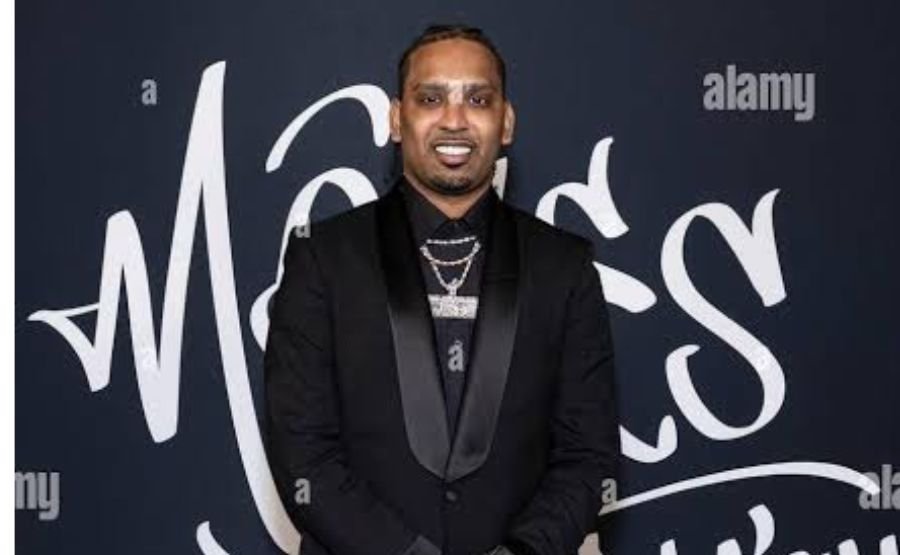
Sambou Camara “Bubba”: The Bronx Kid Who Built an Empire from a Home Studio
Quick Bio
| Detail | Info |
| Full Name | Sambou “Bubba” Camara |
| Born | May 3, 1995, New York’s Bronx |
| Nationality | American (with reported Gambian heritage) |
| What He Does | Music executive, entrepreneur, co-founder and CEO of Highbridge the Label (HBTL) |
| Biggest Accomplishments | Co-founded one of the most impactful independent hip-hop labels of the 2010s; helped launch and manage A Boogie wit da Hoodie, whose album Hoodie SZN hit #1 on the Billboard 200; brokered a historic partnership with Atlantic Records while keeping the label’s creative independence intact |
| Other Key Facts | Also performs music under the name Baby Dubai; married Ashley Marie Burgos in April 2025; net worth undisclosed but generated through substantial label revenue, artist development, and multiple business ventures |
The Story That Keeps People Talking
Here’s the thing that makes Sambou Camara’s story interesting — he didn’t come from behind a desk somewhere. He didn’t grow up in a boardroom family or study music business at some private university. He came from the same Bronx blocks as the artists he’d eventually help turn platinum. Same neighbourhood, same starting point, different role. And that gap between where he began and where Highbridge the Label ended up is honestly one of the more quietly remarkable journeys in recent hip-hop.
People who study the music industry tend to focus on the artists. Makes sense — they’re the ones on stage, on magazine covers, getting the streams. But behind a lot of the biggest success stories in rap, there’s someone like Bubba. A person who sees talent early, knows how to position it, and understands that patience plus strategy beats hype every time. That’s the Sambou Camara story in a sentence.Clearly, though, there is more to it than that.
Growing Up in Highbridge
The Bronx has always been foundational to hip-hop. You don’t need a history lesson to know that — the borough practically invented the culture. But within the Bronx, there are neighbourhoods within neighbourhoods, communities within communities. Highbridge is one of those spots. It’s dense, it’s loud, it’s full of working families and kids grinding against the odds, and it’s where Sambou Camara grew up alongside the people who would eventually become his business partners.
He was born in May of 1995, which makes him part of a generation that grew up watching rap go from something you heard on the radio to something that ran the entire cultural conversation. By the time he was a teenager, streaming was becoming a thing, social media was just starting to flex its muscles in music promotion, and the old model of needing a major label to even get heard was starting to crack.
His background carries Gambian roots, which shows up in his name — Sambou is not a common Bronx name, and it traces back to West African naming traditions. Growing up between those two worlds, that immigrant family sensibility and Bronx street culture, tends to build a certain type of person. Practical. Loyal. Not easily impressed. The kind of guy who watches everything around him and processes it quietly.
Details about his parents and early home life aren’t something he’s spoken about extensively in public. What’s clear is that his formative years happened on those Highbridge streets, and that the friendships he built there — particularly with a kid named Artist Dubose, who the world would come to know as A Boogie wit da Hoodie — would become the foundation of everything else.
School, Friendships, and the Beginning of an Idea
Sambou and A Boogie grew up together. They were childhood friends who came up in the same neighbourhood, which means they knew each other long before any label deal or Atlantic Records conversation was ever on the table. That kind of relationship matters enormously in an industry built on trust and loyalty, because when things get complicated — and in the music business, things always get complicated — the people who’ve known you since before the money tend to be the ones who stick.
There’s another key figure in this story: Quincy, who goes by QP. He’s the third co-founder of Highbridge the Label, and he also came from the same tight-knit circle. So the label, when it eventually came together, wasn’t a pitch-deck idea born in a co-working space. It was a natural extension of a friendship group that had been together for years before anyone pressed record.
Sambou also pursued music himself under the stage name Baby Dubai. He’s released material as a hip-hop artist, which gives him a dimension that a lot of executives lack — he actually understands what it feels like to make music, to put something out and wait to see if the world responds. That lived creative experience almost certainly shapes the way he works with the artists on his roster.
How It Actually Started: A Mixtape and a Dream
In 2015, A Boogie had been rapping and building a small following, but hadn’t broken through yet. Sambou and QP, who were already close with him, decided to formalise what had been a loose support system into something real. They set up a home studio and started working on what would become A Boogie’s debut mixtape, Artist, released in early 2016.
The label’s name came directly from the neighbourhood. Highbridge — as in the actual Highbridge community in the Bronx, and the idea of building a bridge toward success for people who come from that kind of background. It’s a name that means something. Not a random brand word, but a statement of where they’re from and what they’re trying to do.
A month after the mixtape dropped, the label was formally launched. And then things moved fast. Artist did something unexpected — it caught fire. The streets picked it up, it spread online, and within a few months A Boogie had gone from local buzz to being someone that major labels were paying attention to.
By July 2016, Highbridge had signed a deal with Atlantic Records. But critically — and this is the part that shows Sambou’s instincts as a businessman — it wasn’t a straight signing. It was a partnership arrangement that gave Highbridge and its artists a meaningful degree of creative control. That’s not easy to negotiate, especially when you’re a young, unknown independent label sitting across from one of the biggest record companies in the world. That deal structure would define how HBTL operated from that point forward.
The Breakthroughs That Changed the Game
After the Atlantic deal, things compounded. A Boogie’s debut album The Bigger Artist in 2017 cracked the Top 5 on the Billboard 200. The single “Drowning” featuring Kodak Black went multi-platinum. XXL named A Boogie to their Freshman Class — which is basically rap’s version of a coming-out party. Sambou was building something that worked.
Don Q, another artist from the Highbridge neighbourhood, joined the label and added a harder, more lyrically intense voice to the roster. Trap Manny came later. The label started to develop a distinct identity — a melodic, emotionally raw style of New York rap that sounded different from what the rest of the country was doing, and different from what the Bronx had been putting out before.
Then came Hoodie SZN in late 2018. A Boogie’s second studio album debuted at number two on the Billboard 200 and climbed to number one within weeks, holding that position for three weeks straight. For a Bronx independent label that had started in a home studio two years earlier, that’s not just a good result — that’s a landmark. It put Highbridge on the map as one of the most effective indie operations in modern hip-hop.
Artist 2.0 followed in 2020, Valentine’s Day of all days, and debuted at number two on the Billboard 200. By this point, the Highbridge roster had accumulated dozens of gold and platinum certifications from the RIAA. Sambou’s name was appearing as an executive producer on these projects, which in the music industry is both a financial recognition and a statement of creative involvement.
In 2018, the whole story got a Netflix moment. The docu-series Rapture featured A Boogie wit da Hoodie in an episode called “Uptown Baby” that documented how Highbridge used grassroots tactics and genuine community loyalty to build their fanbase. Sambou and the whole HBTL crew appeared in the film, giving audiences a window into how this Bronx operation actually functioned from the inside.
The Personal Life: Family, Love, and Low-Key Living
For someone attached to one of the most prominent rap labels in the country, Sambou Camara keeps his personal life remarkably quiet. He’s not splashed across gossip sites every week. He doesn’t perform his private life online the way a lot of people in his world do.
His relationship with Ashley Burgos changed that profile somewhat. Ashley is the daughter of Bernice Burgos, a well-known model and social media personality, which put the couple in a different kind of spotlight than Sambou was used to operating in. They had a child together, welcomed with an Aladdin-themed baby shower that Ashley shared on social media — and eventually, in April 2025, the two got married.
Ashley is a model and entrepreneur in her own right, so there’s a natural alignment between their ambitions. But from what’s public, it reads as a genuine partnership rather than a calculated personal brand moment. The wedding, the family — it all seems to occupy a space in Sambou’s life that he protects from the constant scrutiny that comes with running a high-profile label.
He also has two brothers who are reportedly involved in the music or entertainment space, keeping that family thread alive through the work.
Setbacks, Quiet Battles, and Staying Power
The music business is brutal in ways that don’t always make the news. Labels that pop up fast can collapse just as quickly. Artists that seem unstoppable get derailed by contracts, personal drama, or just the fickle nature of the streaming era. Staying relevant over multiple album cycles, keeping artists happy and creatively alive, managing the relationship with a major distribution partner without losing your independence — none of it is straightforward.
Sambou has navigated all of that without much public drama attaching to his name. That’s worth noting. In an industry where executives regularly become part of the story in ways that damage the artists around them, he’s kept the focus where it belongs: on the music and the roster.
There was also the challenge of proving that Highbridge wasn’t a one-artist story. Could the label develop Don Q into a mainstream force? Could Trap Manny break through? Could the Highbridge sound extend beyond A Boogie’s particular brand of melodic street rap? Those questions don’t have clean answers yet, but the label has continued operating, releasing music, and maintaining its Atlantic relationship through several years of industry turbulence.
The Money: What We Know and What We Can Reasonably Estimate
Sambou’s exact net worth has never been publicly disclosed. He doesn’t talk about it in interviews. But you can piece together a general picture from what’s known about how independent labels at his level generate money.
Executive producer credits on multiple RIAA-certified albums mean royalty streams. The Atlantic Records partnership, if structured well — and by all accounts it was — means Highbridge retained a meaningful share of their artists’ revenue. Brand deals, merchandise, live show participation, management arrangements — all of these flow back toward the founders when a label is performing at the level HBTL has been.
One source estimated his worth as significant but undisclosed; others gesture at substantial income without putting a number on it. What’s clear is that the Highbridge business has generated real revenue at scale for several years running. By any reasonable measure, Sambou Camara has built financial security well beyond what most people from his starting point would have predicted. The exact figure isn’t something he’s letting anyone get their hands on, which, honestly, is a pretty savvy move.
Where Things Stand Right Now
As of 2025 and into 2026, Sambou Camara is a married man, a father, and still very much in the middle of building what Highbridge the Label can become. The label expanded its structure with the creation of a subsidiary called H.E.A.V.Y., broadening the roster and bringing in newer artists who represent the next generation of the Highbridge sound.
His Baby Dubai music persona continues to operate in the background, releasing material and maintaining an Instagram following that’s grown past 130,000 people who follow along for a mix of personal moments and industry insight. The Instagram bio itself — “run it up, then switch lanes” — reads like a genuine philosophy rather than a tag line.
He’s still young. Born in 1995, he’s in his early thirties. The story isn’t close to finished.
A Reflection on the Whole Thing
What makes Sambou Camara’s journey compelling isn’t flash. It’s the opposite of flash, actually. He built something real, from nothing, alongside people he’d known since childhood, in a neighbourhood that doesn’t often get to write those kinds of endings. He didn’t wait for someone to hand him an opportunity. He created the structure, found the talent, built the relationships, and then leveraged all of it carefully enough that he still controls what he built.
In an industry that chews through young executives and leaves them holding nothing, that’s a remarkable thing. Highbridge the Label has produced number-one albums, platinum certifications stacked up like paperwork, and genuine cultural influence on the sound of New York hip-hop through the latter half of the 2010s and into the 2020s. That doesn’t happen by accident. And the fact that Sambou Camara’s name is rarely the loudest one in any room — even rooms his label helped build — says something interesting about the person behind it all.
FAQs
1. Who exactly is Sambou Camara?
He’s the co-founder and CEO of Highbridge the Label, an independent hip-hop label from the Bronx, New York. He helped build the career of A Boogie wit da Hoodie from the ground up and brokered the label’s partnership with Atlantic Records. He also performs music under the name Baby Dubai.
2. Where is Sambou Camara from?
He was born on May 3, 1995, in the Bronx, New York — specifically connected to the Highbridge neighbourhood, which gave the label its name. Some sources indicate Gambian heritage, reflected in his West African first name.
3. What is Highbridge the Label?
It’s an independent American hip-hop label founded in 2016 by A Boogie wit da Hoodie, Sambou “Bubba” Camara, and Quincy “QP” Acheampong. The label is based in the Bronx and operates in partnership with Atlantic Records. Its roster has included A Boogie wit da Hoodie, Don Q, Trap Manny, and others.
4. How did Highbridge the Label start?
It started organically from a tight-knit friend group in the Highbridge neighbourhood. The founding crew set up a home studio, released A Boogie’s debut mixtape Artist in early 2016, and formally launched the label shortly after when the project gained traction. They landed an Atlantic Records deal by July of that same year.
5. What is Sambou Camara’s net worth?
He has never publicly disclosed a figure. His wealth is generated through executive producer credits on multiple platinum-selling albums, the label’s Atlantic Records revenue-sharing arrangement, and additional business ventures. Most credible sources describe it as substantial but unconfirmed.
6. What is Sambou Camara’s stage name?
He records and performs under the name Baby Dubai. He maintains an Instagram account under that handle and has released hip-hop music alongside his executive work at Highbridge.
7. Who is Ashley Burgos?
She’s a model and entrepreneur, and the daughter of well-known model Bernice Burgos. She and Sambou Camara had a child together and married in April 2025. Their relationship brought Sambou a higher public profile than he typically operates with.
8. Did Highbridge the Label ever have a number-one album?
Yes. A Boogie wit da Hoodie’s album Hoodie SZN, released in December 2018, debuted at number two and climbed to number one on the Billboard 200, where it stayed for three weeks. It remains one of the label’s highest-profile commercial achievements.
9. Was Highbridge the Label featured in a documentary?
Yes. The Netflix docu-series Rapture in 2018 included an episode called “Uptown Baby” focused on A Boogie wit da Hoodie and the Highbridge crew, showing how the label used grassroots community building to develop their audience. Sambou and others from HBTL appear in the episode.
10. What made the Highbridge and Atlantic Records deal significant?
The partnership was structured so that Highbridge retained creative control over its artists rather than simply handing that control over in exchange for distribution. For a young, unproven indie label negotiating with one of the industry’s giants, maintaining that autonomy was a genuine strategic win.
11. Who else did Highbridge the Label develop?
Beyond A Boogie wit da Hoodie, the label has worked with Don Q, Trap Manny, Lil Rekk, and others from the Bronx and surrounding areas. A subsidiary label called H.E.A.V.Y. was also created in 2022 to bring in newer artists.
12. Why is Sambou Camara not more famous if his label is so successful?
Intentionally or not, he operates from behind the work rather than in front of it. He’s consistently kept the spotlight on the artists rather than on himself, which is unusual but arguably a feature rather than a bug — it’s a management philosophy that tends to build long-term trust with talent and lets the music speak loudest.
Read. Explore. Discover more with Dicovered Magazine.