
Peter Steinfeld: The Screenwriter Who Sold Hollywood on Eleven Pages
Quick Bio
| Detail | Info |
| Full Name | Peter L. Steinfeld |
| Born | Wayne, New Jersey (exact birth date not publicly confirmed in reliable sources) |
| Nationality | American |
| What He Does | Screenwriter and television producer |
| Biggest Accomplishments | Wrote Drowning Mona (2000), adapted Elmore Leonard’s Be Cool (2005), and penned the screenplay for 21 (2008) based on the MIT blackjack team story; earned the personal approval of Elmore Leonard himself on the Be Cool adaptation |
| Other Key Facts | Got his entire Hollywood career started from an unfinished eleven-page screenplay he produced in a six-week NYU workshop; his early first paid writing job involved pitching ad-lib jokes for game show host Chuck Woolery’s Love Connection; is married to fellow screenwriter DeShawn Schneider, and together they have two daughters |
The Tale Not Told Enough Times
Here’s a thing about Hollywood — everyone loves the story of overnight success. The kid who moves to LA with a dream, hands a script to someone at the right moment, and suddenly everything clicks. People like to tell that version. Peter Steinfeld’s story is something a little different and, honestly, a little more interesting.
On the basis of an unfinished project, he sold his first movie.Eleven pages are missing from what should have been a finished film; it’s neither a rough draft nor a complete script in need of refinement. And rather than being embarrassed about it, he looked at those pages and thought: I don’t know if I’m any good at this, but I know I love it. That’s the line that launched the whole thing. Most people would have quietly shelved those eleven pages and gone back to something sensible. Steinfeld didn’t.
What followed was a career that produced some recognisable titles from the early 2000s — films that sat squarely in that era’s sweet spot of dark comedy and slick crime Tremendous energy—as well as a writing collaboration with his spouse and a standing in the field as someone who could be relied upon to produce something from difficult source material that actually worked on screen. That’s a niche that’s harder to occupy than it sounds.
See also “Marcy Wudarski: The Woman Who Raised a Legend’s Son and Chose Quiet Over Everything“
Growing Up in New Jersey, Watching Everything
Peter Steinfeld grew up in Wayne, New Jersey, which is a comfortable suburban town in Passaic County — the kind of place that sits close enough to New York City to be influenced by it but not entirely a part of it. Growing up in that orbit means growing up around entertainment, around media, around the idea that New York is where things happen and Wayne is where you watch from across the water and decide whether you want to try for it.
Details about his immediate family background aren’t something he’s spoken about extensively in the public record. What does come through, in the colour around his early life, is an almost precocious attraction to entertainment and wordplay. The fact that as a teenager he was already getting paid — even a small, modest amount — to write jokes for a television game show host says something about how early the instinct was pointing in one direction.
That job came about because a neighbour happened to know Chuck Woolery, the affable host of Love Connection, and Steinfeld ended up writing ad-lib material for Woolery at three dollars a joke. That’s a pittance by any measure. But the fact that someone was paying him actual money to come up with lines — even three dollars at a time — meant the feedback loop was real. He was funny. Someone thought so enough to reach into their wallet.
NYU, English Literature, and the Workshop That Changed Things
Steinfeld went on to study English literature at New York University, which is a degree that tells you something about a person. English literature people are readers. They’re text people. They care about how things are written, how language behaves, what a sentence can carry. NYU itself sits right in the middle of New York City, which means the entire environment around his undergraduate years was saturated with culture, performance, ambition, and the specific electricity that Manhattan generates.
The pivot point came inside a six-week screenwriting workshop he took while at NYU. The expectation for that workshop was clear: you show up, you work, and you leave with a completed feature-length screenplay. A full script, beginning to end. That’s the assignment.
Steinfeld did not complete that assignment. When the six weeks were up, he had eleven pages.
What makes that story compelling isn’t the failure to finish — it’s what he said to himself when he looked at what he had. It’s important to comprehend his own description of that incident, which has been cited in numerous places.. He didn’t throw the pages away. He didn’t apologise for them. He said, essentially: I don’t know if I’m talented, but I know I love this. And then he went and finished the screenplay.
That’s the kind of moment that separates people who become writers from people who wanted to have been writers.
The Slow Build and the First Actual Sale
After the NYU workshop, Steinfeld kept working on that incomplete script, developed it into something full and real, and eventually sold it. The buyer was Neverland Films, and the result was Drowning Mona, released in 2000.
For a first produced screenplay, the cast attached to Drowning Mona was genuinely impressive: Danny DeVito and Bette Midler as leads, with supporting work from Neve Campbell, Jamie Lee Curtis, and Casey Affleck. The film is a dark comedy set in a small Hudson Valley town where everyone is secretly delighted when the local horrible woman drives into a river and drowns — and the question of who tampered with the brakes remains unsolved.
Critics were mixed on the film. Some found the premise funnier on paper than on screen. The pacing took heat. But for a first-time screenwriter, getting your work made — with that cast, in that genre — was a legitimate foothold. It was proof that the eleven pages had been worth finishing.
What it also did was establish Steinfeld as a writer with a particular sensibility: dark, slightly absurdist, comfortable with morally questionable characters in comic situations. That voice would serve him on everything that followed.
Warner Bros., Analyse That, and the Elmore Leonard Moment
With Drowning Mona in theatres, Steinfeld had enough credibility to attract serious attention. Warner Bros. came to him with a significant assignment: write the sequel to Analyze This, the very successful Robert De Niro and Billy Crystal mob comedy from 1999. The sequel, Analyze That, came out in 2002.Although it wasn’t as successful as the first film, it allowed Steinfeld to work with well-known actors and established franchises.
Then came the assignment that probably meant the most to him personally. MGM wanted someone to adapt Elmore Leonard’s novel Be Cool — the sequel to Get Shorty, Leonard’s beloved Hollywood satire. Steinfeld was a fan of Leonard’s work. Get Shorty was, by his own account, exactly the kind of material he loved. Getting handed the task of adapting its follow-up wasn’t just a job — it was the kind of job where you actually care deeply about getting it right.
What happened next is one of those small moments that sticks in a career. Leonard himself read the screenplay. And he was impressed. Steinfeld has described the experience of hearing that Leonard approved of what he’d done with the source material as, in his own words, “the greatest thing in the world.” When the writer whose voice you’re trying to honour tells you that you did it justice, that’s not a professional endorsement — it’s something closer to a blessing.
Be Cool came out in 2005, starring John Travolta, Uma Thurman, Vince Vaughn, Cedric the Entertainer, and the Rock in one of his earlier comedic roles. The film had a mixed-to-positive reception, but it got made, it starred serious names, and Steinfeld had earned his place in a conversation about writers who could handle sophisticated source material.

21 and the MIT Blackjack Story
MGM signed Steinfeld in 2003 to adapt a different kind of material entirely — Ben Mezrich’s nonfiction book Bringing Down the House, the true story of the MIT Blackjack Team, a group of brilliant students who used card counting and mathematical systems to beat the casinos of Las Vegas. The book was a sensation.
For a few years, Steinfeld worked on the adaptation. Then, in a development that happens more often in Hollywood than outsiders might expect, the studio brought in another writer — Allan Loeb — to do a rewrite. The specific rationale was that Loeb, as a former gambling addict, could bring an authenticity to the material that added another dimension. It stings like this. You spend years working on a script, you hand it over, and someone else rewrites it.
Steinfeld’s original work remained foundational to the film. 21, released in 2008 with Jim Sturgess, Kevin Spacey, Kate Bosworth, and Laurence Fishburne, was a genuine commercial success — one of those films that found a wide audience and generated real excitement. His credit on the film was secure, and 21 remains his most commercially successful produced work.
The Marriage, the Family, and the Writing Partnership
Steinfeld is married to DeShawn Schneider, who is also a professional screenwriter. Two writers building a life together is its own kind of arrangement — the rhythms of the work, the deadlines, the dry periods, the rejections, all of it shared between two people who understand it from the inside rather than one person having to explain it to someone who doesn’t.
Many outlets have estimated Steinfeld’s net worth to be around $1 million.The family is based in the Los Angeles area, as the working life of a Hollywood screenwriter essentially demands.
Steinfeld and Schneider have also collaborated professionally, working together on projects including a high-concept film called The Big Shot for Plan B Entertainment and a proposed remake of the 1977 Paul Newman hockey comedy Slap Shot for Universal Pictures. Whether those projects have moved forward or remained in the development limbo that claims so many promising scripts isn’t something the public record has fully resolved — Hollywood development is notoriously difficult to track from the outside.
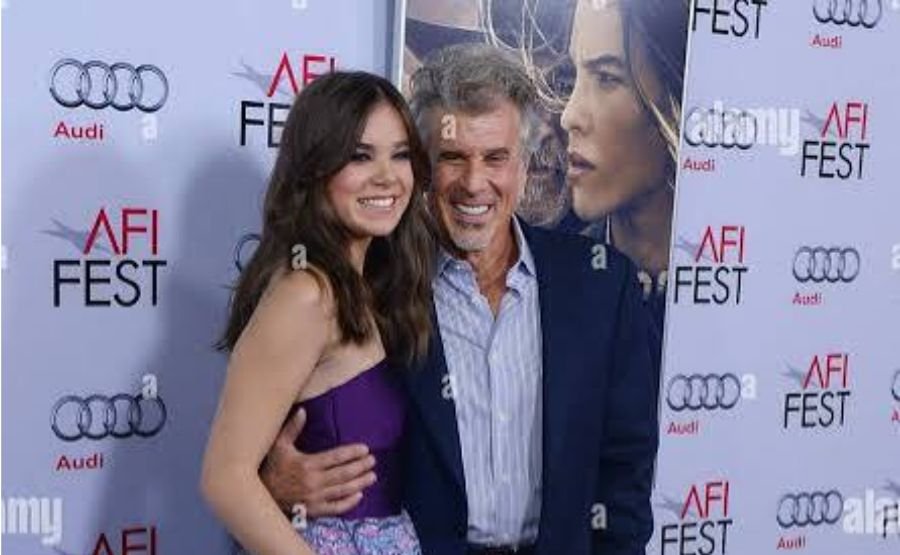
Note: there is a separate person named Peter Steinfeld who is the father of actress Hailee Steinfeld — that Peter Steinfeld is married to Cheri Steinfeld, a fitness professional. They are not the same person, and some lower-quality online sources have conflated the two. Peter L. Steinfeld the screenwriter and Hailee Steinfeld’s father Peter Steinfeld are different individuals who happen to share a name.
The Parts That Don’t Always Work Out
The rewrite situation on 21 is worth lingering on for a moment, because it represents the professional reality that serious Hollywood screenwriters live with. You don’t own your finished work the way a novelist owns a manuscript. Studios own the scripts they buy. They can rewrite them, hand them to other writers, or shelve them entirely. Steinfeld’s original screenplay for 21 was substantially reworked by the time the cameras rolled. That’s a real thing to carry.
There’s also the category of scripts that get developed but never produced. Steinfeld has spoken publicly about Ebony and Ivory, a completed script he delivered to Imagine Entertainment that, as of the last available information, had not been made into a film. In screenwriting, that’s not unusual — many scripts, even good ones, even ones by produced writers with real credits, never make it off the page. The industry is brutal in that specific way.
Television pilots that Steinfeld wrote and executive produced — including one called “Pulse” and another called “Inspector General” — were not picked up by networks. More work that existed but didn’t reach audiences. The ratio of work written to work actually seen by the public is something every screenwriter lives with, and Steinfeld is no exception.
The Money: How Screenwriting Actually Pays
Steinfeld’s net worth has been estimated in various sources at approximately one million dollars. That number is almost certainly conservative, and it’s worth understanding what it means in context.
Screenwriting at the level Steinfeld operates — studio pictures with major casts for Warner Bros., MGM, and Destination Films — pays very well per script. WGA minimums for original screenplays and adaptations are set at specific floors, but negotiated rates for writers with produced credits in that tier are considerably higher. A single studio screenplay deal can pay six figures, and Steinfeld has multiple produced credits across a span of years.
What limits the accumulation of wealth for even successful screenwriters is the irregular nature of the work. There are periods of active assignment, then fallow periods. There are projects that pay well but never get made, which means no back-end participation. The income is real, but it’s not the kind of steady compounding wealth that looks dramatic from the outside.
One million dollars in net worth for a career Hollywood screenwriter with four produced studio films across two decades is a plausible figure — possibly on the lower end of accurate, possibly understated, but not implausible.
Where Things Stand Now
Peter L. Steinfeld remains an active figure in Hollywood development. Projects with Plan B Entertainment and Universal Pictures indicate ongoing relationships with major production entities. His television writing and producing work continues in parallel with film projects.
Working alongside his wife DeShawn Schneider on new material, Steinfeld occupies the specific space that mid-career Hollywood writers live in — not a marquee name, not someone whose attachment gets announced with fanfare, but someone whose track record means that when he delivers a script, rooms full of serious people take it seriously.
The Slap Shot remake, the Big Shot project, and whatever else is currently in various stages of development represent the ongoing work of a craftsman who has been doing this for more than two decades and shows no sign of stopping.
Final Words
What’s genuinely interesting about Peter Steinfeld’s career is how much of it was built on a refusal to let incompleteness be the end of the story. Eleven pages became a feature film. That feature film became a Warner Bros. assignment. That assignment became an Elmore Leonard adaptation. That adaptation became an MIT blackjack thriller. And so the chain went.
In a Hollywood environment that prioritizes IP identification and brand volume over original voice, he also stands for the working adaptor—someone who takes complex source material and finds the cinematic spine inside it. Be Cool had Elmore Leonard’s voice to honour. Ben Mezrich’s reported tale was compressed and dramatized in 21.These are genuinely hard jobs, and Steinfeld did them at a level that earned him continued work.
The Elmore Leonard approval is the detail that lingers most. In a field where the writer is often the most invisible person in the room, having the author whose work you adapted tell you that you got it right is its own form of validation that no box office number can replicate.
FAQs
1. Who is Peter Steinfeld?
Peter L. The most well-known works by American screenwriter and television producer Steinfeld are Drowning Mona (2000), Analyze That (2002), Be Cool (2005), and 21 (2008). He studied English literature at New York University and launched his career after a screenwriting workshop there.
2. What is Peter Steinfeld best known for writing?
His most commercially successful work is 21 (2008), the film based on the MIT Blackjack Team’s true story of card counting in Las Vegas. His most personally meaningful credit is arguably Be Cool (2005), his adaptation of Elmore Leonard’s novel, which earned Leonard’s own approval.
3. How did Peter Steinfeld get his start in Hollywood?
He took a six-week screenwriting workshop at NYU and emerged with only eleven pages written — far short of the full screenplay expected. Rather than abandoning the work, he finished it afterward, sold it to Neverland Films, and it became Drowning Mona (2000), his first produced feature film.
4. Is Peter Steinfeld related to Hailee Steinfeld?
No. There is a separate Peter Steinfeld who is Hailee Steinfeld’s father — that person is married to Cheri Steinfeld, a fitness professional. Peter L. Steinfeld, the screenwriter, is a different person entirely. The two share a name, and some lower-quality online sources have confused them.
5. Who is Peter Steinfeld married to?
DeShawn Schneider, a skilled screenwriter, is his spouse.The two have collaborated on projects together, including The Big Shot for Plan B Entertainment and a planned remake of Slap Shot for Universal Pictures.
6. Does Peter Steinfeld have children?
Yes — he and his wife DeShawn Schneider have two daughters: Chloe, born in 2004, and Ally, born in 2006.
7. What is Peter Steinfeld’s net worth?
Estimates put it at approximately one million dollars, though this is likely a conservative floor rather than a precise ceiling. His career has involved multiple produced studio films over two decades, with each commanding meaningful fees, but screenwriting income is irregular and there is no back-end participation on projects that don’t get made.
8. Was Peter Steinfeld the sole writer of 21?
He wrote the original screenplay based on Ben Mezrich’s book Bringing Down the House, but screenwriter Allan Loeb was brought in to do a rewrite before filming began in 2005. Loeb’s gambling addiction background was cited as adding authenticity to the material. Steinfeld retains a credited role on the final film.
9. What did Elmore Leonard think of Steinfeld’s Be Cool screenplay?
Leonard was reportedly impressed by it. Steinfeld, who was already an admirer of Leonard’s work — particularly Get Shorty, the preceding novel — described Leonard’s positive reaction as one of the best moments of his profession, referring to it as “the world’s finest thing.”
10. What television work has Peter Steinfeld done?
He has written and executive produced several television pilots, including “Pulse” and “Inspector General.” Neither was ultimately picked up by a network, which is a common outcome in television development even for writers with established film credits.
11. Where did Peter Steinfeld grow up?
He was born and raised in Wayne, New Jersey — a suburban town in Passaic County close to New York City. His early environment included a teenage writing job creating jokes for game show host Chuck Woolery’s Love Connection, which represented his first paid writing work.
12. What projects is Peter Steinfeld currently working on?
Based on available information, he and his wife DeShawn Schneider have been developing The Big Shot for Plan B Entertainment and a remake of Paul Newman’s 1977 hockey comedy Slap Shot for Universal Pictures. He also has a completed, as-yet-unproduced script called Ebony and Ivory delivered to Imagine Entertainment.



One Comment