
Peter Guimaraes: The Foreigner Who Continued to Bet on Himself
Quick Bio
| Detail | Info |
| Full Name | Peter Guimaraes |
| Born | Portugal (exact date not publicly on record) |
| Nationality | American (Portuguese-born) |
| What He Does | Restaurateur, entrepreneur, real estate developer, former NYC mayoral candidate |
| Biggest Accomplishments | Co-owner of BiCE Cucina, one of New York City’s most enduring upscale Italian restaurants; co-founder of the Tipsy Girl prosecco and restaurant brand with Real Housewives of New York star Sonja Morgan; opened Au Bar 56, a piano bar concept in Midtown Manhattan; ran for NYC mayor in 2021 |
| Other Important Facts | Emigrated from Portugal to Hartford, Connecticut; studied marketing at Central Connecticut State University and played college football; financed his first real estate deal in Connecticut with a loan shark — and it worked |
The Guy You Don’t Expect to Have Done All This
When you first hear the name Peter Guimaraes, you might not know what to picture. He’s not a celebrity in the traditional sense. He never had a reality TV show built around him. He is neither a sports star nor a tech billionaire. He’s something harder to define — a man who came to America with very little, learned how to read opportunity like a second language, and built an actual life out of bets that most sensible people would have declined to make.
The texture of his story is what makes it intriguing. The loan shark financing a land deal in Connecticut. The pivot to Miami. The link to a Bravo reality show via a prosecco brand. The mayoral run during a pandemic. The piano bar on 56th Street. These are not the beats of someone following a template. They are the moves of someone who genuinely makes things up as he goes — not recklessly, but with the kind of instinctive confidence that immigrants who have already survived the hardest transition tend to develop.
See also “How Old is Ari Fletcher: Chicago Girl, Boss in the Making“
Portugal, and the Decision to Leave It Behind
Peter Guimaraes grew up in Portugal — a country of considerable beauty and, for decades, of considerable economic limitation. Portugal spent much of the twentieth century under an authoritarian regime that suppressed opportunity and economic growth for ordinary people. Even after the Carnation Revolution of 1974 opened the country up politically, the transition to a modern economy was slow and the prospects for ambitious young people were not always obvious at home.
The specifics of Peter’s childhood are private — he has not made his upbringing a centerpiece of his public persona the way some immigrant entrepreneurs do, and that restraint deserves to be honored. What is clear is that his family gave him enough grounding to make a significant leap at a young age, and that Portugal instilled in him the cultural baseline he would carry into everything that followed: a particular kind of European sensibility about food, hospitality, and the relationship between a table and a community.
He arrived in Hartford, Connecticut. That’s the specific landing point — not New York, not Miami, not Los Angeles. Hartford, which is a small New England city with a proud history and a complicated recent past, known for its insurance industry, its long winters, and its proximity to Yale Law School. Not exactly the glamorous American arrival story. But maybe that’s the point. Hartford was a real city where a young man from Portugal could find his footing without being immediately swallowed by the scale of somewhere bigger.
Connecticut, Football, and the Education That Actually Mattered
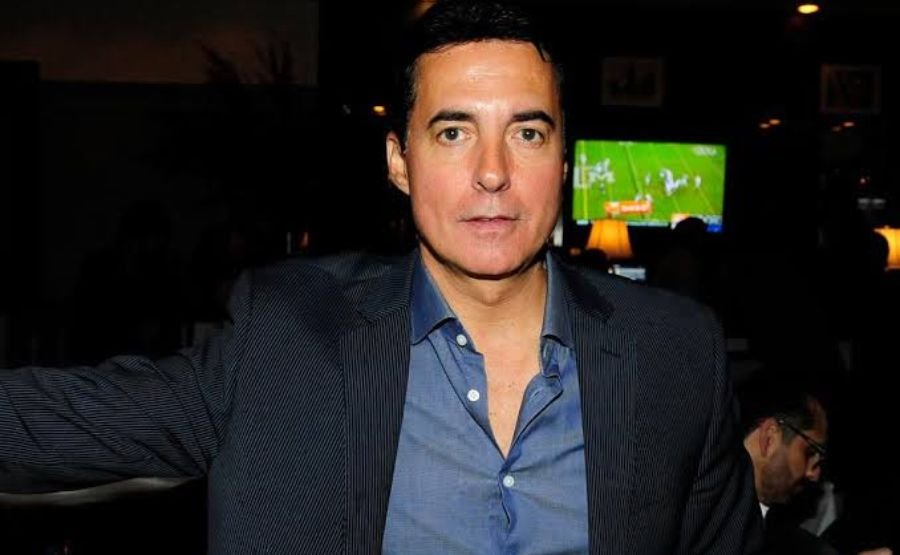
Peter studied marketing at Central Connecticut State University, which is a solid public university in New Britain, just outside Hartford. He also played football there — something he himself has been candid about in retrospect, acknowledging that while he gave it a genuine try, it became clear fairly quickly that professional sports were not going to be the path. Not every college athlete is built for the next level, and recognizing that cleanly is its own form of self-knowledge.
What stuck from his time at CCSU was the marketing education. Understanding how to position a product, how to read a market, how to make people want what you are offering — these turned out to be the skills that defined everything that came after. The football was a phase. The marketing was a foundation.
After graduation, Peter did something that almost defies summary: he found a plot of land in Connecticut, wanted to develop it, had no conventional financing lined up, and went to a loan shark to get the money. He got the money. The deal worked. He came out the other side with real estate experience, a profit, and presumably a healthy awareness of what happens when you borrow from people who are not traditional bankers.
That first real estate deal was the proof of concept he needed — not that he could make money, but that he was willing to operate in territory where most people would not go.
BiCE, Miami, and Learning the Restaurant Business
The restaurant world came into Peter’s life through BiCE — a globally recognized Italian restaurant brand with roots in Milan that had been operating high-end locations in major cities for decades. BiCE is not a casual dining concept. It is an upscale, Northern Italian experience that prioritizes authenticity and has served as a benchmark for Italian cuisine in cities like New York, Miami, Beverly Hills, and internationally.
Peter got involved with the brand and opened a BiCE location in Miami, specifically in the Victor Hotel. Miami in the hospitality sense is a brutal proving ground — the competition is ferocious, the clientele is sophisticated and demanding, and the margins in high-end dining are always thinner than they look from the outside. Making a BiCE location work in Miami required operational skill, relationship building, and a deep understanding of what the brand represented and why customers would choose it over a dozen other alternatives.
The Miami operation worked well enough that it expanded his credibility as a hospitality operator substantially. He wasn’t just a real estate guy who happened to be near restaurants. He understood the business from the inside.
Eventually the focus shifted to New York, where BiCE Cucina on 56th Street became his primary vehicle — and where he would eventually become co-owner, cementing his stake in one of the city’s most durable upscale Italian establishments. BiCE New York is the kind of restaurant that has outlasted trends, recessions, and the general churn of the Manhattan dining scene because it offers something consistent and genuinely good rather than chasing whatever the moment demands.
Tipsy Girl, Sonja Morgan, and the Reality TV Orbit
Around 2015 and 2016, Peter’s name entered a completely different kind of cultural conversation when he partnered with Sonja Morgan — a cast member on Bravo’s Real Housewives of New York City — to launch Tipsy Girl, a prosecco brand that also had ambitions of becoming a restaurant concept.
The partnership generated immediate controversy, almost none of it Peter’s fault. The brand name Tipsy Girl was perceived as too close to Bethenny Frankel’s enormously successful Skinnygirl brand, and Bethenny — who is never shy about protecting her business interests — moved to challenge the trademark. Peter had registered the Tipsy Girl name first, months before Bethenny’s team got involved, which gave him the legal standing to hold it.
His approach to the whole controversy was notably calm and philosophically interesting. He pushed back on the criticism that the name promoted recklessness, arguing that the word “tipsy” carries multiple meanings — tipsy in love, tipsy in life — and that the brand was about a feeling more than a literal state of intoxication. Whether you find that convincing probably depends on how charitable you’re feeling, but it was a more thoughtful response than the situation seemed to demand.
The Tipsy Girl restaurant had its own challenges. The planned Greenwich Village location ran into trouble when a liquor license application was denied — the licensing board took issue with the fact that the brand had been a plotline on a reality television show and didn’t want the restaurant to function essentially as a destination for the show’s fans. The restaurant eventually opened in Hartford instead, which brought Peter’s story back around to the Connecticut city where he had started.
The Tipsy Girl relationship with Sonja Morgan was not always smooth — there were reported disagreements over promotion and expectations — but Peter handled those friction points largely without public drama, which is a difficult thing to manage when your business partner is a reality television personality.
The Mayoral Run: The People’s Candidate
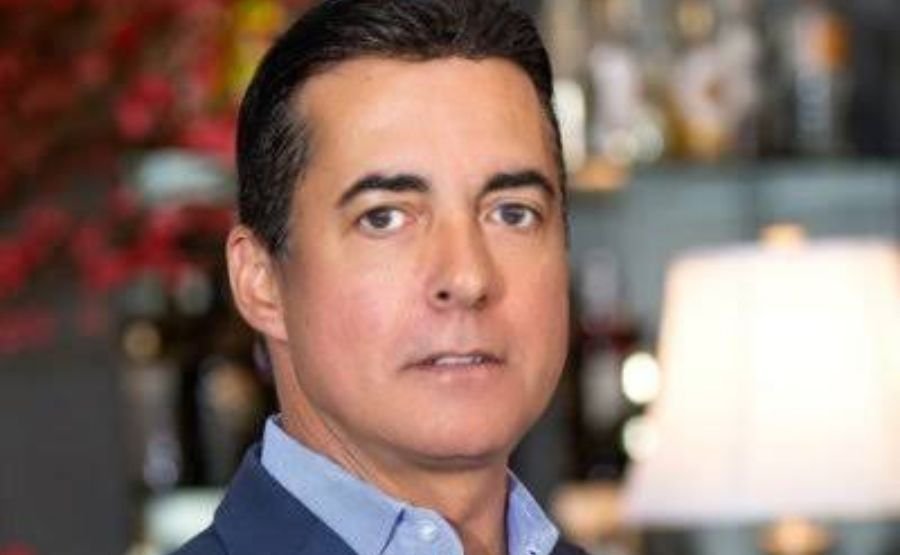
In 2021, during the COVID-19 pandemic, Peter Guimaraes put his name on the ballot for mayor of New York City. He ran as an independent, calling himself the people’s mayor, and framed his candidacy around issues that were very real and very immediate: homelessness, crime, affordable housing, crumbling infrastructure, and economic recovery from the pandemic.
He did not win. He was not expected to win. The 2021 NYC mayoral race was ultimately between Eric Adams and Kathryn Garcia, two candidates with substantial political machines and citywide name recognition that Peter couldn’t match.
But the candidacy was genuine. He cared about the city in the way that people who have built their lives in it tend to care — not abstractly, but specifically. He referenced workers in Harlem, teachers in Queens, bankers on Wall Street. His vision of New York was one where all of those people existed in the same city simultaneously and deserved a mayor who could hold all of that simultaneously in mind.
Running for mayor of New York City as an independent immigrant entrepreneur is an audacious thing to do. It doesn’t require winning to mean something.
Au Bar 56 and the Next Chapter
In September 2024, Peter opened Au Bar 56 at 235 West 56th Street in Manhattan — a piano bar concept that combined French tapas, craft cocktails, live music, and his genuinely original idea: a piano with a bar top built into it, allowing patrons to drink at the instrument itself while musicians played.
That is a genuinely creative concept. It’s not a gimmick in the sense of being empty — it’s a specific vision of what a hospitality experience can be, rooted in a European sensibility about music, food, and social space. The kind of thing that only works if the operator actually cares about each element rather than treating any of them as props.
Where the Money Sits
Peter Guimaraes’s net worth is not publicly disclosed and no reliable figure exists in the public record. What can be reasonably inferred is that his real estate activities, his stake in BiCE Cucina, his various hospitality ventures over two-plus decades in competitive markets, and his entrepreneurial track record add up to a meaningful but private wealth position. He is not a billionaire. He is a successful immigrant entrepreneur who has built real things in one of the hardest cities in the world to build anything.
What This All Actually Adds Up To
What separates Peter Guimaraes from the many people who move to America from Europe and have modest, decent lives is the scale of his willingness to reach. Not recklessly — that first loan shark deal aside — but persistently. He didn’t stay in Hartford because Hartford was comfortable. He went to Miami. He went to New York. He went to Midtown. He ran for mayor. He opened a piano bar with a bar built into the piano.
There’s a thread running through all of it, and the thread is hospitality in its oldest sense: creating spaces where people feel welcome, fed, comfortable, and part of something. BiCE is that. Tipsy Girl was trying to be that. Au Bar 56 is unmistakably that. The presence of both the Wall Street financier and the sanitation worker was key to his mayoral campaign.table.
That’s not an accident. That’s a worldview.
FAQs
1. Where is Peter Guimaraes from originally?
He emigrated from Portugal to Hartford, Connecticut. He has not publicly specified which city or region of Portugal he came from.
2. What did he study in college?
He studied marketing at Central Connecticut State University, where he also played football before accepting that professional sports weren’t the right path.
3. How did he first make money in America?
His first significant venture was a real estate deal in Connecticut, financed — remarkably — through a loan shark. It worked, and gave him the confidence to keep building.
4. What is BiCE Cucina?
BiCE Cucina is a high-end Italian restaurant on West 56th Street in Manhattan, part of the globally recognized BiCE brand rooted in Northern Italian cuisine. Peter is co-owner.
5. How did he end up connected to Sonja Morgan and Real Housewives?
He co-founded Tipsy Girl, a prosecco brand, with Sonja Morgan around 2015-2016. The brand became a storyline on The Real Housewives of New York City, bringing Peter into that orbit even though he was never a cast member himself.
6. What happened with the Tipsy Girl restaurant?
The planned Greenwich Village location was denied a liquor license partly because the board was uncomfortable with the restaurant being connected to a reality TV storyline. The venture eventually opened in Hartford, Connecticut instead.
7. Did Peter Guimaraes run for political office?
Yes. He ran as an independent candidate for mayor of New York City in 2021, during the COVID pandemic, positioning himself as a grassroots candidate focused on housing, crime, infrastructure, and economic recovery.
8. What is Au Bar 56?
It’s a piano bar concept Peter opened in September 2024 at 235 West 56th Street in Manhattan, offering French tapas, craft cocktails, live music, and — most distinctively — a piano with a bar top built into it so patrons can sit at the instrument while musicians play.
9. What is his net worth?
No verified public figure exists. He has operated in New York real estate and hospitality for over two decades, suggesting a comfortable financial position, but he has not disclosed specific numbers.
10. What was the Tipsy Girl trademark dispute about?
Bethenny Frankel, owner of the Skinnygirl brand, felt Tipsy Girl was too similar a name and attempted to challenge the trademark. Peter had registered the name before Bethenny’s team tried to, giving him the legal standing to maintain it.
11. Does Peter Guimaraes have a family?
His personal and family life is private and not part of his public record in any meaningful way.
12. What makes his business philosophy distinctive?
By his own words and actions, he has consistently prioritized hospitality in the most genuine sense — creating places where people feel welcomed and comfortable rather than impressed or intimidated. That philosophy connects his Connecticut beginnings to BiCE to Au Bar 56.
Read. Explore. Discover more with Dicovered Magazine.





One Comment